
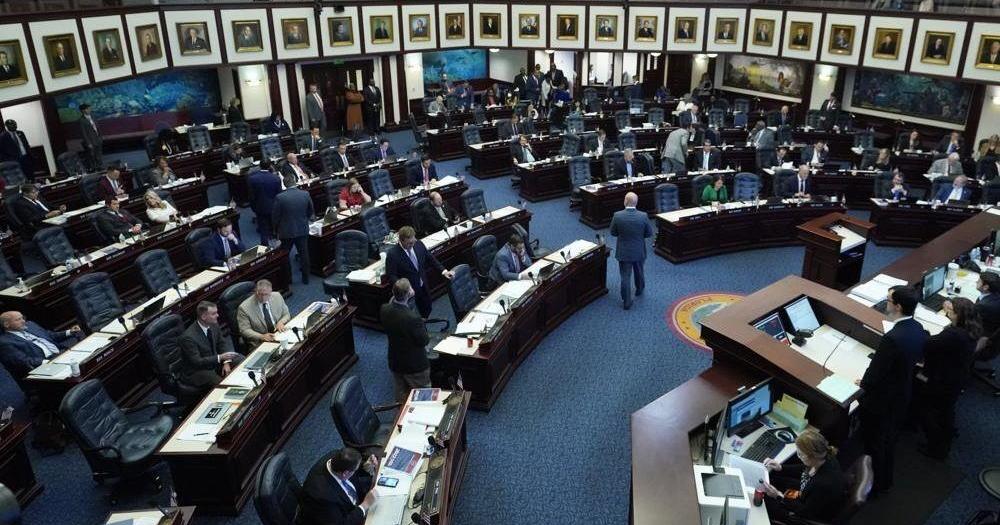
The 2026 legislative session in Florida is set to begin Tuesday, with significant issues such as guns, artificial intelligence, and property insurance taxes on the agenda.
Gov. Ron DeSantis will be leading his final session as the state’s leader, and many anticipate a busy year in Tallahassee.
Property insurance is among the major topics to be debated. Eight proposals are under consideration. One of them, HJR 209, would allow homeowners to exempt $200,000 of their homestead property’s assessed value from non-school property taxes, provided the property is insured.
In Southwest Florida, insurance premiums have been on the rise. The proposed tax exemptions aim to alleviate this financial burden. An amendment has been added to HJR 209 to protect emergency personnel from budget cuts, although critics argue it might impact funding for essential services.
Kathy from Fort Myers said, “That’d be a huge break because the flood and windstorm coverages have definitely gone up, and our homeowners doesn’t even insure for those anymore.”
Christian Fautz, also from Fort Myers, said, “You need to see where the money’s coming from to fund the other services, like parks and so forth. Maybe there’s other areas or other revenue generating places that they can pull a from.”
Artificial intelligence in insurance is another hot topic. A bill in the Florida House is pushing for a “qualified human professional” to decide on claim denials or reductions, as opposed to A.I.
Insurance officials argue that AI complies with laws similarly to humans and warn that banning AI could slow down claim processing.
Paul Martin, Vice President of the National Association of Mutual Insurance Companies, said, “If a practice is prohibited for a human to do on behalf of an insurance company, it is prohibited for AI to do. Artificial intelligence is not an end run for the insurance companies around a state’s statutes or its regulations.”
Guns are another significant issue this year. One bill proposes lowering the age from 21 to 18 to purchase a rifle or shotgun, potentially reversing a 2018 law enacted after the Parkland shooting.
Another bill would permit college employees, faculty, and students to openly or concealed carry handguns on campus, along with a proposal for safer gun storage to prevent access by children.
Even if these proposals pass in the legislature, they would still need to be placed on the 2026 ballot for voters to decide.
WINK News will continue to provide updates on these legislative developments.