
EATONVILLE – Willie Griggs tipped his black-felt cowboy hat to the Family Dollar employee holding the door for him and greeted her warmly.
But when Griggs, 78, glanced across the street to the now-vacant Hungerford school property, a place where his daughter once attended school, his expression turned to frustration.
A deal to sell the historic school land to a charity — expected to be approved by the Orange County School Board on Tuesday — strikes him as wrong, even if the nonprofit plans to build many amenities he and others feel the small town needs.
Like plenty of his neighbors, Griggs wants the sale scrapped and the land given to Eatonville, a town founded by freed slaves. The town, not an outside group, should control what happens to the historic school land in its borders, they say.
“Whoever was wrong needs to admit that, come together and start over and get it right,” he said.
Others, though, see Dr. Phillips Charities’ plans for the land, unused for nearly two decades, as the jumpstart Eatonville needs. The nonprofit, which recently developed Orlando’s Packing District and has deep pockets, could bring transformative development to the 117 acres that fronts Interstate 4 and serves as a gateway to the town.
“It would be good to see a bigger community, a better community, and if they’re trying to bring something better to the community, why not?” said Clerrick Cutliff, 34, who grew up near Eatonville and on a recent afternoon stopped at the same store where Griggs shopped.
Eatonville is one square mile, and the median income is about $35,500, well below the state and regional average. The Hungerford property sits on Kennedy Boulevard, the town’s main thoroughfare, which has a few small businesses, the Town Hall and a local library. The school land could define Eatonville’s future, even as it divides its residents.
The property was the site of the former Robert F. Hungerford Normal and Industrial School, founded as a boarding school for Black students in 1897.
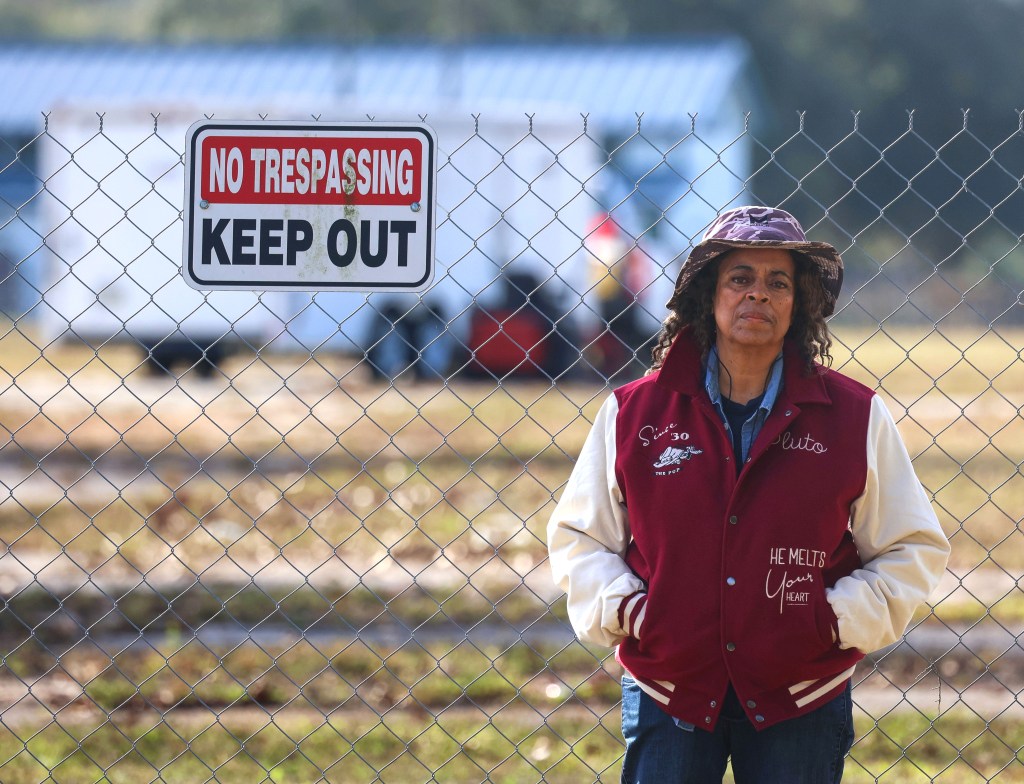
By the late 1940s, the school was struggling financially, and the white-run Orange County School Board purchased it, for a steal and under controversial circumstances, old court records show. The school then served as a public high school for Black students and, after desegregation, as an alternative school. It was closed in 2009 and the buildings were demolished in 2020. The site is now vacant and surrounded by chain-link fencing.
The school board and Eatonville have tried for nearly two decades to sell the land to developers, but plans have always fallen through.
The town scrapped the latest proposal in 2023 when residents and new town leaders became alarmed that it would lead to expensive housing that would force out people who’d lived in Eatonville for years.
Then town leaders pushed for the school board to donate the land directly to Eatonville, but school leaders said that could not be done legally. Instead, district leaders worked with Dr. Phillips and the town’s mayor on a new deal that they viewed as meeting most of the town’s needs. It was announced in September.
“The people of Eatonville deserve progress,” said Stephanie Vanos, a school board member whose district includes Eatonville, at the time.
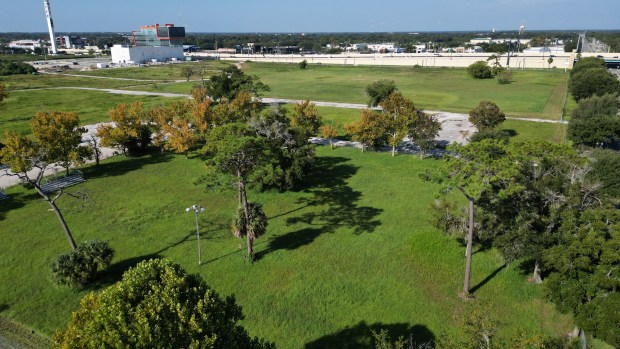 Aerial image of the site of the former Hungerford School in Eatonville, on Saturday, September 20, 2025. (Ricardo Ramirez Buxeda/Orlando Sentinel)
Dr. Phillips’s plans include affordable housing, a town museum, a park with a pavilion for outdoor events, a healthcare facility and early learning services as well as retail businesses, including a grocery store, according to the sale agreement.
Mayor Angie Gardner, who helped lead the opposition to the 2023 development plans, said the deal with Dr. Phillips is “for the people.” But once the plans were unveiled, others on town council and in the town vehemently disagreed.
Julian Johnson, the founder and president of the 1887 First community organization, has fought to see the land returned to the town. He said the deal reflects systemic racism since it robs Eatonville of control.
“Other people making decisions for Black people, you know, for years to come,” Johnson said. “To the outside it looks good. To the inside, we get screwed over as a community.”
Inishia Maragh, who has lived in Eatonville for six years, supports some of the planned developments, but said she’s nervous about outsiders dictating what will be put in the town.
“Someone who’s not here, they don’t know the community. They don’t understand what’s going on here,” Maragh said.
Others in town worry Dr. Phillips plans do not include enough projects that would build the town’s tax base, since medical and educational facilities mostly don’t pay property taxes.
In contrast, Joyce Irby came to a recent town council meeting to defend the deal.
“It’s a possibility,” Irby said. “We have given up our own choices, nobody took our choices from us. We have been incompetent for years in dealing with business, for years. It’s all of our fault.”
A former singer in the 80s all-girl band Klymaxx, Irby was born in Eatonville, where relatives just a generation removed from slavery came to buy land and raise families.
Her family built the house she lived in for times as a child and where she lives today — a block from the Hungerford property.
Three years ago, Irby returned to Eatonville because of the dispute over the land.
“My 93-year-old aunt asked me to come back here and help fight for this land and I said ‘Yes, ma’am,’” Irby said. “So I moved back. Started going to every council meeting and trying to develop relationships with people who I thought could help.”
Irby believes accepting the deal is the best option for a town with little power or money.
At the same meeting, Angela Johnson, who is running for a seat on the town council, criticized parts of the deal, arguing the property’s sales price is not the fair market value.
“Where would you ever sell a piece of land without a current appraisal? Nowhere,” Johnson said. “…We can’t do it in any affluent communities. Let’s stop allowing people to crap on us.”
The school board is selling the land to Dr. Phillips for $14 million — a figure that could ultimately go down to $1 million if the nonprofit meets building goals. The Hungerford property was appraised at $24 million in 2020.
The school board last week indicated it was ready to approve the deal with Dr. Phillips, eager to see the property developed and back on the town’s tax rolls. The school board does not pay property taxes.
“We’ve heard from adults, children, grandparents, all ages, who are excited about the hope and the future that Dr Phillips Charities, this partnership, could be for the town of Eatonville,” said board member Alicia Farrant at last week’s meeting, addressing town residents. “ And sadly it is being sabotaged, or attempted to be sabotaged, by your own council members.”
Most of Eatonville’s town council has opposed the deal since it was introduced.
“To sell Eatonville down the drain for $1 million is a slap in our faces,” said Councilwoman Wanda Randolph soon after the deal was unveiled.
At last week’s school board meeting, members of the town council asked the school board for a 90-day delay on its vote to allow Eatonville to form its own bid for the land. But the school board was not receptive.
Council members said if the school board approves the sale Tuesday as expected, it will try to negotiate with Dr. Phillips about the development plans. It has a meeting scheduled for Jan. 20.
A half-mile west of the Hungerford land, Kim Middleton, 75, served fresh collard greens and baked chicken to customers at her soul food restaurant on a recent afternoon.
Middleton said she wished the town could control the land.
“I want them to own something, because they never have anything. Eatonville, they don’t own nothing,” she said.