
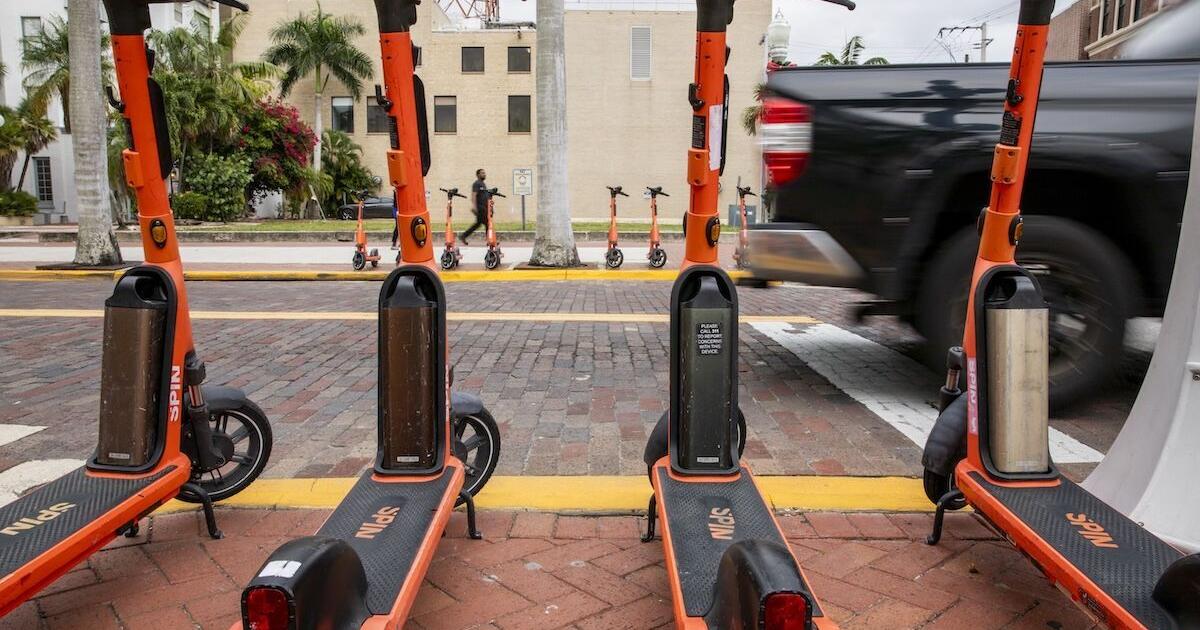
Six months after orange e-scooters debuted downtown, Fort Myers officials are weighing whether to expand the pilot program citywide.
The scooters are currently limited to the River District, where early ridership data suggests steady demand, operator Spin told City Council. During the program’s first six months, 5,109 unique riders took 11,938 trips and logged 21,628 miles.
At a Jan. 12 City Council workshop, Spin presented its six-month evaluation and outlined a potential second phase of the pilot. Council members are expected to vote at a future meeting on whether to expand the program, which could allow scooters throughout much of the city, double Spin’s fleet to about 200 scooters and extend operating hours from midnight to 2 a.m., with availability beginning at 6 a.m.
“This isn’t just a novelty tourism type of transportation anymore,” said Bruno Lopes, Spin’s director of government partnerships. “It really has become a true form of transportation for some folks.”
About 25% of riders were tourists, while the rest were local users, Spin reported. Ridership peaked on weekends and during evening hours. Spin also recorded 3,697 instances in which potential riders opened the app after midnight, when scooters were no longer available, suggesting demand for later hours.

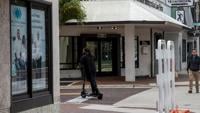
A rider travels through downtown Fort Myers on a Spin electric scooter, part of a pilot program officials say has shown steady demand but raised safety concerns.
Evan Williams
Founded in 2016, Spin operates in cities nationwide, alongside competitors such as Lime and Bird. E-scooter programs have expanded rapidly in recent years, according to the National Association of City Transportation Officials, though results have been mixed. The U.S. Consumer Product Safety Commission also has linked scooters to an increase in emergency department visits.
While Fort Myers has not seen any major scooter-related incidents, city officials raised concerns about safety and potential liability, including collisions on sidewalks.
City Attorney Grant Alley urged the city to conduct a risk management analysis before expanding the program, particularly as lawmakers consider changes to Florida’s sovereign immunity laws. House Bill 145 could more than double the current caps on personal injury claims against government entities.
“We run the risk of having a potential financial drain with respect to the scooters,” Alley said. “If we were to do any expansion, we should increase the liability protection the city would have.”
Current rules require riders to use the street and follow traffic laws.
“Twice I’ve almost gotten hit by a scooter that is coming behind” on the sidewalk, council member Diana Giraldo said. “I feel very uncomfortable expanding the area and expanding the number of scooters we have for this. I think it would be irresponsible for us as a council at this moment.”
Lopes said Spin is willing to adjust an expansion plan to address concerns, including limiting scooters to specific areas or reducing speeds.
“Whatever it takes,” he said.
The scooters currently have a maximum speed of 12 mph and are tracked by GPS, with geofencing used to restrict where they can operate.
Council member Liston Bochette questioned whether the city has sufficient infrastructure, such as clear street markings, to support a broader rollout. He suggested smaller, incremental expansions into adjacent neighborhoods like Dean Park.
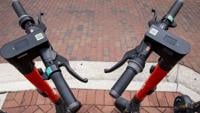
Electric scooters operated by Spin are staged in the River District, where the pilot program is currently limited.
Evan Williams
“There’s a solution here, I just don’t know what it is yet,” Bochette said.
Public reaction has been mixed. Some business owners welcome the scooters while sharing safety concerns.
Tricia Davis, owner of Scoops on First ice cream shop, said she opposes scooter use on busy corridors, such as U.S. 41 and Fowler Street but could support limited routes, such as along McGregor Boulevard no farther than the Edison & Ford Winter Estates.
“To be honest, I can’t wait to ride one,” Davis said, noting her employees frequently use scooters after work. “The kids say they ride the most at night.”
Davis said she could envision using a scooter to make short supply runs, such as to the Publix on West First Street, especially on nights when downtown streets are closed for events.
“If I run out of something, I have to walk,” she said.