
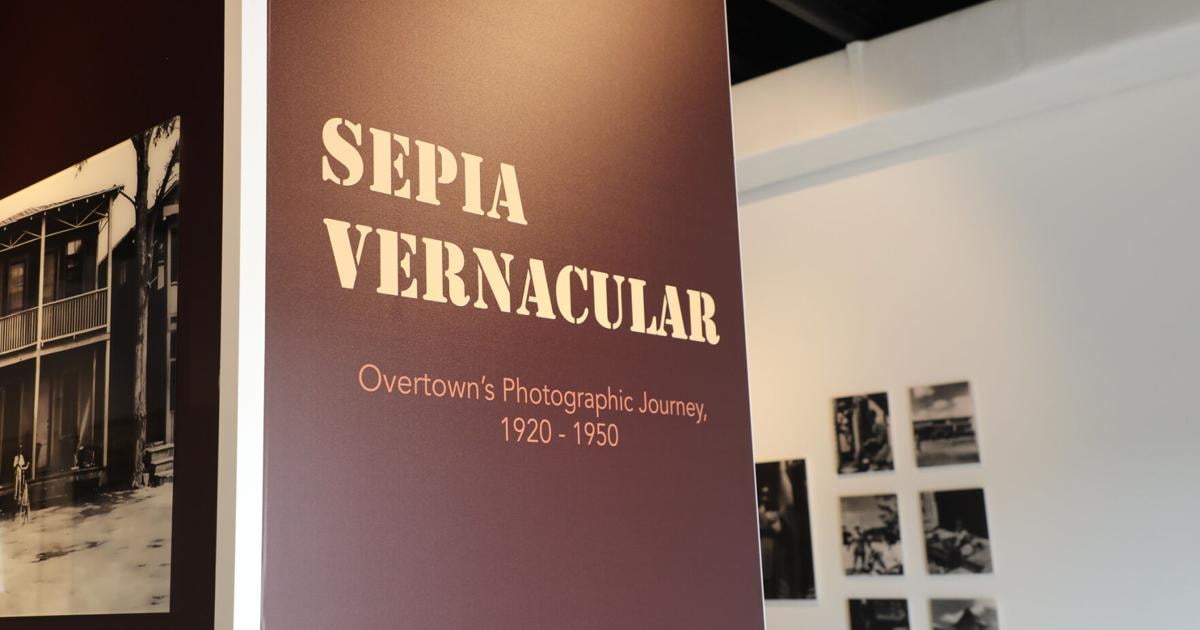
Overtown’s Sepia Vernacular exhibition serves as Miami’s living time capsule, capturing the lives, memories, and shared experiences of African Americans from the 1920s to ‘50s through a display of photographs. Making its debut at the City of Miami’s Administrative Building in November 2024, the exhibit left a lasting impact on residents, leading to an effort for an eternal display of the Overtown upbringing.
Southeast Overtown/Park West Community Redevelopment Agency (SEOPW CRA) Director of Operations Natalya Sangster, Executive Director James McQueen, and Director of Architecture and Development Brian Zeltsman partnered with the City of Miami’s Planning Department in the development of an exhibit located closer to the residents of Overtown.
“There was a lot of exposure there, but we knew that we had to bring it here so that the people who live here can walk to it, they can see it, and they can share their stories,” said Sangster.

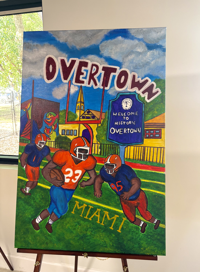
A student painting pays tribute to football in Overtown, celebrating sports as a cornerstone of neighborhood pride.
(Faith Francois for The Miami Times)
Before the digital age, residents applying for permits were required to submit photographs of their properties. These images were then preserved on tax cards and now serve as rare visual records of earlier life in Overtown. The Sepia Vernacular exhibit features dozens of these archived photographs, sourced from the City of Miami Planning Department’s public art division, alongside selections from Max Waldman’s 1940 Color Town series, curated by Alba de la Paz. The exhibit focuses on the 1920s through the 1950s, capturing Overtown before major redevelopment plans reshaped the community.
Historic snapshots by Max Waldman preserve memories of a different time.
(Faith Francois for The Miami Times)
“The placement of I-95 was literally dismantling this neighborhood,” said Sangster. “It took away homes, it took away businesses, and people had to rebuild, so that time period captures right before all of those changes happened.”
As of June 2025, the showcase has found its permanent home within Lawson E. Thomas’ former law office, itself a historic monument.
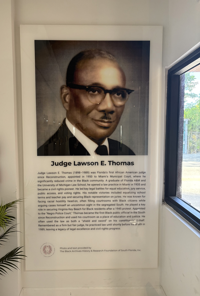
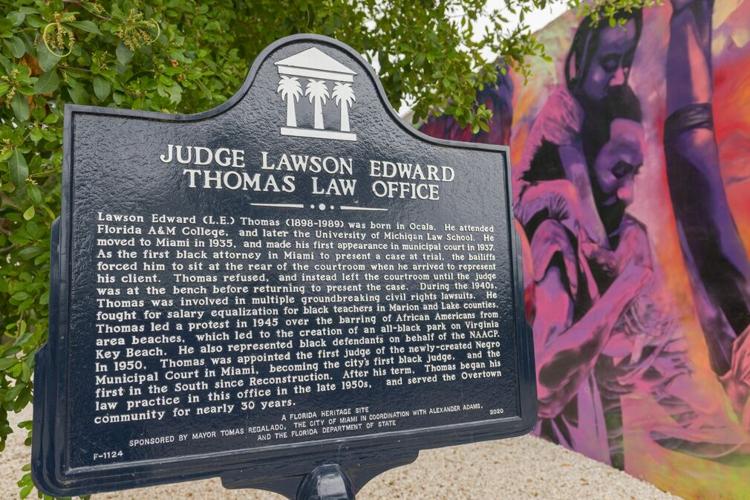
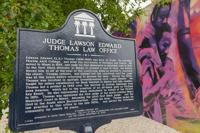
A plaque honoring Judge Lawson E. Thomas stands inside the building where he once practiced law.
(Faith Francois for The Miami Times)
A historic foundation
In 1950, Judge Lawson Edward Thomas was appointed to Miami’s municipal court, becoming Florida’s first African American judge since Reconstruction. Throughout his career, he helped reduce crime within Miami’s Black community, standing alongside educational leaders and facing racial discrimination without wavering. Years later, Thomas’ legacy lives on within Sepia Vernacular.
Decades after Thomas’ passing in 1989, the building was acquired by the SEOPW CRA and received historic designation by the City of Miami.
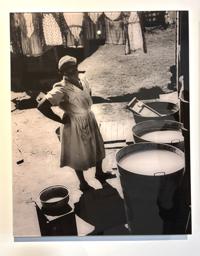
Archival black and white images highlight the vibrancy of African American life in Overtown during the 1920s–1950s.
(Faith Francois for The Miami Times)
“My greatest joy in this job and for this building is rebuilding Overtown, because when I grew up Overtown was a thriving community,” said McQueen.
McQueen says he grew up just a few streets away from the Lawson E. Thomas building. “I remember the ‘colored only’ signs, so to be doing a job at this time trying to rebuild a community, it’s truly an honor more than anything else,” he said.
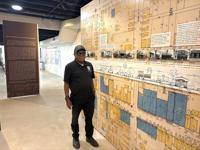
SEOPW CRA Executive Director James McQueen draws on personal memories of growing up in Overtown to guide the exhibit’s vision.
(Faith Francois for The Miami Times)
To transform the building after its abandonment, the site underwent significant renovations. Zeltsman witnessed the building in its early stages. Upon first visiting the site, he says he was met with widespread calls for restoration.
“Without the renovations, we wouldn’t be able to be sitting here, to be quite honest,” said Zeltsman. “When my teammates removed the boards from the windows, we were unfortunately surprised to see that the whole roof had collapsed and caved in. We could see the sky and the tree above us.”
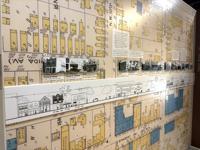
Archival photographs on display at Sepia Vernacular capture everyday life in Overtown during the 1920s–1950s.
(Faith Francois for The Miami Times)
Following the allocation of $374,000 by the SEOPW CRA, the renovations team was able to restore power, water, lighting, and all essential building needs. Thomas’ legacy remains present through a plaque outlining his history and bricks outside the museum that resemble those of the original law office.
“Hopefully when people walk through here, they get a sense of the importance of his legacy,” said Zeltsman.
Expanding through engagement
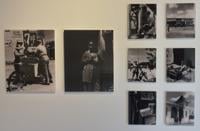
Historic photographs from the 1920s to the 1950s offer a rare glimpse into Overtown before widespread redevelopment.
(Faith Francois for The Miami Times)
The Sepia Vernacular exhibit was originally planned to only occupy half of the space, but with community involvement, the exhibit expanded. During Overtown’s Soul Basel, art pieces were added to the exhibit in collaboration with Key2MIA, a local group that teaches residents about Miami’s essence and culture, led by Keymia Sharpe. Key2Mia proposed the idea of showcasing artworks made by the students of Booker T. Washington High School, providing the community’s youth with its own oral history. Through these advancements, Key2MIA was able to bring Judge Thomas’ niece, Whittney, to witness the exhibit.
“We want the community to also feel like this is their exhibit; it’s your free range,” said Sangster.
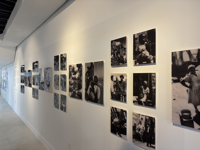
Max Waldman’s archival images capture everyday moments of African American life in Overtown.
(Faith Francois for The Miami Times)
The exhibit has further expanded with a new wall dedicated to the many stories of the Overtown experience, where all ages are invited to write their story. The exhibit also includes a QR code that takes attendees to a series of videos showing Overtown residents speaking of their shared experiences.
“I think resilience is the main conversation that this community gets from this exhibit, especially through sharing their stories on the community board and being able to look around and reminisce,” said Sangster.
Community stories that live on
As Sepia Vernacular continues to grow, its creators hope the exhibit remains more than a gallery, serving instead as a shared space where memory, history, and community converge. For many visitors, the photographs offer not only a glimpse into the past but also a reminder that Overtown’s story is still being written.
“There’s a sense of community and connectedness with learning your history to see how you move forward,” said Sangster. “And so when you’re suggesting changes for the community, you can look at the past because you don’t always have to reinvent the wheel.”
In February, to celebrate Black History Month, the exhibit will continue expanding into the community. The exhibit team is increasing its efforts to facilitate field trips and invite youth groups to view the project.
Close
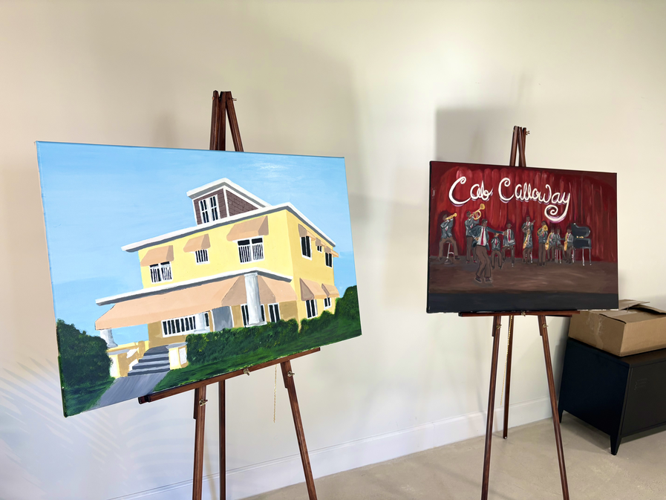
Artwork from Booker T. Washington High School students bring color and community involvement to Sepia Vernacular.
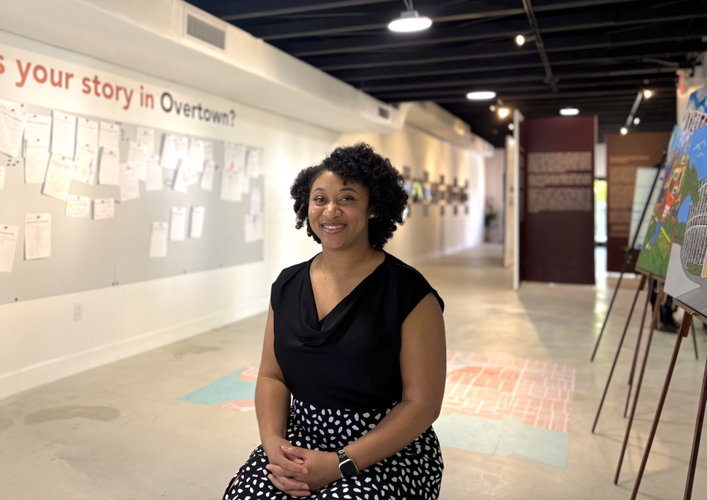
Natalya Sangster, SEOPW CRA Director of Operations, helps bring Overtown’s history to life.
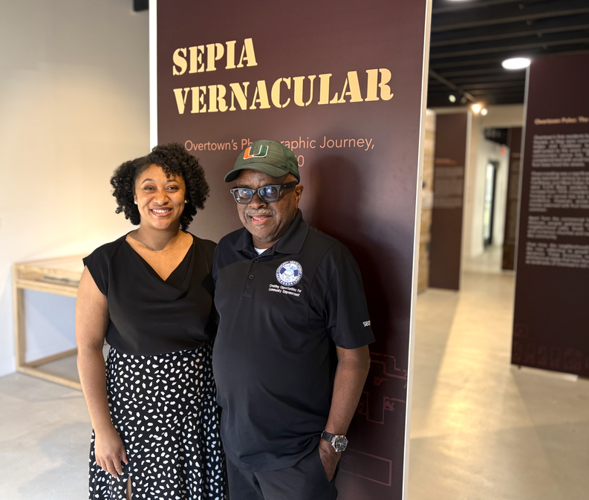
Pictured at the exhibition’s opening doors, SEOPW CRA Director of Operations Natalya Sangster and Executive Director James McQueen welcome visitors to Sepia Vernacular.
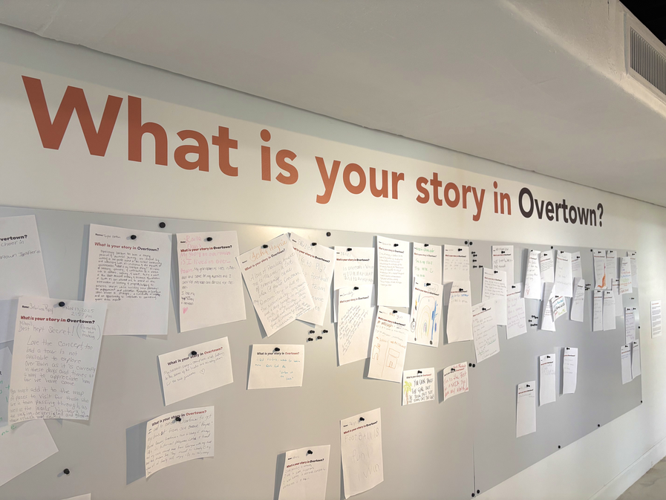
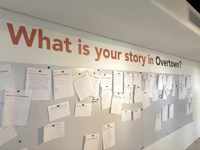
Sepia Vernacular invites visitors to share their Overtown stories.
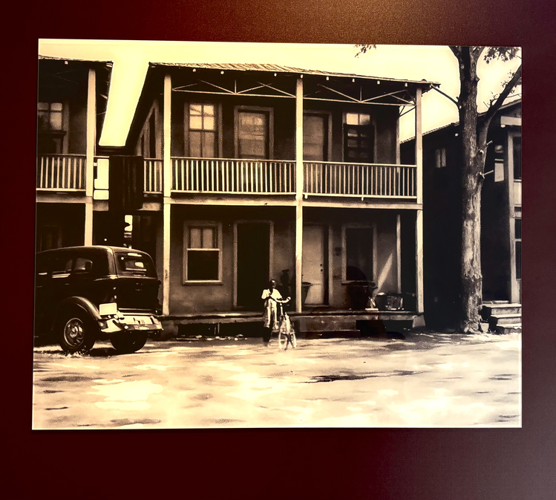
Windows into Overtown’s past line the Sepia Vernacular exhibit walls.
Southeast Overtown/Park West Community Redevelopment Agency AJ Shorter Photography
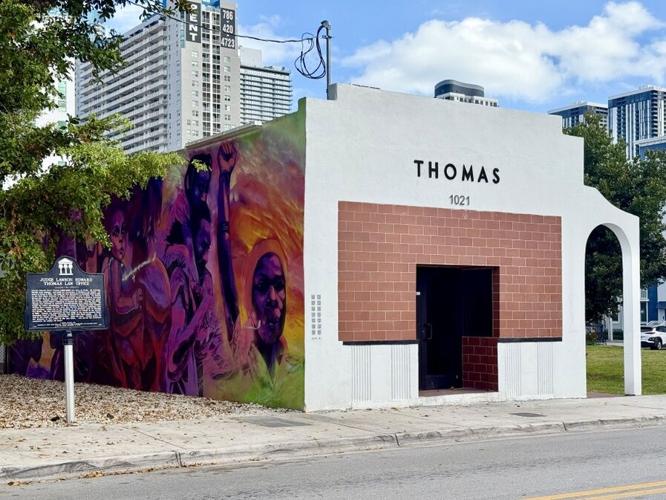
The former law office of Judge Lawson E. Thomas now serves as the permanent home of the Sepia Vernacular exhibition.
Artwork from Booker T. Washington High School students bring color and community involvement to Sepia Vernacular.
Natalya Sangster, SEOPW CRA Director of Operations, helps bring Overtown’s history to life.
Pictured at the exhibition’s opening doors, SEOPW CRA Director of Operations Natalya Sangster and Executive Director James McQueen welcome visitors to Sepia Vernacular.
Sepia Vernacular invites visitors to share their Overtown stories.
Windows into Overtown’s past line the Sepia Vernacular exhibit walls.
Southeast Overtown/Park West Community Redevelopment Agency AJ Shorter Photography
The former law office of Judge Lawson E. Thomas now serves as the permanent home of the Sepia Vernacular exhibition.