
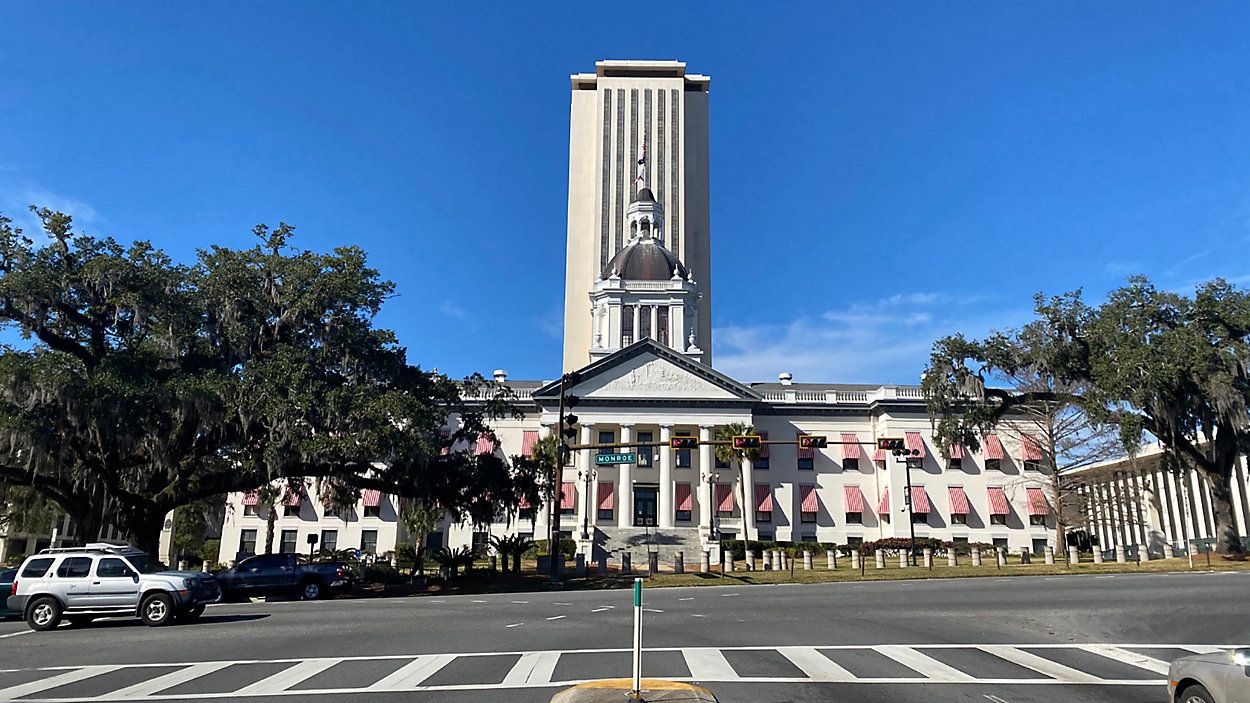
Florida Gov. Ron DeSantis gave his final State of the State address, and state lawmakers got to work advancing a bill that will streamline development approvals.

Speaking to the Florida Legislature for his last State of the State Address, Gov. Ron DeSantis took the podium to tout his accomplishments and declare that he has fulfilled the promises for action he made when he was elected.
“Seven years ago, I stood on the steps of the old Capitol building to articulate a new vision, launch a bold agenda and make a promise to produce big results,” he said. “Today, I stand here in this chamber to report that together, we have made good on that agenda.”
DeSantis pointed to the state’s fiscal progress during his time as governor, saying that when he took office, Florida had a “weak rainy day fund” and “modest budget reserves.” Since then, he said the state’s rainy day fund has more than tripled, while budget reserves have doubled.
“Results are what matter the most,” he said. “And we, more than any other state, have delivered those big results.”
DeSantis said his administration retired almost half of the taxpayer-supported debt held by the state, which saved more than $1 billion in principal and interest costs.
“We’ve proven that fiscal responsibility and limited government work,” he said.
DeSantis pointed to the state’s economy, which he said has accounted for almost 14% “of all new jobs produced throughout America” since 2020.
And he said that people from around the country are flocking to the state because Florida is friendly to taxpayers.
“We do not, and will never, have an income tax in the Sunshine State,” he said.
“I don’t think there’s any question that, working together, we have made the state of Florida the most taxpayer-friendly state government of all 50 states,” he added.
In education, DeSantis announced that Florida’s graduation rate for the 2024-25 school year was 92.2%, which is the highest in the state’s history.
He pointed to Florida’s ability to attract quality teachers because it has the highest average minimum salary in the Southeast region, and has put a total of $6 billion toward efforts to better compensate teachers since he was elected.
DeSantis touted the state’s Hope Florida program, which is led by his wife, first lady Casey DeSantis, saying it has caused significant improvements for residents in the state.
“By leaning into our faith community, we have seen a historic 47% reduction in the number of children entering our child welfare system, and seen more than 33,000 Floridians reduce their reliance on public assistance,” DeSantis said.
He said those improvements resulted in a $130 million savings for Florida’s budget.
Lawmakers advance a bill to adjust how developments are approved
With just one day left before the start of the legislative session in Tallahassee, Florida lawmakers are gearing up to tackle various issues that have been garnering a lot of attention in past months.
Proposed elimination of property taxes and congressional redistricting are expected to take center stage, all while Gov. Ron DeSantis gears up for his final year in office.
DeSantis has already laid out some of his biggest priorities.
Top of the list is the conversation surrounding the elimination of non-school property taxes, which includes four proposals that would either cut them out entirely or phase them out over 10 years.
Another proposal would eliminate non-school property taxes exclusively for homeowners 65 and older.
The proposals include a police mandate that would require local governments to leave law enforcement budgets untouched.
But many lawmakers from both parties have voiced concern about this idea, since it could significantly change how local governments fund essential services like police, fire and schools, especially in rural areas.
Property taxes are the primary source of revenue for local governments.
The Florida Policy Institute estimates $43 billion would be needed to maintain current services if the House proposals are enacted.
When it comes to introducing big pieces of legislation like this during his final session, University of Central Florida political science professor Aubrey Jewett said he looks at it through a policy and political lens.
In the case of eliminating property taxes, Jewett said it’s a policy issue, especially as it relates to taxing and spending, which could have major impacts for local governments.
But he said it is also a political issue.
“It’s pretty clear that (DeSantis) still has political aspirations and political ambitions,” Jewett said. “This is his last year as governor. He’s term limited out — he’s a lame duck. But he wants to go out with some big political and policy victories. And so, if he can be considered the architect of the first state to totally eliminate property taxes for primary homeowners, that would be something that he could brag about.”
By the same token, Jewett said this also applies to mid-decade redistricting, which he believes is being used as a tactic to maintain a strong Republican presence in Congress.
As the midterm elections inch closer, DeSantis has called a special session in April to address congressional redistricting to potentially redraw the state’s congressional districts.
This comes months after President Donald Trump urged Republican-led states to redraw their maps to expand GOP majority in Congress.
“The Florida Constitution says that when the legislature draws district lines, that they can’t do so with the intent of helping or hurting a political party,” Jewett said. “And so, all the legislative leaders and the governor are sort of winding themselves in circles coming up with all these reasons why they want they want to do mid-decade redistricting.”
But before he can move forward with this, DeSantis needs the approval from both the Florida House and Senate.