
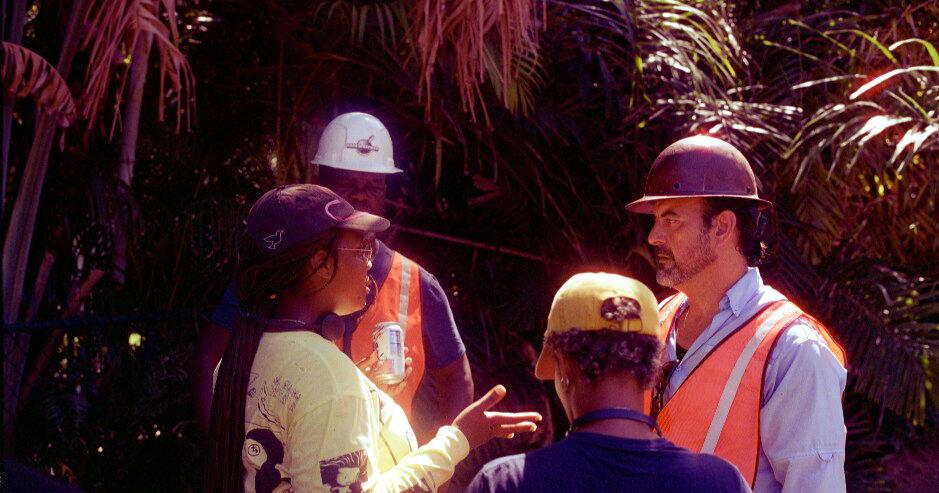
Miami-born filmmaker Monica Sorelle has been named a 2026 fellow by United States Artists, a Chicago-based arts funding organization. The associated award, a $50,000 unrestricted cash prize, is given to 50 fellows across the United States who exemplify groundbreaking artistic visions, unique perspectives within their fields, and evident potential for the award to make an impact on their professions and lives.
Sorelle is a Haitian-American artist based in Miami whose work explores alienation and displacement. Her feature directorial debut, Mountains (2023), premiered at the Tribeca Film Festival and was later featured at the Toronto International Film Festival. Her short films have won top prizes at the Miami Film Festival and have been selected at Sundance. Sorelle aims to preserve cultural traditions within Miami and the Caribbean through her work, with a focus on the African and Latin diasporas.
Her film career began in 2012 when she graduated with her BFA in film from the University of Central Florida. Initially working on the sets of short films, she was hired within the year to cast for background characters on the set of Moonlight (2016), the Academy Award-winning coming-of-age drama film written and directed by Barry Jenkins. There, she found a community of other young filmmakers in Miami who began working on each other’s projects with the goal of amplifying the city’s film scene together.

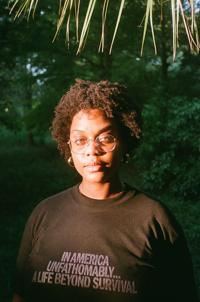
Monica Sorelle
(Monica Uszerowicz)
Sorelle came into the film scene in Florida around the same time the state’s film tax incentive program lapsed in 2016. According to Florida Politics, from 2010 to 2016, the Legislature allocated $296 million to provide tax credits to film studios and other production companies that shot primarily in Florida. Around Sorelle’s career debut, the state allowed its biggest financial incentive program to expire amid funding disputes, and the program has remained inactive for the last 10 years, leaving Florida as the only state in the Southeast without a statewide film incentive. A significant decline in the film and television industry followed, with many productions relocating to other states.
“We were sort of in this limbo of, what does filmmaking look like in Miami?” said Sorelle. “[Moonlight] made myself and a lot of my friends realize that we can stay here and make films here, and that the films about our histories and our neighborhoods are not only interesting but can be celebrated internationally. It renewed an interest in not just packing up and moving to LA but in building a solid foundation for regional, independent storytelling.”
Sorelle’s approach to filmmaking puts the amplification of truth before all else. Her observations of the city that she utilizes in her work are specifically geared toward being more multifaceted than the portrayals of Miami in popular cinema, where the city is often the background of crime drama and similar genres. She seeks to shed light on the changes that she sees in Miami, from sea level rise to gentrification.
“A lot of our storytelling is rooted in this sort of observation and awareness of how the city is changing, and a grief about it as well,” said Sorelle.
Sorelle argues that, as an artist representing a certain community, she has to be open to different perspectives, not only trying to get her own personal point of view across, but having room for everyone’s different experiences to shine through her work.
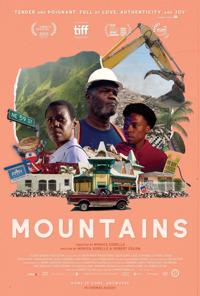
A film poster for Mountains (2023).
(Courtesy of Music Box Films)
“I think the best filmmakers have a reverence for all people, whether they agree with them or not, and I think that’s what makes cities like New York so cinematically interesting,” said Sorelle. “You can visit New York through cinema without having stepped foot there, and I would like to afford that same cinematic possibility to Miami.”
With the fellowship from United States Artists, Sorelle hopes to both create new work and support community members with their own projects, acting as a sounding board for people in her community that aren’t usually able to be heard on a national level.
“I’m just a girl from North Miami, you know what I mean?” said Sorelle. “So to be able to make something — to continue to make films in Miami that are so rooted here in our culture and our lived realities, and that are able to play in theaters across the United States in English and in Haitian Creole — is kind of unheard of.”

A still from Mountains (2023).
(Courtesy of Music Box Films)
One of Sorelle’s main inspirations comes from learning about Miami-Dade from her friends that live all over the county: from their different upbringings, cultural histories, and places of origin.
“I’m proud that myself and the community that I’ve built here have the tenacity to not only create these stories and stay here and build community, but to have an impact that’s greater than what we even imagined,” said Sorelle.
Find out more about Monica Sorelle and her work at monicasorelle.com. Her directorial debut, Mountains (2023), is available to watch through streaming services, including Amazon, Apple TV, and Youtube.