
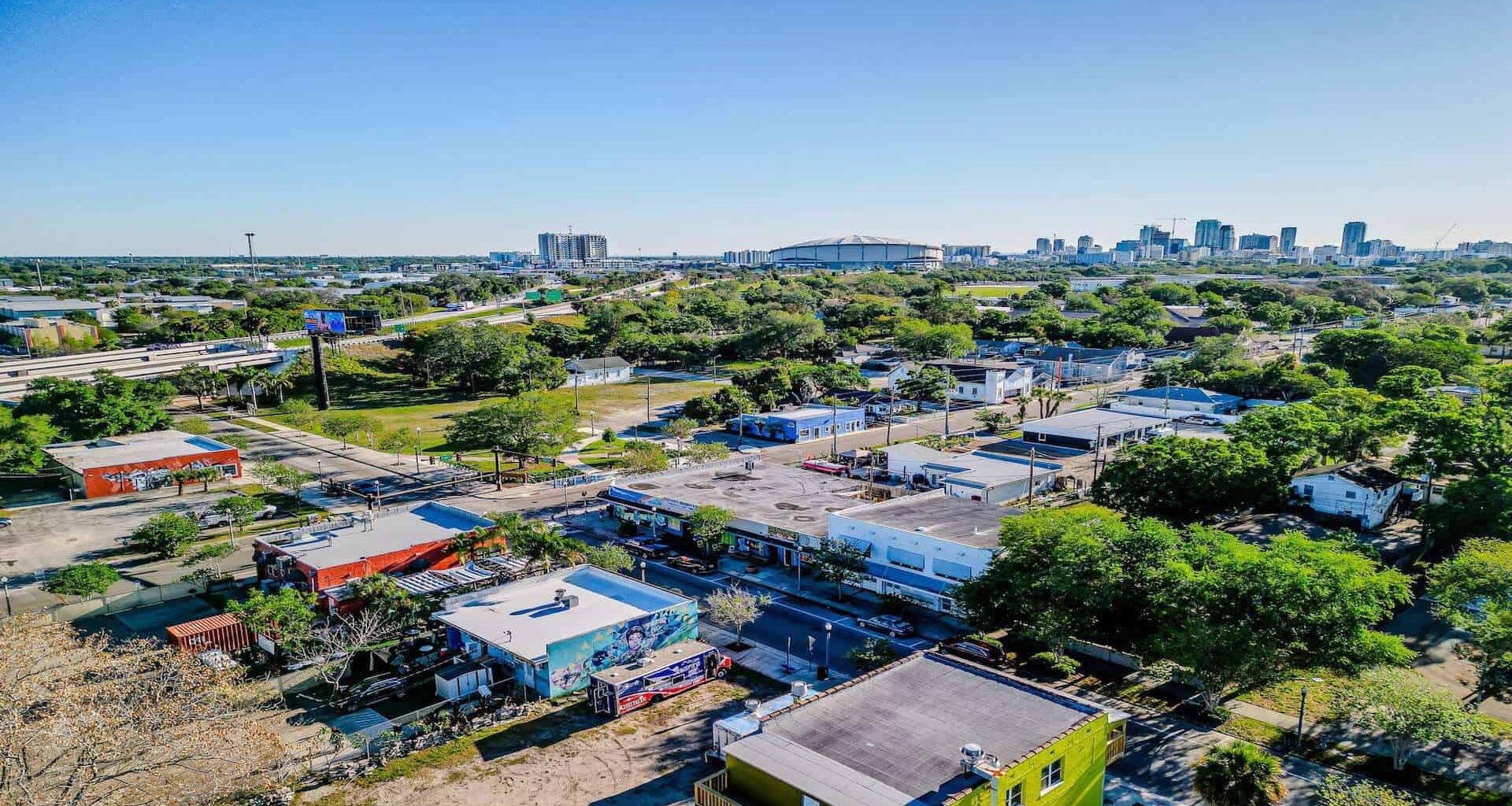

For years, talk of revitalizing St. Petersburg’s historic Deuces corridor has surfaced with little visible change. Now, momentum is beginning to build. During a recent Deuces Live community update at the Enoch Davis Center, city leaders shared progress on several major projects that together point to a more active, connected future for 22nd Street South.
The cultural and economic backbone of Black life in St. Pete, the Deuces flourished through the mid-20th century before the construction of I-275 disrupted the neighborhood and slowed investment. Today, with multiple developments advancing at the same time, the corridor is starting to reclaim its role as a place to live, gather, and build community.
New life for the historic Manhattan Casino
Among the most anticipated updates is the return of the Manhattan Casino, a landmark deeply tied to the history of the Deuces. The city has begun a full renovation of the building with the goal of reopening it as a publicly operated event venue.
The project will transform the space into a flexible, two-story facility capable of hosting everything from performances and celebrations to meetings and conferences. Plans include support spaces on the ground floor and a large ballroom upstairs designed to host several hundred guests. A prominent mural by local artist Ya La’ford will remain in place, preserving a visual connection to the site’s cultural legacy. Once renovations are complete, the city expects to begin scheduling events, with construction projected to finish in 2026.
Homeownership opportunities take shape on the Deuces
Residential development is also playing a key role in the corridor’s revival. Construction is underway on a new townhome project along 22nd Street South that will bring two dozen for-sale homes to the area. The development includes a mix of two- and three-bedroom units designed for first-time buyers, with each home offering private outdoor space and on-site parking.
The homes are being marketed to households earning below the area’s median income, creating a pathway to ownership for residents who may otherwise be priced out of the market. City funding helped move the project forward, and completion is expected within the next year and a half. Conversations about adding neighborhood-serving commercial space as part of the broader development are still ongoing.
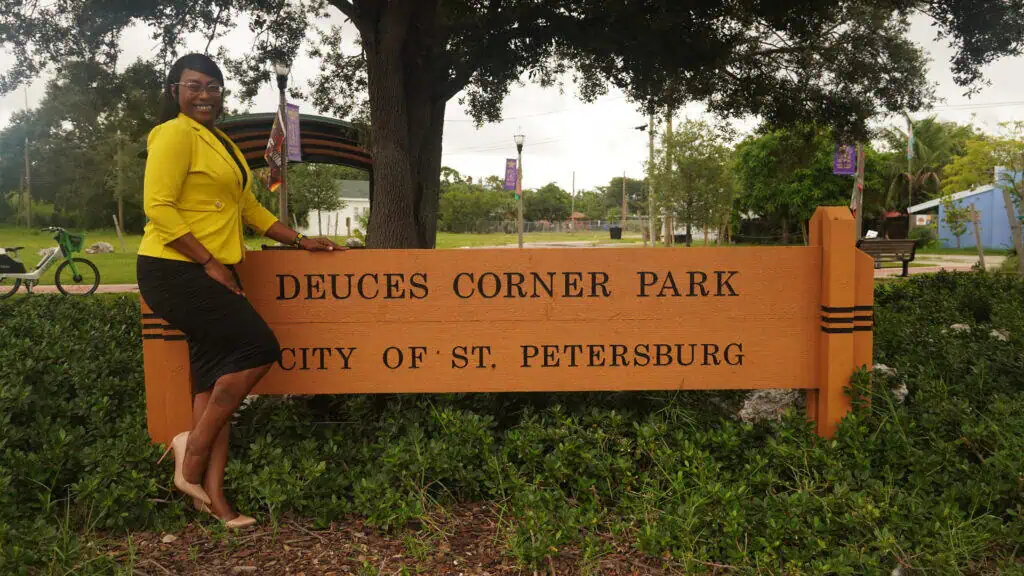 Latorra Bowles at the Deuces Corner Park sign| Photo via Kaylen Ross
Tangerine Plaza redevelopment moves closer to reality
Another long-discussed site on the Deuces is Tangerine Plaza, which is now closer to redevelopment following city approval of a lease option with a private development group. The proposal includes a mixture of affordable housing and a full-service grocery store, a combination many residents have long advocated for.
While the project team works through inspections and planning, they face a set deadline to secure financing, partners, and a grocery tenant. For Deuces Live Executive Director Latorra Bowles, this kind of investment is essential to transforming the corridor into a place people actively use throughout the day.
“I envision a corporate office here, new businesses set up, and a cultivated corridor with real foot traffic,” she says. “I want people walking on their lunch breaks, busy streets, better sidewalks, and brighter streetlights.”
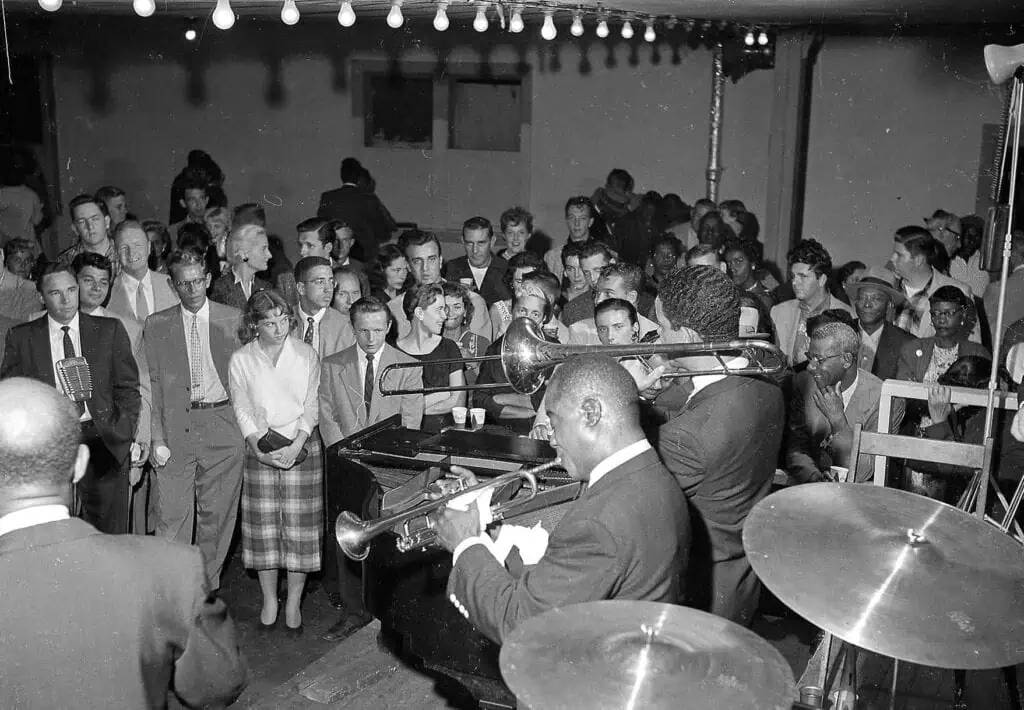 Louis Armstrong playing at the Manhattan Casino
More development and community investment ahead
Beyond these headline projects, additional efforts are underway to support long-term growth along 22nd Street South. The city is seeking proposals for a mixed-use development on a city-owned parcel known as the Merriwether site, with an emphasis on honoring the area’s history while encouraging equitable partnerships. At the same time, a collaboration with Habitat for Humanity will bring dozens of affordable townhomes to the corridor, expanding housing options for families looking to put down roots in the neighborhood.
Residents have also been clear that revitalization is about more than new buildings. Community priorities include safer streets, improved sidewalks, better lighting, enhanced landscaping, and public spaces where people can gather. Improvements to bike infrastructure, road conditions, signage, and zoning are also seen as essential to creating a corridor that feels active, accessible, and welcoming.
