
By: Staff Writer | January 15, 2026 | 12 min. read |
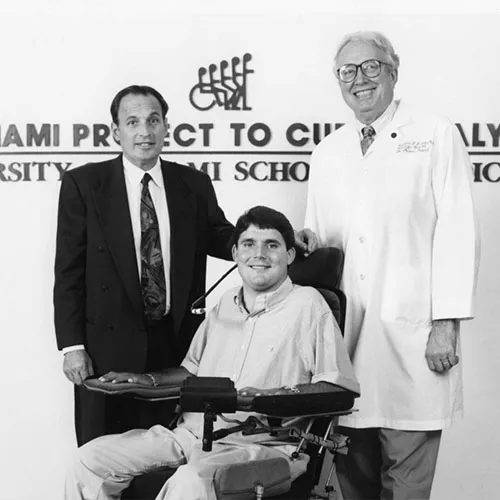
In 1985, Barth Green, M.D., world-renowned neurosurgeon, and Nick Buoniconti, NFL Hall of Fame linebacker, joined forces and founded The Miami Project to Cure Paralysis after Nick’s son, Marc, sustained a spinal cord injury during a college football game. Since then, research at The Miami Project has changed the landscape of knowledge and therapeutic strategies for spinal cord injury and traumatic brain injury.
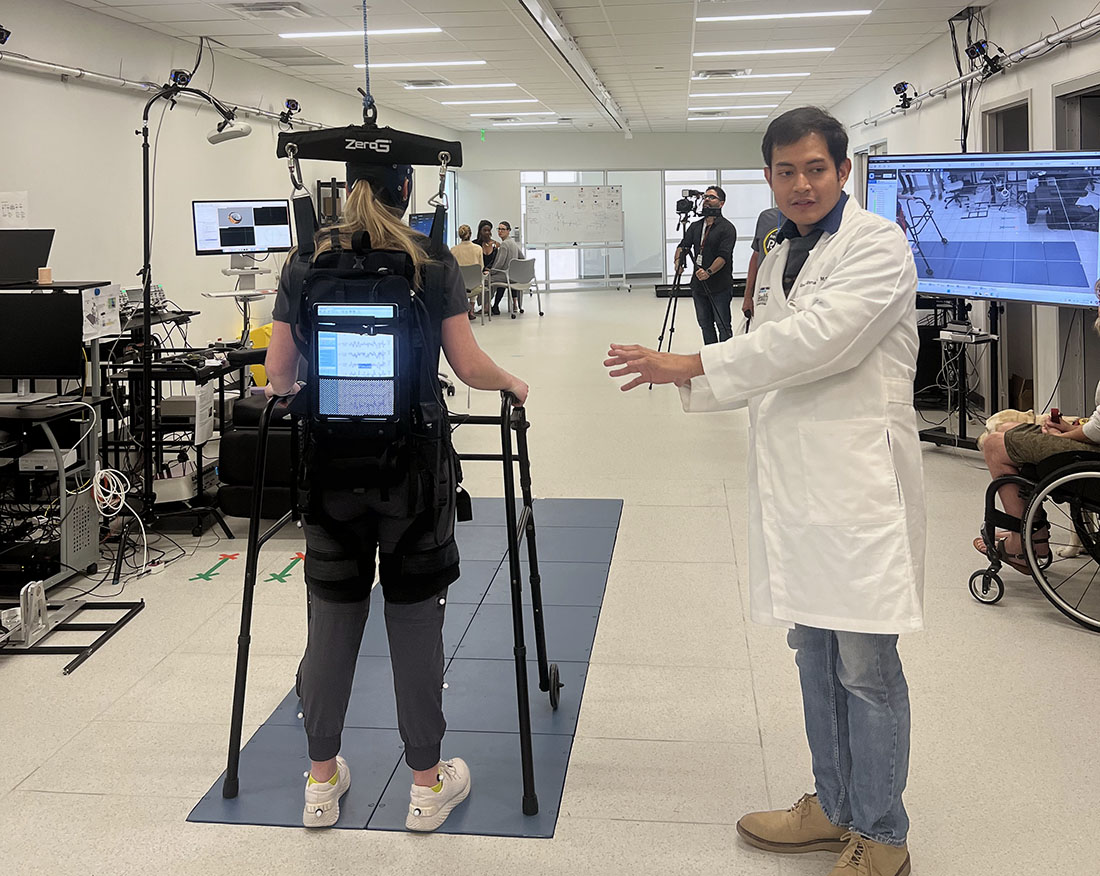
Neurorehabilitation has long been a focus of researchers and clinicians at The Miami Project. Take a look at some of the high points in the program’s history.
1985
The Miami Project
The Miami Project to Cure for Paralysis launches. Miami Dolphin Nick Buoniconti, whose son was paralyzed during a football game, joined Founder Dr. Barth Green to create a clinical and basic science research enterprise seeking the cure for paralysis.
1984
Quality of Life
Miami Project researchers launch significant projects focused on neuropathic pain, spasticity, blood pressure regulation, obesity and endocrine systems dysfunction.
1989
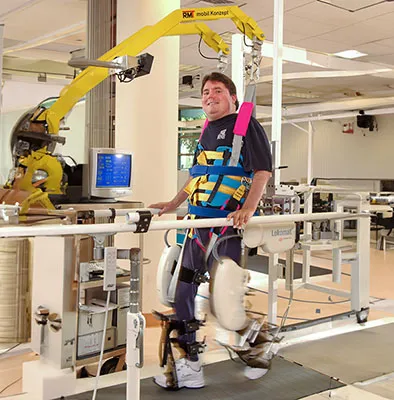
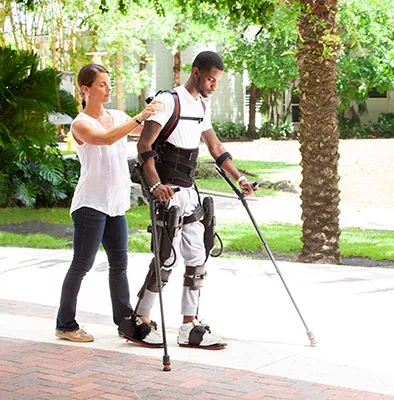
Working on Walking
Miami Project researchers conduct intensive walking and gait training research, using the newest technological advances for motor and sensory recovery, including suspensory ambulation systems and robotic exoskeleton systems for upright walking. At the same time, Drs. Blair Clancie and Edelle-Field Fote continue early neuromodulation research started by Dr. Bernard Brucker.
2000
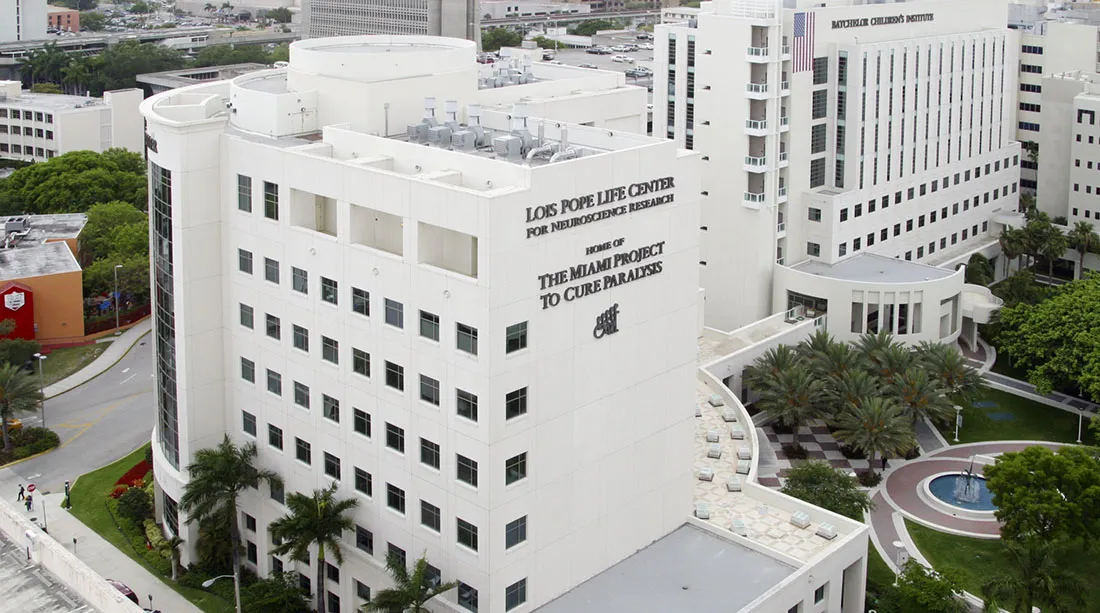
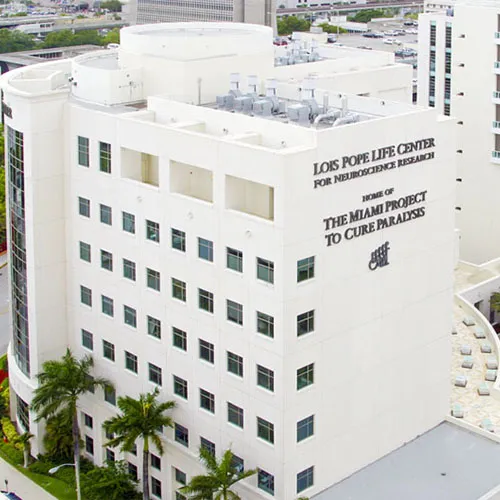
Lois Pope Life Center
With the help of Lois Pope, the Buoniconti Fund, the state of Florida and the University of Miami, the Lois Pope Life Center is built. It would become the new home of The Miami Project and a center for neuroscience research.
2012
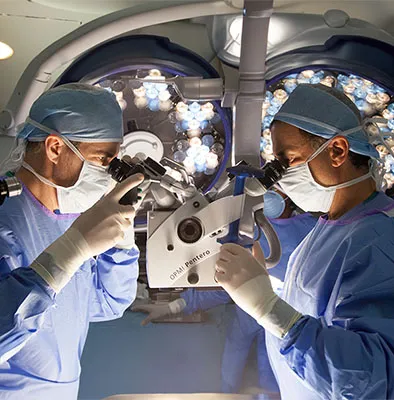
Schwann Cell Implantation
The Miami Project is approved for Schwann cell implantation clinical trials by the FDA. Researchers implant the first patient with his own Schwann cells in the phase 1 trial.
2020
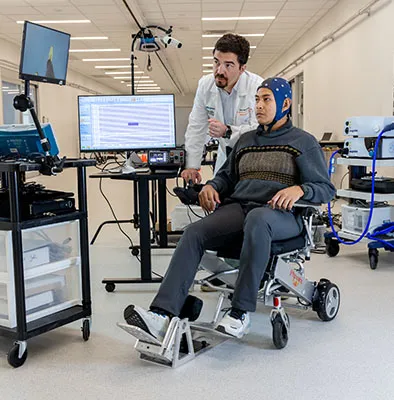
Christine E. Lynn Rehabilitation Center
Buoyed by the generosity of Christine Lynn, the Christine E. Lynn Rehabilitation Center opens, providing Miami Project researchers with 25,000 square feet of dedicated research space. Dr. David Gater is named medical director and emphasizes combining clinical care with state-of-the-art research.
For more than four decades, the University of Miami Miller School of Medicine has been a global leader in neurorehabilitation research. At the heart of this innovation is The Miami Project to Cure Paralysis, a multidisciplinary initiative that has transformed the landscape of spinal cord injury (SCI) treatment and recovery.
The Early Years: Bold Beginnings
In the 1980s, researchers at The Miami Project began exploring untested rehabilitation strategies for SCI, including microprocessor-controlled electrical stimulation of paralyzed muscles. These early studies, conducted in the basement of Jackson Memorial Rehabilitation Center, aimed to improve both motor function and cardiovascular health.
Mark Nash, Ph.D., professor of neurological surgery and physical medicine and rehabilitation, recalled the era as “exciting and daring,” driven by the vision of Dr. Barth Green to create a center dedicated to translating bold new treatments into clinical practice.
Building a Research Powerhouse
The 1990s marked a turning point with the establishment of the Department of Physical Medicine and Rehabilitation. The momentum continued into 2000 with the opening of the Lois Pope LIFE Center, a seven-story facility funded by philanthropist Lois Pope, the Buoniconti Fund, the state of Florida and the University of Miami.
The first floor of the LIFE Center became a hub for clinical neurorehabilitation studies, featuring a lifestyle center equipped for supervised exercise and research participation. Investigations into neuropathic pain, spasticity, obesity and male fertility flourished, alongside cutting-edge technologies like robotic exoskeletons and suspensory ambulation systems.
A Vision Realized: Christine E. Lynn Rehabilitation Center
In 2018, Jackson Memorial Hospital began planning a state-of-the-art rehabilitation hospital. Thanks to a generous donation from longtime supporter Christine E. Lynn, the Christine E. Lynn Rehabilitation Center was born. Opened in 2020, the facility includes 25,000 square feet of dedicated research space across three floors.
This expansion enabled The Miami Project to deepen collaborations with departments such as physical medicine and rehabilitation, neurology and biomedical engineering. Clinical researchers began recruiting participants for studies targeting both acute and chronic injuries to the spinal cord, brain and peripheral nerves.
Navigating Challenges and Growth
The COVID-19 pandemic in early 2020 temporarily halted many research activities. However, the arrival of David Gater, M.D., Ph.D., as chair of the Department of Physical Medicine and Rehabilitation brought renewed energy. Dr. Gater, a federally funded expert in SCI-related obesity and metabolic disease, helped expand research programs until his untimely passing in 2024.
Today, under the leadership of Leslie Morse, D.O., an internationally recognized expert in SCI-induced osteoporosis, the department continues to thrive. Dr. Morse’s appointment in 2024 has further strengthened the center’s commitment to mechanistic-based therapies and interdisciplinary collaboration.
Advancing Neuromodulation and Brain-Computer Interfaces
The Miami Project has long been at the forefront of neuromodulation research. Early studies by Drs. Blair Clancy, Edelle Field-Fote and Monica Perez explored techniques like transcranial magnetic stimulation and epidural stimulation to activate residual neural circuits.
Currently, Matija Milosevic, Ph.D., assistant professor of neurological surgery at the Miller School and director of neuromotor rehabilitation at The Miami Project, leads efforts to refine electrophysiological tools for mapping nervous system damage and evaluating novel interventions. Pain research led by international scholar Eva Widerstrom-Noga, D.D.S., Ph.D., professor of neurological surgery at the Miller School, continues to address the pervasive issue of post-SCI pain.
In 2023, The Miami Project participated in the groundbreaking Uplift study, a 14-center clinical trial evaluating transcutaneous stimulation for upper extremity function. Led by James Guest, M.D., Ph.D., professor of neurological surgery at the Miller School, and Dr. Morse, the study reported significant improvements in hand function, sleep and pain.
The Future: Brain-Computer Interfaces and Beyond
Brain-computer interface (BCI) research is one of the most exciting frontiers. In 2021, Miami Project researchers conducted their first BCI study, implanting a sensor strip on the brain’s motor cortex to control a hand device. The subject successfully used thought to manipulate objects and even drive a car.
In 2025, The Miami Project was selected as the second U.S. site for Neuralink’s PRIME study, a clinical trial exploring the feasibility of thought-controlled devices for SCI and ALS patients. Led by Allan Levi, M.D., Ph.D., professor and chair of the Department of Neurosurgery, Jonathan Jagid, M.D., professor of clinical neurological surgery, neurology and orthopedics and rehabilitation, and Michael Ivan, M.D., associate professor of neurological surgery, this initiative represents a major leap forward in restoring lost function.
A Bright Horizon for Neurorehabilitation
Today, the Christine E. Lynn Rehabilitation Center, Jackson Health System and the Miller School are nationally recognized for excellence in patient care and clinical research. The lifestyle center, now adjacent to a therapeutic aquatic facility, supports studies in physical activity, nutrition and mindfulness.
Clinical trials continue to explore interventions for motor recovery, cardiovascular health, male fertility and neuropathic pain. The Oneness program, a collaboration between the Miller School and Jackson Memorial Hospital, streamlines patient recruitment for clinical trials, enhancing research efficiency.
With ongoing support from federal agencies, private donors and industry partners, The Miami Project remains committed to its mission: developing evidence-based interventions that promote neural repair and improve quality of life for individuals with SCI and related conditions.
Tags: brain-computer interface, Christine E. Lynn Rehabilitation Center, Department of Neurological Surgery, Department of Physical Medicine and Rehabilitation, Dr. Allan Levi, Dr. James Guest, Dr. Jonathan Jagid, Dr. Leslie Morse, Dr. Matija Milosevic, Dr. Michael Ivan, Dr. W. Dalton Dietrich III, Lois Pope, Marc Buoniconti, neurological surgery, Nick Buoniconti, physical medicine and rehabilitation, spinal cord injuries, The Buoniconti Fund, The Miami Project to Cure Paralysis