
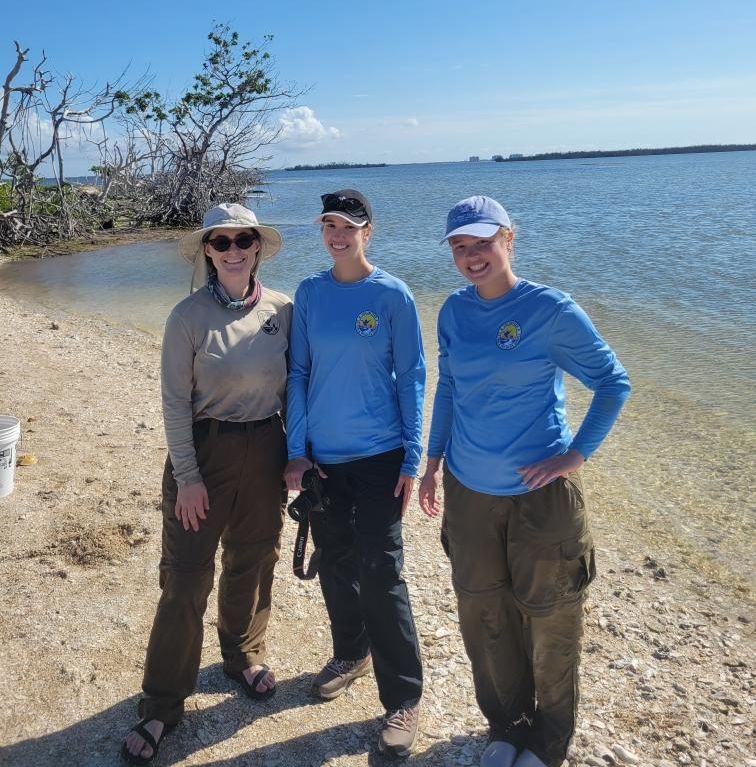
J.N. “Ding” Darling National Wildlife Refuge biological science technician Avery Renshaw recently reported on the Sanibel refuge’s biology activities.
Givney Key, an important bird rookery island that is part of the Matlacha Pass National Wildlife Refuge (NWR) and the “Ding” Darling complex, has received a much-needed helping hand in the form of about 700 newly planted mangrove trees. Many local mangrove islands, like Givney, experienced extensive damage and tree mortality from recent hurricanes and tropical storm events. This has caused island erosion and a loss of important nesting habitat for many bird species, including herons, egrets, brown pelicans and shorebirds.
Unfortunately, these islands have struggled to recover naturally, indicating the need for restoration efforts to try to help that recovery process. Recently, refuge staff and partners provided mangroves and planted red, black and white mangroves on the island, along with the “Ding” Darling Wildlife Society-Friends of the Refuge (DDWS) and volunteers from the America’s Boating Club of Sanibel-Captiva. The roots of the new trees will help stabilize island sediments and reduce further elevation loss.
Protecting and restoring mangrove habitats is essential for the communal well-being of Southwest Florida, as they provide many ecological, cultural and ecosystem benefits. Mangrove ecosystems serve as essential habitat for marine and coastal species; help improve water quality; and support subsistence, recreational and commercial fisheries. They also provide protection against the negative impacts of climate change by sequestering and storing carbon dioxide from the atmosphere and protecting coastlines from erosion and storm damage.
The planting was part of an ongoing effort between the refuge and Sanibel-Captiva Conservation Foundation’s Coastal Watch to restore target refuge-owned rookery islands. During the federal government shutdown last year, Coastal Watch, MANG and Captains for Clean Water volunteers also planted about 700 mangroves on Black Skimmer Island in the Matlacha Pass NWR.
In 2026, remember to slow down and acknowledge the incredible gifts we receive from the natural world every day. Indigenous worldviews recognize and teach us our kinship with nature and the interconnectedness of all of earth’s beings means it is both our responsibility and honor to reciprocate that relationship and give back to nature.
Should you wish to practice reciprocity by showing our mangrove kin some love, more volunteer opportunities to participate in mangrove island restoration efforts will be advertised this year. Additionally, you can help to raise the mangroves that often get planted at refuge restoration sites through Coastal Watch’s Adopt-A-Mangrove program. For information about the program, visit https://sccf.org/adoptamangrove/.