
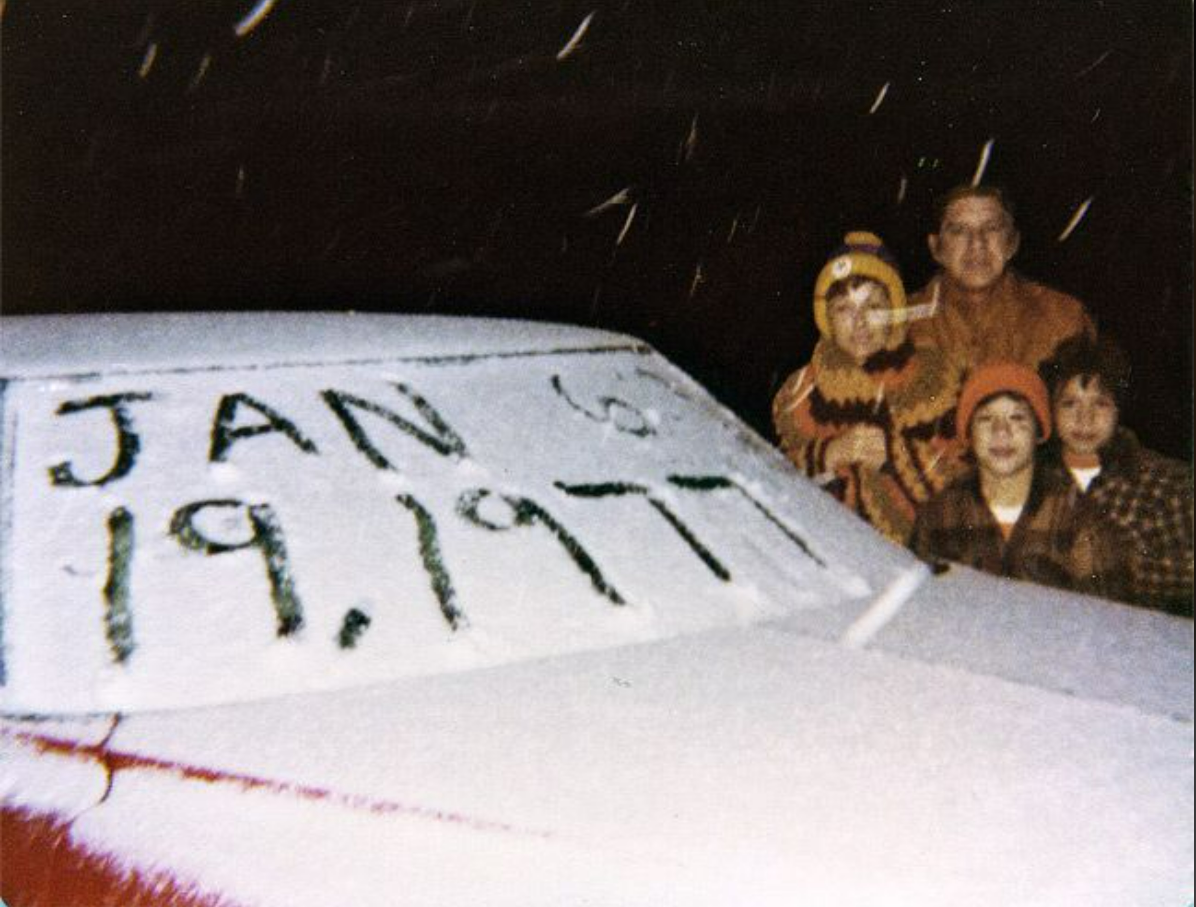
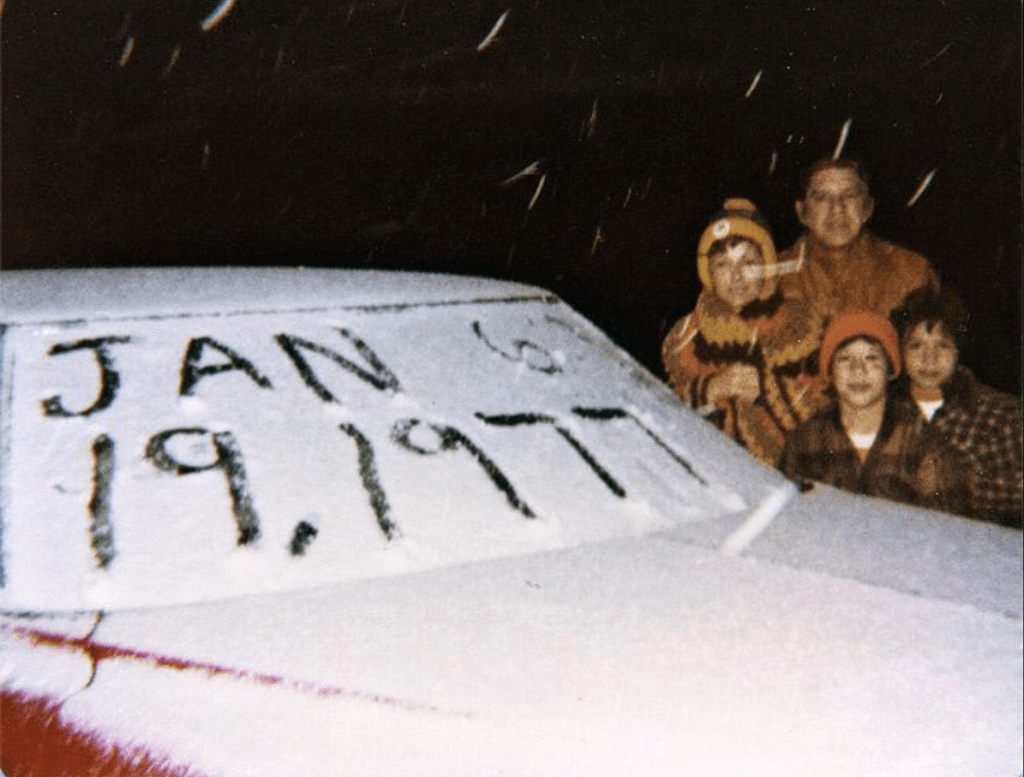
 An unknown family made this photo in Miami-Dade County the day it snowed there.
Photographer: unknown. Source: Reddit
This week has brought some of the coldest weather in quite a long time to the Sunshine State, with people bundling up at night as though they were headed out onto the frozen tundra. It is a bit chilly, but truth is, it could be far, far worse. Many of us remember when it was just that.

Forty-eight years ago this week, South Florida experienced something so improbable, so cosmically unlikely, that newspapers printed the kind of headlines normally reserved for moon landings and alien invasions.
It snowed.
On the morning of January 19, 1977, residents of Fort Lauderdale, Miami, and points south woke up to temperatures in the low 30s—already an affront to the natural order—and then watched in disbelief as actual frozen precipitation began drifting down from the sky. The Fort Lauderdale News didn’t bother with subtlety. Its front page simply screamed: “SNOW!”
The Miami News went even harder, running “Snow in Miami!” in letters usually saved for armistice announcements, with a helpful subhead declaring it a “Souvenir edition: The day that couldn’t happen.”
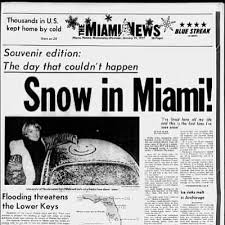
To be clear, this was not a blizzard. It wasn’t even a dusting. The National Weather Service officially recorded a “trace”—weather-speak for “we saw it, but our rulers are useless here.” The flurries started around 8 a.m. and were gone by 9:30. The snow melted on contact with the ground, because the ground was still, after all, in Florida, and wanted no part of this nonsense.
But for those 90 magical minutes, chaos reigned.
People abandoned their cars in the middle of Hallandale Beach Boulevard. Teachers marched entire classrooms outside to witness what many children—and plenty of adults—had never seen in their lives. Phone switchboards at local newspapers lit up like Christmas trees (which, ironically, had been put away three weeks earlier because it was supposed to be warm).
The front page of the Fort Lauderdale News helpfully pointed out that it was colder that day in Fort Lauderdale than in Anchorage, Alaska. The Palm Beach Post decorated its masthead with cartoon icicles and ran the headline “It’s COLD, Snow Foolin’,” which was the exact level of dad-joke energy the moment demanded.
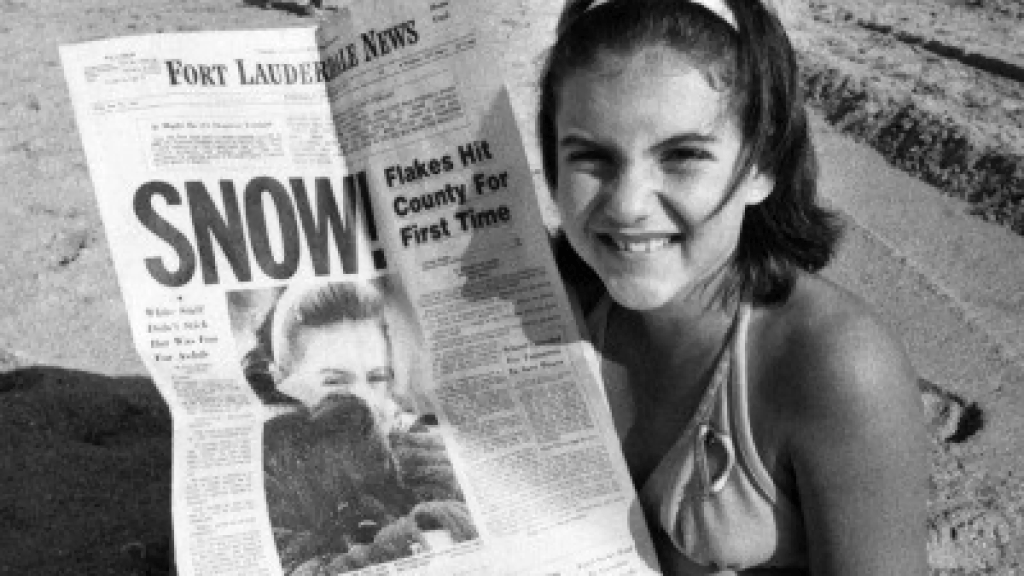 An infamous Florida Sun-Sentinel photo on Ft. Lauderdale Beach.
The timing was especially awkward for one James Earl Carter of Plains, Georgia. The following day—January 20, 1977—he was scheduled to be inaugurated as the 39th President of the United States. His big moment got bumped below the fold in South Florida, because who cares about the peaceful transfer of power when you can watch snowflakes land on a palm tree?
Meanwhile, the real devastation was happening in the citrus groves. Temperatures plunged to 28 degrees in Fort Lauderdale, 27 in West Palm Beach, and a brutal 23 in Homestead. The cold snap obliterated 35 percent of Florida’s citrus crop and wiped out 95 percent of vegetables. Statewide agricultural losses hit $350 million—about $1.8 billion in today’s dollars.
But for one brief, shining morning, none of that mattered. South Floridians had snow. Real snow. Snow they could see with their own eyes, even if they couldn’t exactly build a snowman with it.
It hasn’t happened since.
Every few years, a cold front sweeps through and meteorologists field the inevitable question: could it snow again? The official answer is yes, technically, it could. The unofficial answer is don’t hold your breath.
But if you were there on January 19, 1977—standing in your driveway in shorts and flip-flops, watching frozen water fall from the sky like the universe had finally lost its mind—you’ll never forget it.
And if you weren’t there, well, you’ll just have to take everyone’s word for it. The snow melted before anyone could prove anything.