
by Dawn Kitterman
TALLAHASSEE — A bill that would revise the 2003 charter for the Manatee County Port Authority has begun moving through its assigned House committees. HB 4073, sponsored by Florida Rep. Bill Conerly (District 72), would convert the local Port Authority from a dependent special district under the oversight of the Manatee County Commission to an independent special district with most authority members appointed by the governor.
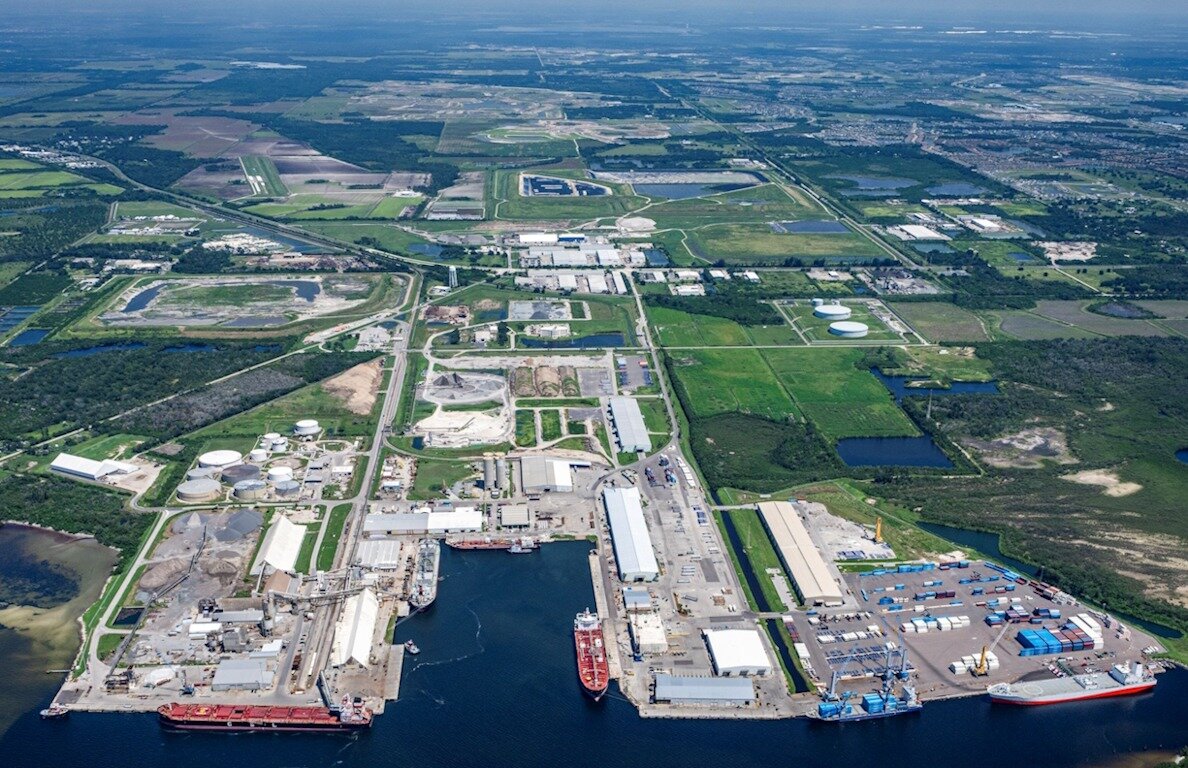
Currently composed of the same seven elected officials who serve as Manatee County Commissioners, the Port Authority board is the governing body of Seaport Manatee.
However, HB 4073 would change the governing body’s structure, reducing the authority board to five members: four appointed by the governor and one, a Manatee County Commissioner, chosen and appointed by the county commission.
It’s been roughly three months since Port Authority members, during an October meeting of the board, cast a tie vote on whether to give support to legislative action that would revise the authority’s charter and governance structure.
Port Authority Chairman Mike Rahn introduced a resolution for members’ consideration, communicating his strong support for the creation of an independent special district.
SeaPort Manatee state lobbyist David Ramba provided authority members with a presentation on the proposal. Ramba told commissioners that the bill’s language was drafted by port staff based upon input from “some members of the Florida House and Senate,” though he did not name specific state members.
Now that the bill has been filed in the House, the lobbyist disclosure information on the Florida House of Representatives website lists multiple lobbyists from Ramba Consulting Group as engaged on the measure in Tallahassee.

A lengthy discussion and deliberation of authority members followed the presentation. At times, dialogue grew tense amid disagreement among some members, with half the present members unwilling to lend their support.
Commissioners George Kruse, Amanda Ballard, Tal Siddique, Carol Felts, Jason Bearden, and Rahn were present for the vote, and Commissioner Bob McCann was absent.
On one side of the debate, Rahn, Kruse, and Ballard agreed that a change from a dependent to an independent special district might provide the authority with members who had greater expertise than that of commissioners. This change could mean more professional business planning and oversight, leading to increased financial and growth success, they argued.
But Felts, Siddique, and Bearden were not comfortable casting their vote in support of a measure they said they were not well-informed about.
While the three in opposition expressed nuances in their positions, the overall sentiment seemed to be that they each felt unprepared to cast a vote on the matter and preferred more time and information before making a decision.
Bearden expressed feeling blindsided, alleged the measure was being rushed, and even implied there could be a hidden agenda, motivated by potentially bad “backroom” deals.
Siddique called the entire proposal “not well thought out,” and added that the fact that he wasn’t provided with a briefing ahead of being asked to vote was “a major problem.”
In the end, the vote to approve a resolution that would have given the authority’s support for a bill, to be presented two weeks later before the Manatee County Legislative Delegation, failed 3-3 in a tie.
Despite the lack of majority support from the Port’s governing body, lobbyist Ramba and Authority Chairman Rahn appeared at the Manatee County Legislative Delegation meeting to encourage the introduction of a bill revising the authority’s charter during the legislative session.
During public comment, Rahn acknowledged the tie vote authority members earlier in the month, and instead listed several past commission and authority chairs who offered their names for the record in support of an independent district bill, including Kevin Van Ostenbridge, Vanessa Baugh, Reggie Bellamy, and James Satcher.
Another former Port Authority chairman also approached the delegation under public comment; his opinion differed from that of Rahn and other proponents.
TBT Publisher and former Manatee County Commissioner Joe McClash, one of the longest-serving authority members, called it “unprecedented” to have a serving authority chairman go before the delegation to speak in support of a measure that failed to gain majority support of authority members.
McClash questioned the timeline and requested that the delegation consider pausing further action on any legislation until authority members and members of the community are better informed on the issue, suggesting a bill might be more appropriate next session, in 2027.
McClash also shared his concern that removing local government oversight could limit environmental protections. One of the significant advantages of having the authority organized under the county government, said McClash, was that “we were able to protect the environmental areas of Manatee County and Tampa Bay” through policies that were aligned with Manatee County Government.
But Senator Jim Boyd and representatives Will Robinson, Michael Owen, and Bill Conerly were all on the same page, and the Manatee County Legislative Delegation voted to advance the bill.
As of last week, HB 4073 had arrived in the Intergovernmental Affairs Subcommittee, with stops in the Ways and Means Committee and State Affairs Committee scheduled ahead.
If Conerly’s measure were to make it through the House, and a companion measure were adopted in the Senate, the measure could become law this year. At that point, Gov. Ron DeSantis would be positioned to make his first appointments to the authority in the fall, with initial terms beginning October 2026.
DeSantis’ choices in gubernatorial appointments have historically drawn scrutiny throughout his tenure, particularly from critics who argue that many of his choices are driven more by political loyalty and ideological alignment than by qualifications or experience.
HB 4073 includes language governing who may qualify for an appointment to the Port Authority board. While Seaport Manatee is located in northern Manatee County, near the mouth of Tampa Bay in Palmetto, the bill allows gubernatorial appointees to be residents of either Manatee or Sarasota County. The Sarasota–Manatee county line lies roughly 20 miles south of the port by car.
The expanded eligibility is a significant change, as it would allow appointments from outside Manatee County, which represents a departure from the current structure under county oversight
The bill’s provisions also provide that “no more than two of the (Port Authority) board members shall be persons who are primarily engaged in the maritime business.”
The Manatee County Port Authority was structured as a dependent special district by the Florida Legislature in 1967. The intent was to ensure coordination with the county as the port was developed, providing a governance structure that allowed the port to operate as a separate entity in day-to-day operations while remaining accountable to county commission oversight.
In 2003, HB 829 consolidated all prior acts codifying the current dependent charter as it exists today.
Beyond restructuring its governance model, the proposed legislation revises how the Port Authority’s powers are defined, adding significant new language to the decades-old charter.
As filed, HB 4073 is roughly 43 pages long—more than twice the length of the 2003 charter it would replace. Many of its sections expand on existing language or definitions, though some are entirely new.
For example, Section 4, which defines “Port facilities,” includes roughly 20 lines of expanded text, some definitions providing more specificity or expanding on the existing ones, while others introduce entirely new categories compared to the current charter.
Under HB 4073, facilities would be expanded to include the following additional definitions, “…waterways, ferries, slips, quays, terminals, sidings, shipyards, moles, canals, cold storage plants, tidal basin, trainways, cable ways, deports, warehouses, industrial and manufacturing plants, icing plants, refrigeration plants, precooling plants, conveyors, appliances for economical handling, storage, and transportation of freight and handling passenger traffic… all other harbor improvements and facilities which the Port Authority may determine to be necessary…”
The 24 titled sections, with included proposed revisions, cover various aspects of port operations and powers, including powers and authority to acquire, lease, and dispose of property, strategic decisions regarding development, expansions, improvements, maintenance, site security and policing, bond issuance, securing financial instruments to fund projects, among other responsibilities.
While the number of newly added or expanded sections or provisions appears significant in scope, such broad expansion may not be unexpected given that this is the first major update to a charter more than 20 years old and that it converts the Port Authority from a dependent governance structure to a significantly different independent governance model.
That said, in recent years, a growing number of proposals in Florida’s legislative sessions have faced scrutiny from constituents, and even locally elected officials, over concerns about state encroachment on home rule.
Click here to review the full text of HB 4073 as originally submitted, or visit www.flsenate.gov/Session/Bill/2026/4073/ to track its progress.