
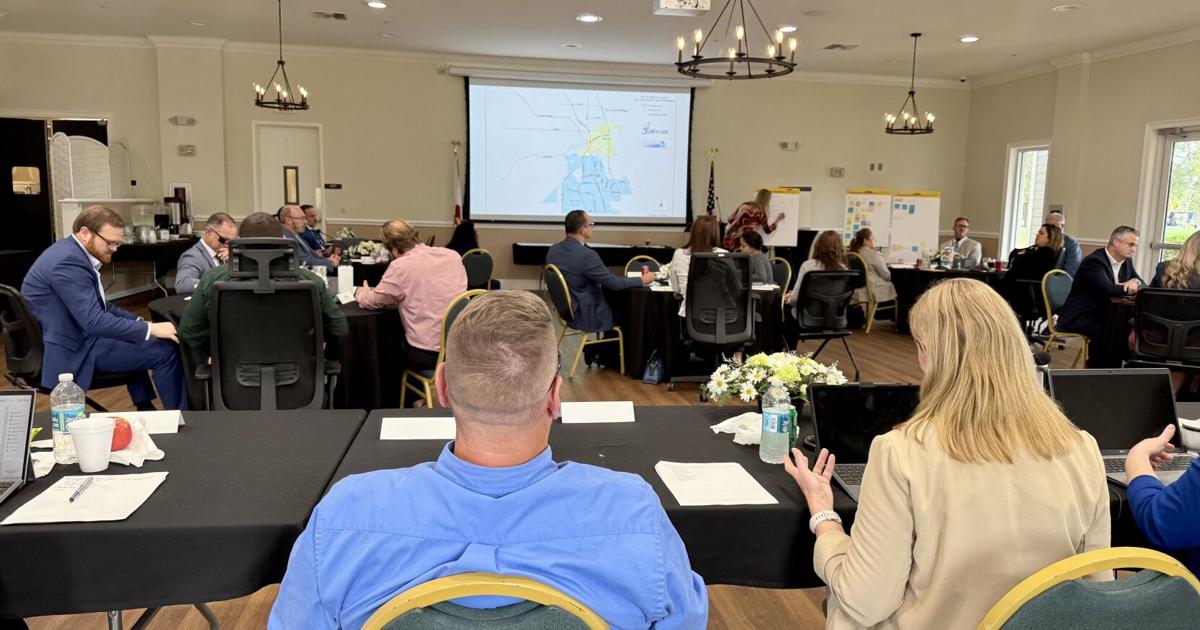
PORT ST. LUCIE — On Wednesday, Jan. 14, the City of Port St. Lucie and St. Lucie County held a joint working session from 9 a.m. to 4 p.m. at the Saints, bringing together senior leadership from both governments. Attendees included the city manager and county administrator, the mayor, council members, county commissioners, city and county attorneys, and various department heads.
The meeting focused on shared planning priorities and operational coordination, with state-level discussions about restructuring or eliminating property taxes providing a backdrop of uncertainty.
While the outcome of legislative proposals and potential ballot measures remains unclear, local governments continue evaluating how revenue changes could affect service delivery, infrastructure planning, and long-term financial stability.
Participants broke into smaller groups and addressed a range of issues affecting both jurisdictions. Key topics included solid waste capacity and long-term disposal planning, including future needs and the interlocal cooperation required for large-scale infrastructure solutions. The group also discussed emergency operations coordination, cold weather shelter planning, communications, and challenges related to homeless services, highlighting the need for consistent protocols and cross-agency collaboration.
Leaders also reviewed growth and boundary-related issues, including shared project impacts and annexation planning. To reduce duplication and improve transparency, participants discussed the value of a unified project tracking platform that could provide consistent public updates and timelines across major initiatives, helping residents better understand project status and responsibilities.
Parks and land planning were included as part of growth management discussions. A potential strategy raised during the session included Port St. Lucie acquiring school board property that currently has no entitlements, preserving it for long-term public use and possible future park development. Participants also addressed the strategic use of park impact fees and coordinated planning to expand recreational capacity and reduce pressure on county athletic fields.
Transportation and mobility planning were also discussed, including priorities for advancing road projects and aligning funding sources. Corridors referenced included Rangeline Road, Midway Road, and Walton Road, along with broader mobility policy coordination.
While the session did not produce final decisions, it reflected a shared intent to identify gaps, align priorities, and strengthen coordination through incremental steps. With continued population growth and evolving state policy considerations, ongoing city-county collaboration remains central to planning, communication, and project delivery across the region. The group will re-convene for future conversations.