
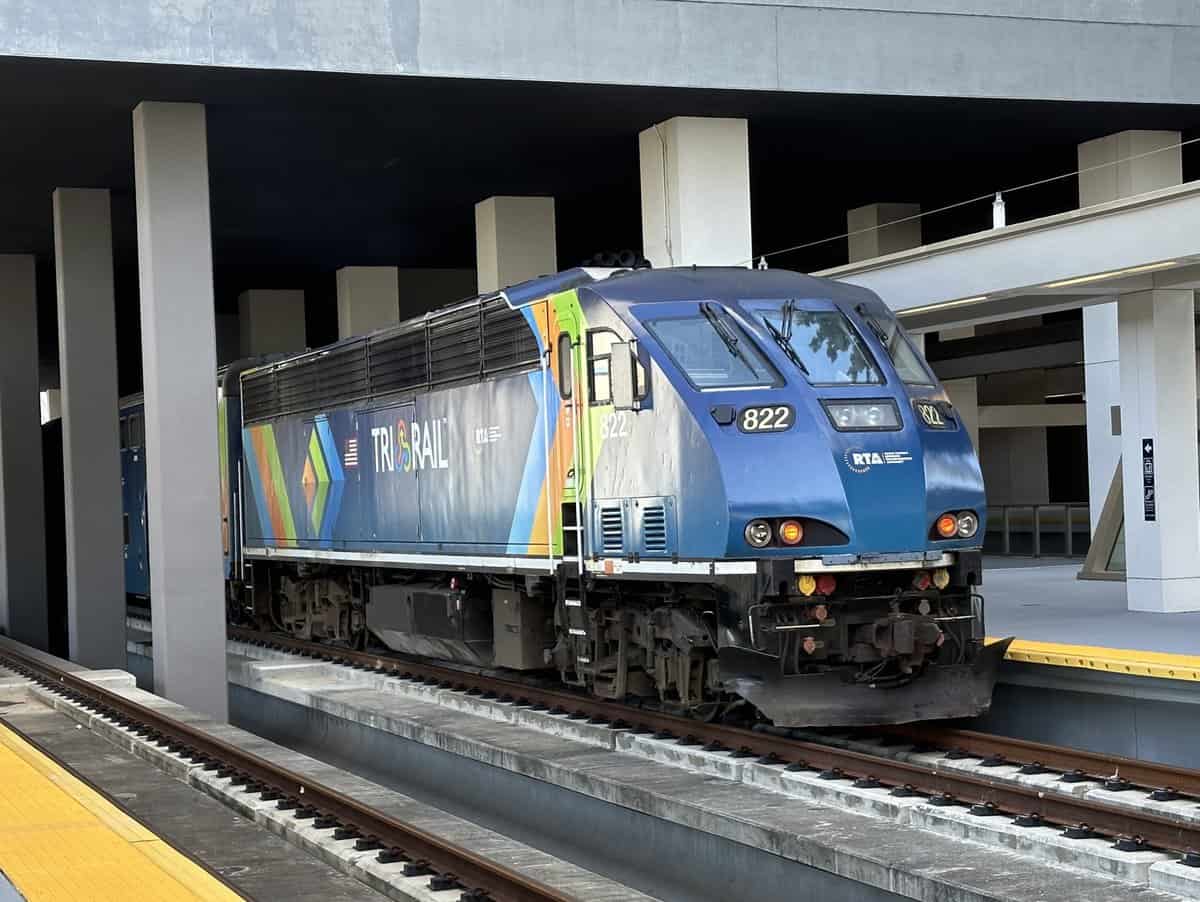
 By Phillip Pessar from Miami, USA – https://www.flickr.com/photos/southbeachcars/53515979425/, CC BY 2.0, https://commons.wikimedia.org/w/index.php?curid=147273119
The landscape of South Florida transportation is shifting rapidly this week as the region’s two major rail providers face vastly different futures. While the private high-speed rail Brightline has tapped a global industry veteran to lead its next phase of growth after a period of trouble, the publicly funded Tri-Rail is sounding the alarm over a massive budget shortfall that threatens its very existence. Both face an intense 2026, where serious choices need to be made.
Brightline Names New CEO to Navigate “Next Phase”
On Wednesday, Jan. 14, 2026, Brightline Holdings LLC announced a major shake-up in its executive suite. Nicolas Petrovic, a globally recognized rail leader and former CEO of Eurostar—the high-speed service connecting London and Paris—has been named the new Chief Executive Officer.
Petrovic takes the helm at a pivotal time. While Brightline’s revenue has surged following its expansion to Orlando, the company continues to navigate significant debt and operating losses.
The Transition: Petrovic succeeds Michael Reininger, who has been the face of Brightline’s development for over a decade. Reininger isn’t leaving the fold; instead, he will move to lead Brightline West, the ambitious $21 billion project aimed at connecting Southern California to Las Vegas.
The Mission: Petrovic is expected to focus on turning Brightline’s Florida operations toward long-term profitability and operational stability, leveraging his experience in the complex European rail markets. Recently Brightline has focused more on its potential as a commuter rail between West Palm Beach, Fort Lauderdale and Miami, but running more trains in the busy South Florida corridor and cutting the number of daily trips northward toward Orlando.
Tri-Rail Warns of Potential Shutdown Amid Budget Cuts
While Brightline looks toward expansion, Tri-Rail is fighting for survival. Despite serving a record 4.5 million riders in 2025, the South Florida Regional Transportation Authority (SFRTA) is facing a “looming cliff” due to drastic state funding cuts. This comes at a time where many leaders in the state including Governor DeSantis have talked about cutting property taxes as well as emphasizing road projects and managed toll lanes over public transportation both in terms of trains and buses.
The Florida Department of Transportation (FDOT) recently slashed its annual contribution to Tri-Rail from $42.1 million down to just $15 million. Combined with the expiration of federal COVID-19 relief funds at the end of 2026, Tri-Rail officials warn that the service could run out of money by July 2027.
The Local Impact: Boca Raton in the Balance
For Boca Raton residents who rely on the Yamato Road station, which is the busiest in the system, the stakes are high. Tri-Rail is currently asking Palm Beach, Broward, and Miami-Dade counties to each chip in an additional $10 million to bridge the gap.
Searching for Solutions
To combat the deficit, Tri-Rail is exploring “creative” revenue streams:
Transit-Oriented Development (TOD): Projects like The Colony at Boca Raton, a mixed-use development near the station, are designed to generate lease revenue.
Advertising: Residents can expect to see more “wrapped” trains as the agency sells high-visibility ad space to local and national brands.
What This Means for Commuters
For the time being, trains are running as scheduled. However, if the funding gap is not closed by the start of the next fiscal cycle, SFRTA Executive Director David Dech warns that service reductions—including the elimination of weekend or express trains—may be the only way to extend the timeline.
As the 2026 legislative session continues, all eyes will be on Tallahassee and local county commissions to see if a deal can be reached to keep the tracks hot for the region’s 14,000 daily commuters who rely on Tri-Rail.
At a time when affordability continues to be a touchy issue, losing mass transit in South Florida could spell disaster for the region’s workers and continued economic development.
Related