
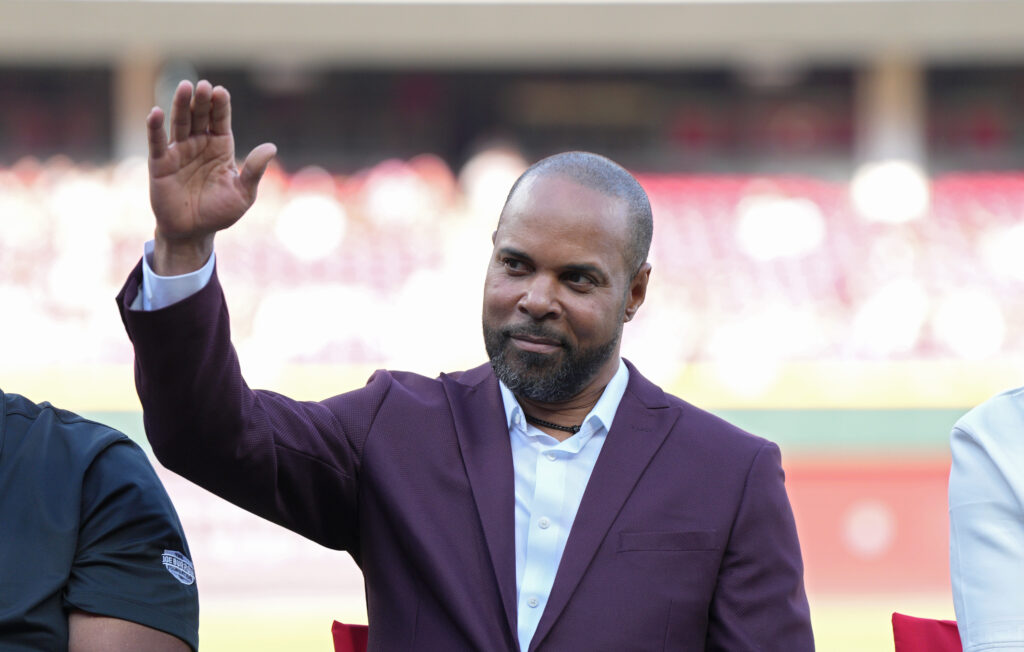
“I know when I was a kid, my mom and dad brought me and my brothers together, and the only commonality that we had was sport,” Larkin said. “Everybody had their individual thing that they loved to do. However, the one thing that my mom and dad did is church and sports, and so we spent time together, eating around the table, talking about sports.
“So you think about the Orlando franchise and people, and the mindset of people that actually come to Orlando. That dynamic of tourists that comes to Orlando, for the most part, is families.”
By comparison, Las Vegas will likely not manage that. The crowd may be older, and while they’ll be flush with finances to splurge, that spending will end with them specifically. With a family, the next generation of the sport will be served.
“I don’t know if you’re getting that younger fan base as much in those 40 million visitors that are going to Las Vegas,” Larkin said.
While MLB may want to grow the sport globally, the footprint of where the game is played is a completely different topic. The NFL and NBA are already considering some kind of expansion to Europe, but there are some within the MLB Players’ Association who would rather not think about those broader markets.
“I think there’s going to be some realignment, along with expansion,” Larkin explained. “There’s going to be a realignment in the game of baseball. One of the things that the players, at least the players I’ve spoken to, have talked to me about is less travel.”
Take the Seattle Mariners, who travel further than any other club. The AL West pennant winners will be the only team to eclipse the 50,000 miles traveled mark in 2026. Only five others – all from California – will travel at least 40,000 miles.