

From public markets to private credit and cross-border energy deals, Miami is emerging as a proving ground for tokenization beyond theory
For years, tokenization lived mostly at the edges of finance. It was discussed at conferences, tested in pilots, and debated in white papers. What it lacked were moments that felt, well, real.
That is starting to change, and Miami is increasingly where those moments are taking place.
At its core, tokenization is all about modernizing how assets move, settle, and are recorded. That evolution is pulling tokenization out of crypto-native circles and into conversations that look a lot more like traditional capital markets.
Few companies reflect that shift more clearly than Securitize, which is preparing to enter the public markets through a $1.25 billion SPAC deal.
Public markets put tokenization to the test
For Carlos Domingo, founder and CEO of Securitize, the move toward public markets reinforces what tokenization was always meant to represent.
“Tokenization is about transparency and modern market infrastructure, and public-market standards reinforce that with the same accountability,” Domingo said. “For us, that scrutiny builds trust and emphasizes that tokenization can and will operate at the same level as traditional capital markets, while improving them.”
Domingo frames tokenization as an upgrade to the financial ledger itself. Rather than relying on fragmented, legacy systems, blockchain provides a real-time record of ownership that can automate compliance, distributions, and corporate actions.
“Asset managers are choosing it because blockchain provides a more transparent, real-time record of ownership compared to legacy systems,” he said. “Tokenization enables faster settlement, more efficient operations and automation across compliance, distributions and corporate actions.”
Yet speed alone is not the full story. Domingo points to the layers of intermediaries and disconnected systems that still dominate capital markets.
“Even with faster settlement, much of today’s capital markets infrastructure is still fragmented and overly intermediated,” he said. “Tokenization addresses this by consolidating core functions onto a shared, real-time ledger, reducing the need for layers of intermediaries while preserving regulatory protections.”
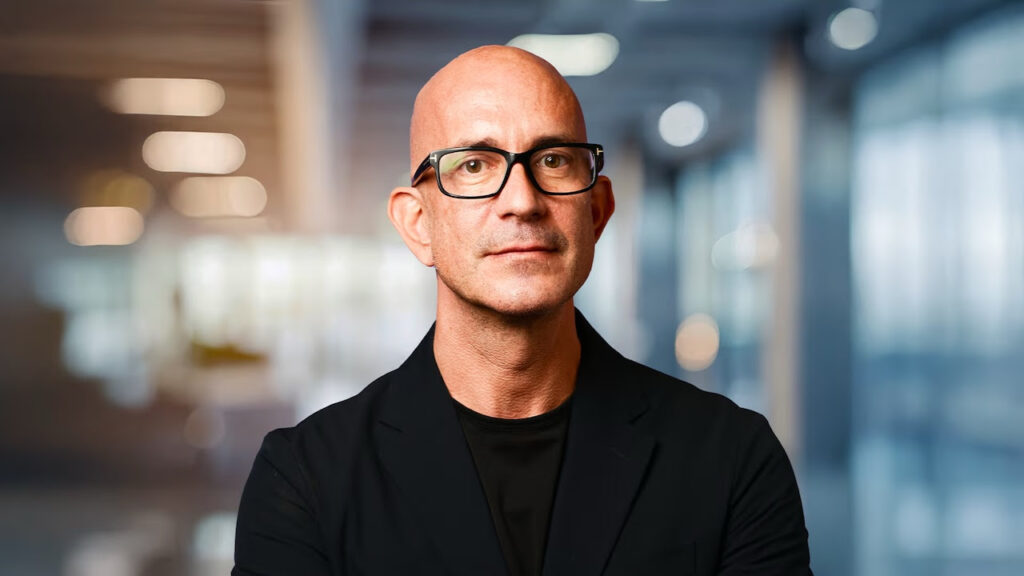 Carlos Domingo, CEO of Securitize
Regulation as a prerequisite, not an obstacle
For institutional players, regulation is not optional. Domingo argues it is the foundation of adoption.
“Asset managers don’t experiment with market infrastructure unless they have confidence it’s durable, compliant, and aligned with regulators,” he said.
Over the past year, regulators have become more explicit that tokenization can play a legitimate role in modern capital markets. That shift has moved institutions from observation to action, even as questions remain around standardization and long-term frameworks.
Tokenization in the wild: energy and cross-border deals
If Securitize represents tokenization at the level of market infrastructure, Global Settlement Network shows what it looks like in practice.
 Kyle Sonlin, CEO of Global Settlement Network
Founded and led by University of Miami graduate Kyle Sonlin, the Miami-based company recently facilitated a $75 million acquisition of a Latin American oil and gas facility using a fully tokenized capital stack.
“Tokenization is to capital what SPVs were to ownership: a standard wrapper that lets complex assets move through familiar legal and regulatory channels,” Sonlin said.
In the transaction, tokenized debt and equity moved alongside settlement in stablecoins. There were no banks and no wires.
“Tokenization doesn’t change the asset,” Sonlin added. “It changes how the deal and capital flows move.”
For Sonlin, the real gain is not just speed, but risk reduction. “When settlement takes weeks, everyone is exposed,” he asserted. “When settlement happens immediately, most of that risk disappears.”
That advantage is magnified in emerging markets, where access to reserve currencies and cross-border banking infrastructure can stall deals. “By leveraging tokenization, capital flows much more freely and efficiently while maintaining all relevant compliance standards that regulators expect,” Sonlin said.
Why commodities were ready first
Energy and commodities, Sonlin argues, were a natural fit for tokenization.
“These markets are already global, regulated, and capital-heavy. That’s exactly where better settlement makes an immediate difference.”
With sourcing often located in emerging markets and investors spread globally, tokenized transactions can materially reduce fees and friction. Sonlin also sees tokenization playing a growing role in commodity supply chains tied to hardware, AI, and national infrastructure.
“In the age of hardware and AI, the most important trend moving into 2026 and beyond is control of commodity supply chain pipelines,” he said.
The legal line between scalable and stalled
 Kate Lashley, Partner, Sidley
As tokenization moves from pilots to production, legal structure has become the dividing line between ideas that scale and those that do not.
“The most common mistake is treating tokenization as a technology experiment rather than a regulated financial product,” said Kate Lashley, a partner in the Miami office of global law firm Sidley.
Compliance, Lashley notes, depends on both the underlying asset and how the token is structured, distributed, and transferred. “Assuming that labeling or technological novelty determines the regulatory outcome is a risky mistake,” she said.
Regulatory clarity has improved, but much of it still comes through guidance rather than formal rulemaking. That leaves institutions cautious, even as interest accelerates.
Native on-chain credit, not digital wrappers
Maple Finance offers a different view of tokenization altogether. Rather than wrapping existing assets, the Miami-based company originates private credit directly on-chain.
 Sidney Powell, CEO of Maple Finance
“In the traditional sense, tokenization refers to representing an existing, off-chain asset as a digital token,” said CEO and co-founder Sidney Powell. “At Maple, we are not bringing the old world on-chain; we create private credit loans that are native to the blockchain.”
That approach enables automation, transparency, and global access from origination through repayment. Still, Powell acknowledges the remaining barriers.
“Regulatory clarity, security and custody, track record, and institutional-grade infrastructure” all continue to shape allocator decisions, he said.
For Powell, tokenization becomes mainstream when on-chain credit is no longer viewed as experimental, but as a standard part of global portfolios.
Miami as function, not branding
Across infrastructure, execution, and regulation, Miami emerges not as a marketing story but as a functional hub.
“Miami represents an international mix that properly matches our identity as an international company in a global industry,” Domingo said.
Sonlin is even more direct. “Miami isn’t a vibe choice,” he said. “It’s a functional one.”
READ MORE IN REFRESH MIAMI:

I am a Miami-based technology researcher and writer with a passion for sharing stories about the South Florida tech ecosystem. I particularly enjoy learning about GovTech startups, cutting-edge applications of artificial intelligence, and innovators that leverage technology to transform society for the better. Always open for pitches via Twitter @rileywk or www.RileyKaminer.com.
Latest posts by Riley Kaminer (see all)