
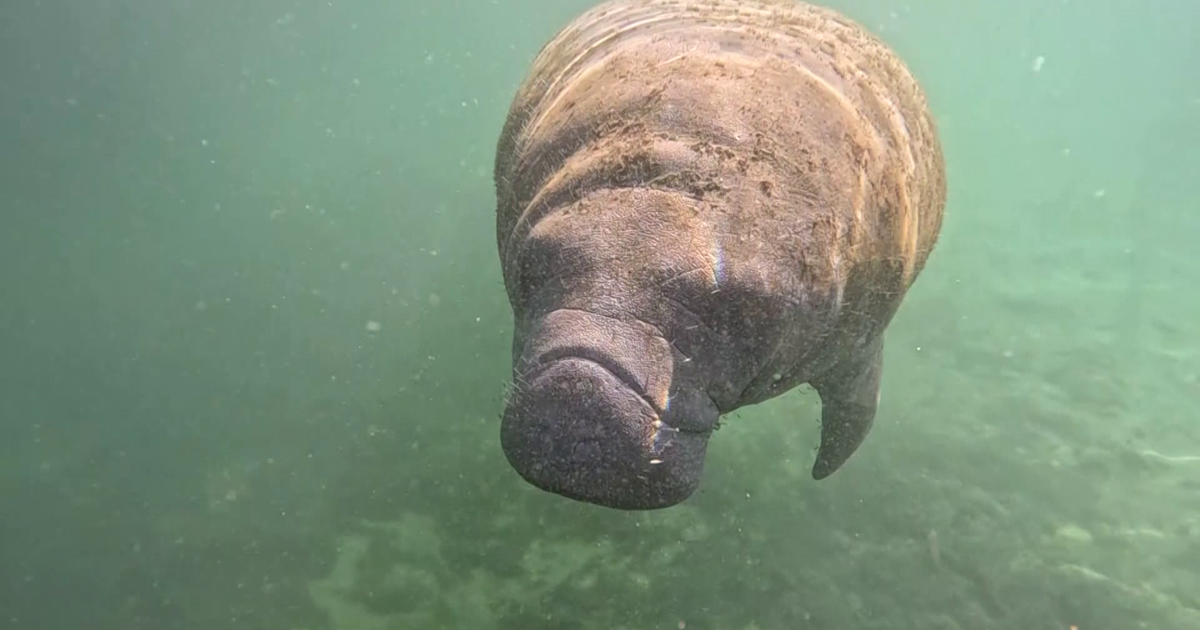
The Caloosahatchee River is experiencing increasing salinity levels, posing a threat to the river’s ecosystem. Scientists are concerned about the impact on fish, seagrass, and manatees. WINK News reporter Bridget Bruchalski accompanied researchers on the water to track these changes in real time.
“It’s a salinity sensor,” said Eric Milbrandt, director of the Sanibel-Captiva Conservation Foundation (SCCF) Marine Lab. This sensor also measures dissolved oxygen and temperature, providing insights into the estuary’s conditions.
Milbrandt explained that the current low rainfall is a significant concern. “We’re concerned about the low amount of rainfall that we’ve had this dry season,” he said.
Less rainfall means less fresh water entering the river, and this affects the salinity balance. “It helps to keep the salinity balance and the estuary in the right place,” Milbrandt said.
SCCF is recording record-high salinity levels on the Caloosahatchee, the highest since 2008. “If we don’t get enough fresh water, what happens is you can get areas of hypoxia where the saltier water stays below the fresh water,” Milbrandt said. “Those don’t mix, and you can get low dissolved oxygen, conditions, fish kills, etc.”
Habitat struggles extend beyond fish and manatees. “The other thing that we’re concerned about is habitats require fresh water. Those species can’t tolerate high salinities,” Milbrandt said.
The ecosystem’s dependency on fresh water from Lake Okeechobee is crucial but complicated by shared water resources. “Having a system out of balance is bad for the ecosystem,” Milbrandt said. “It’s bad for the species that live here, but it can also have consequences for red tide and what happens on the coast.”
SCCF is collaborating with partners to explore the possibility of more fresh water from Lake Okeechobee to help balance salinity levels. However, the region may need to rely on rainfall to address the issue.