
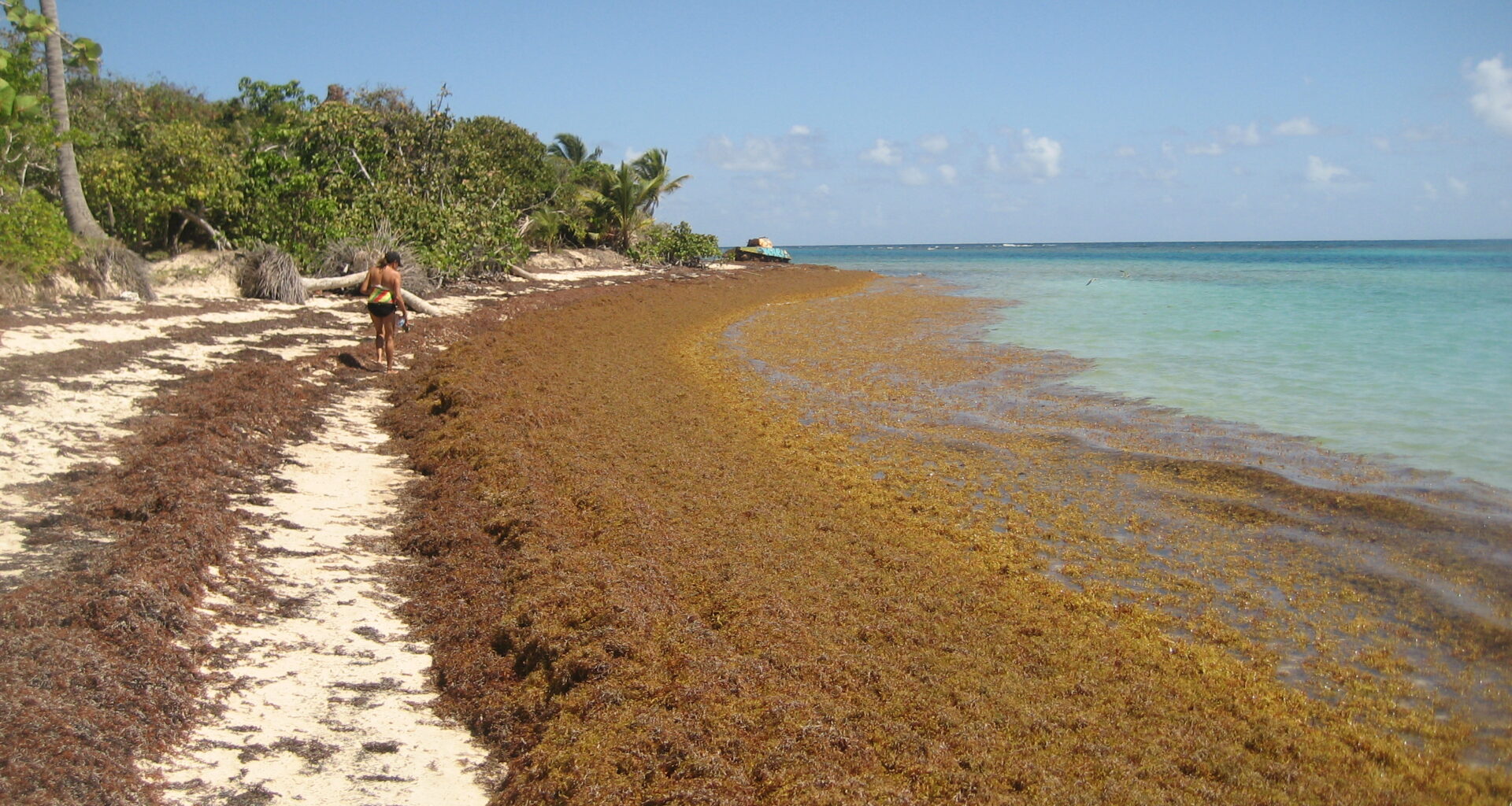
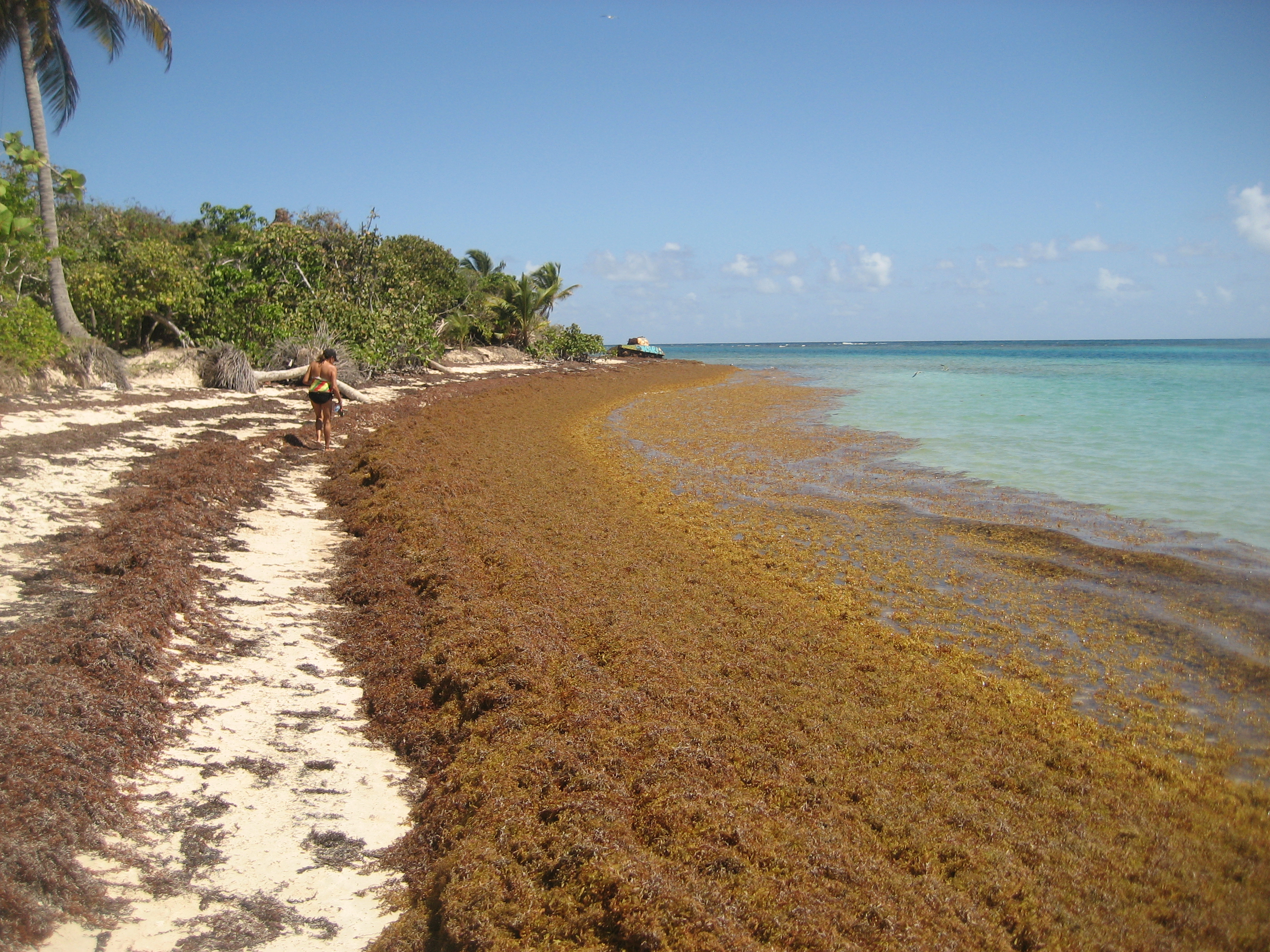
Sargassum covers Playa Flamenco in Puerto Rico in 2015. By Seán Kinane.
Listen:
Researchers from the National Oceanic and Atmospheric Administration and the University of South Florida used artificial intelligence to find an increase in floating algae across the ocean.
One researcher calls the uptick in floating seaweed a double-edged sword.
The researchers conducted a comprehensive study of global floating macroalgae and found that blooms are expanding across the ocean.
Dr. Chuanmin Hu is a professor at the USF College of Marine Science and a senior author of the study.
He said the trends are likely the result of changes to currents and nutrients, with ocean warming due to climate change being a factor.
“It’s good for a healthy ecosystem. But when you have too much good stuff at the wrong time and the wrong location, it becomes bad for this case.” Hu told WMNF.
In open water, macroalgae can provide critical habitat for marine life and have a positive impact on fisheries, serving as a nursery for many species.
But once the algae reach coastal waters, they can cause harm to tourism, economies, and the health of people and marine life.
To conduct the study, Hu and his colleagues used artificial intelligence to scan 1.2 million satellite images of the ocean, focusing on 13 zones and five types of algae.
“The paper we just published is the first paper to show a global picture of where we can find macroalgae, the big algae, that is visible to the human eye,” Hu said.
Locally, Hu said Tampa Bay beaches would mostly be immune to the blooms, as they would end up on the east coast of Florida.