
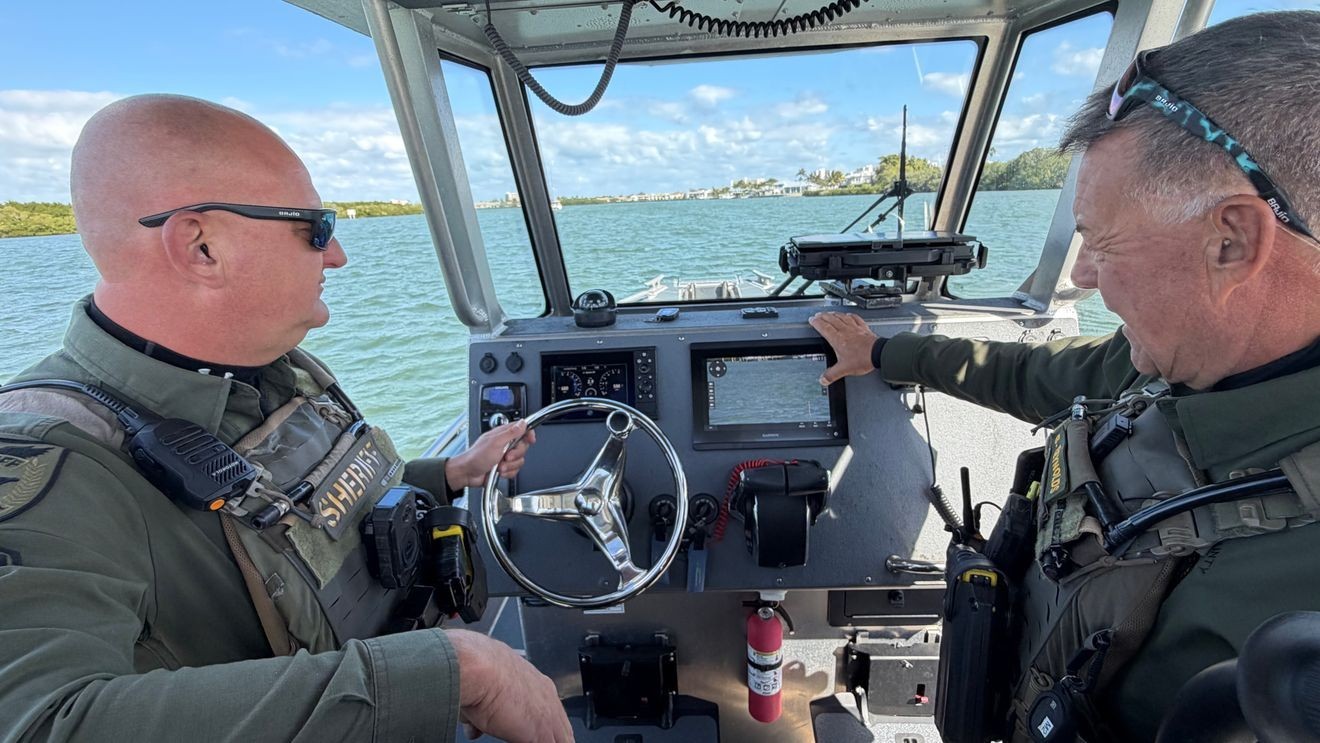
ST. LUCIE COUNTY, Fla. (CBS12) — In St. Lucie County, extra efforts are underway to keep you safe on the water. The sheriff’s office will start allowing deputies to cross-train for their marine unit.
Public safety doesn’t stop when the water gets rough. In fact, that’s when the St. Lucie County Sheriff’s marine unit springs into action.
“A lot of people don’t know what they’re doing. They just got boats, are new to it. So, we’re telling them the speed zones, how to find out, how to become educated, how to get the knowledge on to be a safe boat operator. We do a lot of rescues, assist to kayakers, paddle boarders,” said Marine Deputy Britt Reynolds. “We work with a lot of animals. We work a lot of injured animals.”
But it’s only a team of three doing all that — covering 22 miles of coastline between Indian River and Martin Counties.
“We are capable of doing everything by ourselves, but it’s very difficult at times,” said Deputy Reynolds.
See also: Inside the St. Lucie County Sheriff’s Office: Growth puts spotlight on public safety
Reynolds says that’s because the marine unit doesn’t operate like standard road patrol or other units.
“The first thing is that our boats don’t have park, that’s what I always say. We’re fighting the winds, we’re fighting currents, everything like that. So, if I’m actually tied up to boat and engage and I’m by myself, that’s kind of a hard situation to do,” said Reynolds. “We don’t have backup, like on road patrol, that can get to us in a heartbeat.”
 In St. Lucie County, extra efforts are underway to keep you safe on the water. The sheriff’s office will start allowing deputies to cross-train for their marine unit. (WPEC)
But that’s changing soon.
The sheriff’s office is launching a program called the ‘Tactical Marine Operator’ Program (TMO).
“If it’s something besides operating a boat and you need another set of hands, that’s where it’s a big asset, or even if something’s major going on and I get hurt or something, then I’ve got someone else on the boat that can drive it in,” said Reynolds. “So, the Tactical Marine Officers Program will be zone deputies who can respond to certain areas where we could pick them up quickly. They can jump on the boat, and then they’re with us.”
TMO’s will go through an interview process, be required to pass a swim test, and be trained on boater education and marine knowledge.
“We’re just looking forward to having additional help again, because it just spreads it, and that also opens a gateway to have more permanent, full-time people here, so that if we do lose somebody, we’ve already got people pre-trained that can come over,” said Deputy Reynold.
At this time, it’s unclear how many deputies will be cross-trained. But we’re told any extra set of hands will be a big help.