
Citing concerns over “public perception” affecting tourism, Orange County Commissioner Nicole Wilson is seeking a way to prevent a potential immigration processing facility in east Orlando after ICE officials toured a potential site last week.
But County Mayor Jerry Demings, a Democratic candidate for governor, didn’t directly address Wilson’s proposal, instead echoing his previous comments about continuing to cooperate with federal immigration enforcement “as statutorily required.”
In a memo and draft language sent to Demings and other commissioners on Monday, Wilson called for a temporary ban on detention facilities not operated by cities or the county — similar to a moratorium passed in Kansas City, Mo., last week as immigration officials weigh a facility there.
In particular, Wilson raised questions about how the notoriety of an ICE facility would impact the Central Florida’s biggest industry.
“Tourism, hospitality, and visitor-serving commercial uses depend heavily on land use compatibility, public perception, and the overall quality of place,” she wrote. “The placement of detention facilities in or near tourism corridors or mixed-use commercial areas risks undermining these critical economic sectors.”
She also cited environmental and economic concerns.
“Once approved, these facilities can result in long-lasting and irreversible impacts that limit the County’s ability to protect community character, ensure infrastructure adequacy, and align development with adopted policy goals,” she wrote.
Asked about the memo, Demings didn’t weigh in directly on Wilson’s idea, saying in a statement that the county hadn’t been contacted by Immigration and Customs Enforcement.
“Any facility proposed here would require transparency, community input, and assurances that laws are enforced with dignity and respect,” the statement reads.
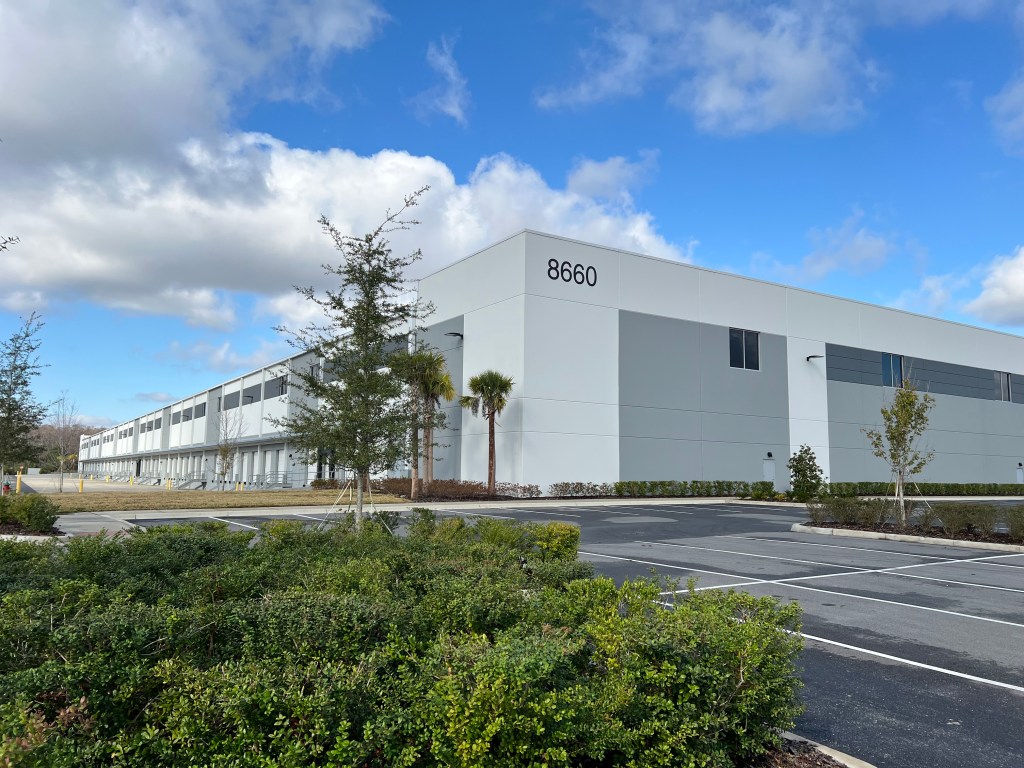
Rumors had swirled in Orlando last week that federal immigration authorities were eyeing an east Orlando warehouse as part of a network of industrial facilities around the country that could be used to detain immigrants and speed up President Trump’s mass deportation plans.
On Friday, TV cameras from WFTV and WKMG caught ICE Senior Advisor David Venturella leaving a warehouse at 8660 Transport Road, near Exit 19 on the Beachline Expressway. He said the visit was purely “exploratory.”
A potential hiccup in Wilson’s idea is that the warehouse site was annexed into the city of Orlando in 2024 as the city expanded its eastern border, incorporating a swath of wooded land planned for Tavistock’s Sunbridge development. The warehouse, though, is owned by Beachline Logistics LLC, which is unaffiliated with Tavistock.
But as part of an agreement between the city and county in 2024, the two sides agreed to enter into a joint-planning agreement for the area. The land would also keep the development plan and land uses previously approved by the Board of County Commissioners.
Orlando’s city government also hasn’t been contacted by ICE, nor by anybody related to the Transport Drive property, a spokesperson said.
Newly elected Orlando Commissioner Tom Keen, who represents the far-flung area, said he commended Wilson’s proposal but wasn’t sure if he’d bring forward a similar measure to City Hall.
But, he noted, Tavistock and city leaders had big plans for the more than 11,000 acres it annexed in 2024 – and those plans didn’t include an immigration facility.
“It doesn’t seem like that’s compatible with the rest of the area out there,” he said. “We did not annex that property for it to be a detention center.”
While the Kansas City council passed a 5-year moratorium on detention facilities after news broke there of a potential processing center, a few other obstacles could hamper a similar ban in Orlando.
Florida Senate Bill 180 bans local governments from new moratoriums on construction, reconstruction or development plans through Oct. 1, 2027, said municipal attorney Cliff Shepard.
He said if the federal government directly operated the facility, it could also invoke the Supremacy Clause of the U.S. Constitution, allowing it to bypass local zoning rules and regulations. But if the facility were to be owned by a private company, it would likely have to follow local rules.