
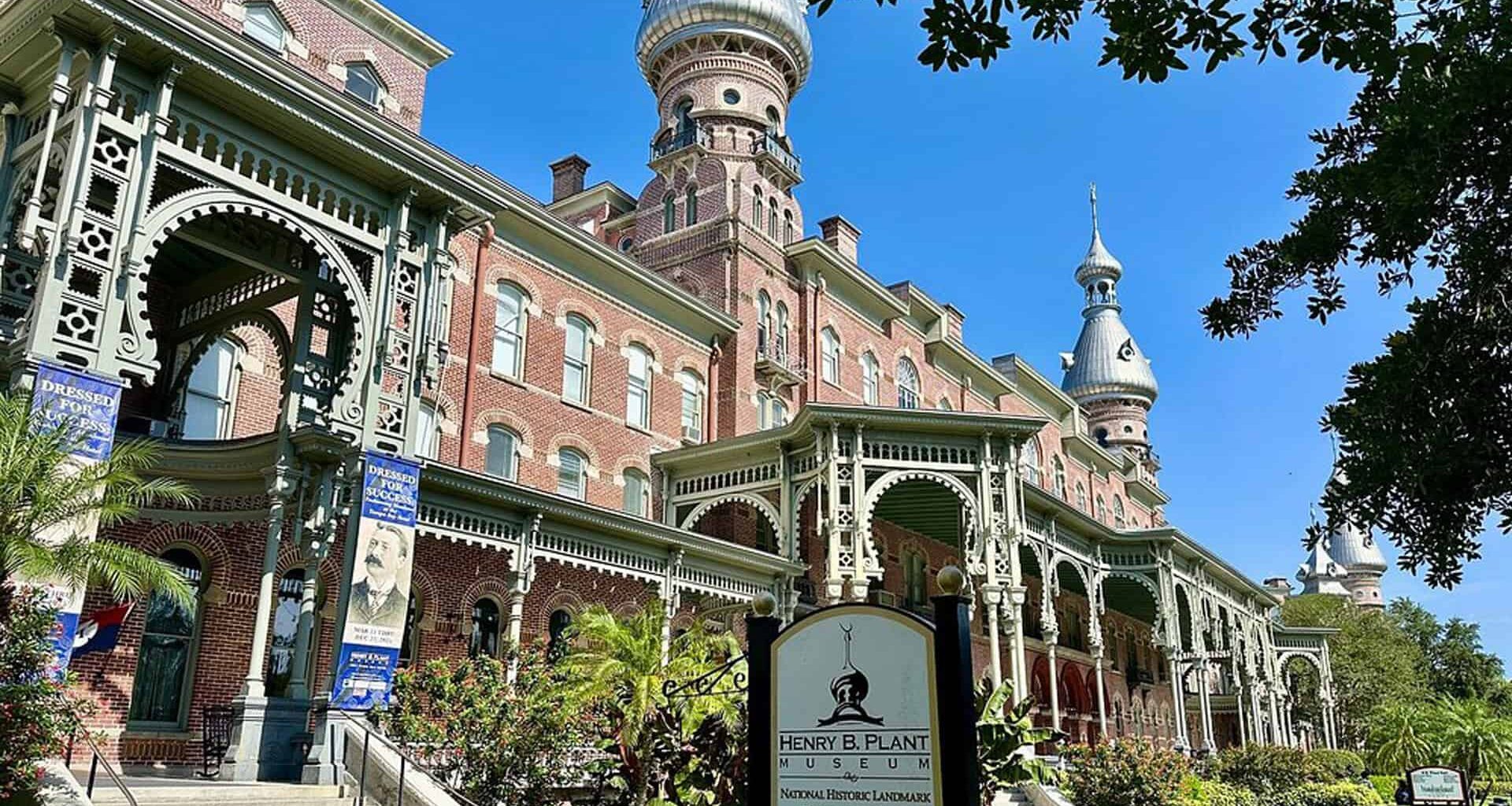

Just in time for Tampa’s most spirited season, the Henry B. Plant Museum (401 W. Kennedy Boulevard) is unveiling a treasure trove of history and imagination. Opening January 24, Gaspar’s Gold: Carnival and Community in a New South City invites visitors to look beyond the legend of José Gaspar and learn about the real history, artifacts, and artistry behind our Gasparilla traditions.
To help get into the spirit of the season, and as a teaser for the incredible new exhibit, the Henry B. Plant Museum has shared five fun facts from the storied history of Tampa’s Gasparilla Pirate Fest.
Our first pirate invasion
When most of us think of Gasparilla, we imagine pirates, parade floats, beads, and the art and music festivals that follow throughout the year. But Gasparilla has deep historical roots that stretch back to 1904, when a group of local business leaders first decided to dress up as pirates and “plunder” the city to boost civic pride.
What started as a spirited stunt created some of Tampa Bay’s most celebrated traditions, many shaped by cultural influences and local creativity. For instance, the discovery of King Tut’s tomb in 1922 inspired Gasparilla’s royal court to dress as Egyptian royalty in 1924.
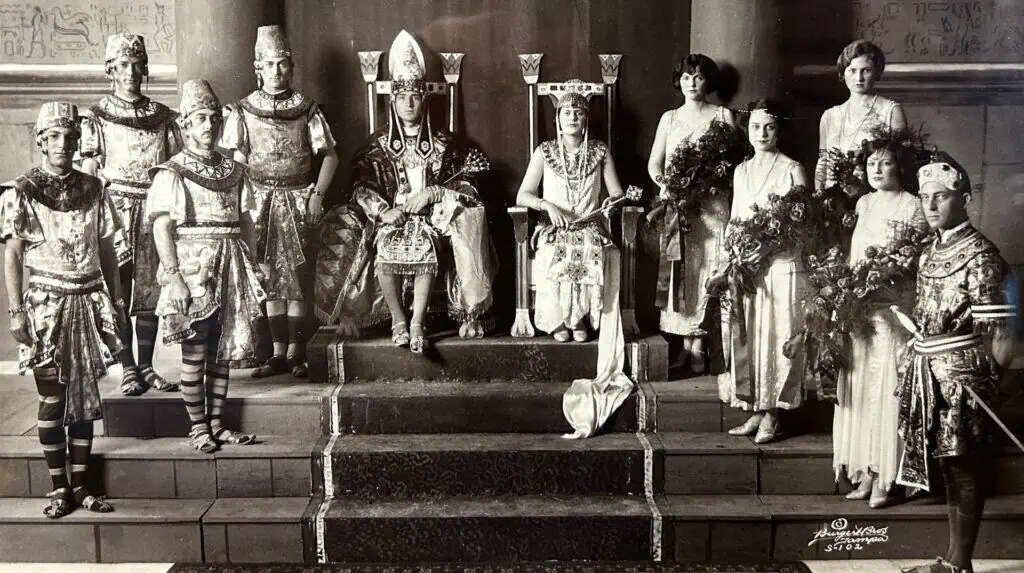 Egyptian royalty photo via Henry B. Plant Museum
From hotel grounds to fairgrounds
The new exhibition showcases Ye Mystic Krewe of Gasparilla’s royal crowns, coronation invitations, and dance cards, along with historic photos from the Gasparilla Carnival and South Florida Fair. Beginning in 1904, both events were held on the grounds of the Tampa Bay Hotel, a shared tradition that continued until the fairgrounds relocated in the 1970s.
The early Gasparilla years also came with some memorable, offbeat surprises. For example, Shriners Day in 1904 featured the Shriners riding camels in a lively parade from the Tampa Bay Hotel to the German Club.
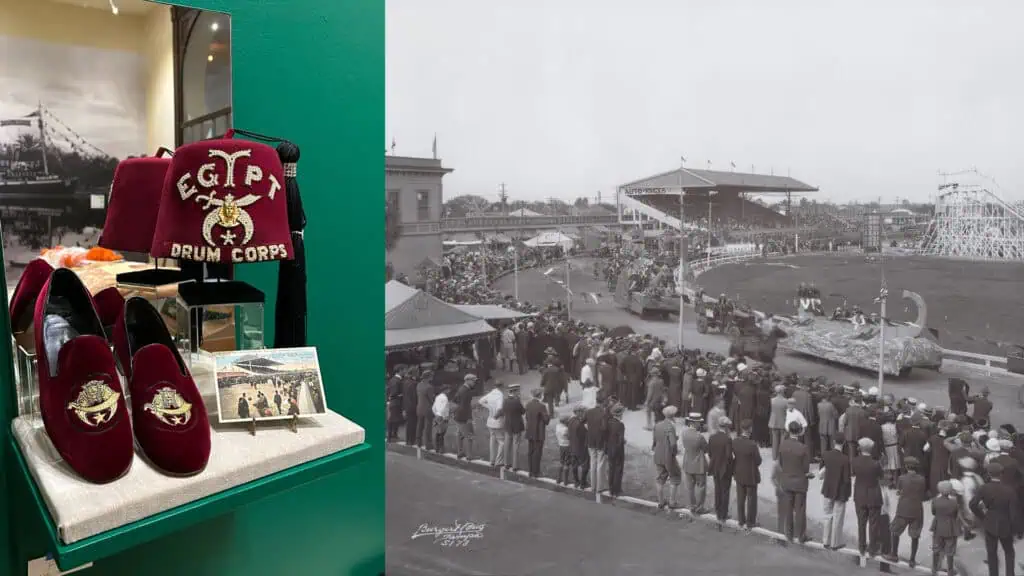 Shriners memorabilia and fairgrounds photo via Henry B. Plant Museum
And of course, you can’t reminisce about Gasparilla without recalling the thrill of staking out the best parade spot, jumping for beads, and scrambling into the street for a gold pirate coin. Gaspar’s Gold also taps into the artistry behind these beloved traditions. The exhibit highlights original illustrations and rare pieces from legendary float designer John F. Gasthoff and his son. Known as “the dean of American float makers,” Gasthoff’s imaginative and whimsical works perfectly capture the spirit and the spectacle of Gasparilla.
Women who shaped history
The exhibit also makes a point to celebrate the people who helped build the festival’s legacy, like visionary women and creatives. Tampa’s own Krewe of Venus was formed in 1965 thanks to the support of the female-only Krewe of Venus in New Orleans, which opened doors for greater women’s participation in Gasparilla.
Fashion lovers might also be surprised to learn that Ann Lowe, the first famous African American fashion designer and the creator of Jacqueline Kennedy’s wedding dress, got her professional start designing dresses for Gasparilla’s royal court.
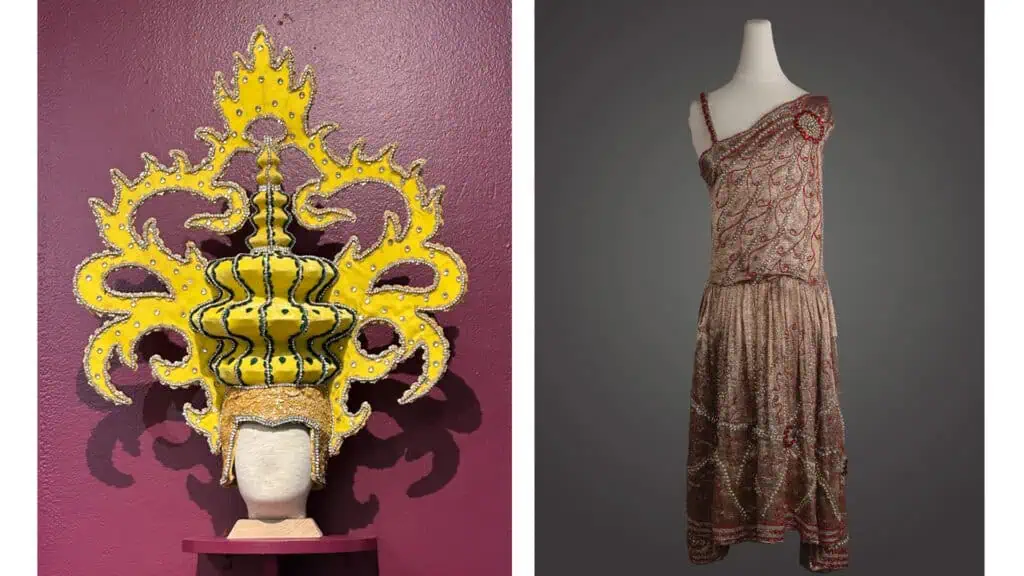 Krewe of Venus headdress and Ann Lowe dress images via Henry B. Plant Museum
Plan your visit
Gaspar’s Gold is on display through August 30, and you can visit Tuesday through Saturday from 10 a.m. to 5 p.m. or Sunday from 12 p.m. to 5 p.m. (closed Monday). Adult tickets are $12 and available on the museum’s website. You can also plan your visit to coincide with one of their upcoming special talks:
Parade Roots: Mardi Gras, Mayhem, and Meaning in the Gulf South, February 20, 6:45 p.m.
Pirates of the Golden Age Atlantic: Romance versus Reality, April 11, 6:45 p.m.
Whether you’re a longtime Gasparilla fan or new to Tampa and wondering why we let pirates take over the city each year, this exhibit is a perfect way to kick off the season. Follow the museum on Instagram for more events and announcements.