
In 2017 Marty Proctor made a comment to the Groveland city council that still reverberates through this growing community just thirty miles west of Orlando. “We need to have dark-sky lighting in a large development being built right now in my front yard,” Proctor said. Not surprisingly, a council member asked what “dark-sky lighting” was.
“I made it my mission to find out more so I could concisely and clearly share that knowledge and what we could do about it,” says Proctor, an electrical engineer with experience in lighting and energy design. “I don’t think people understand how damaging the effects of light pollution are to essentially all parts of our environment—animals, bugs, pollinators, plants, people.”
He describes himself as living “on the edge of the wild,” and he experiences that damage firsthand. To the west he sees “the Milky Way, stars, constellations,” and to the east, the light dome of Orlando and overly lit towns. Groveland abuts the Green Swamp Wilderness Preserve, a wildlife habitat that’s critical to the Floridan aquifer, and the biodiverse Palatlakaha River and Wetland System.
Six years later, Proctor, along with a committed crew of supporters, made good on that mission when Groveland became a certified DarkSky International Community in 2023. Kissimmee Prairie Preserve State Park was the first DarkSky “place” in Florida (2016), but it’s easier for parks to get certified than towns and cities. Now, visitors to Groveland will notice all sorts of ways the city came together to realize the goal. And those who want to stargaze can head to the Jimmy Thomas Memorial Park, which some locals are trying to convert into a permanent night sky viewing site once the current ballparks move to their new, entirely DarkSky-compliant fields this spring.
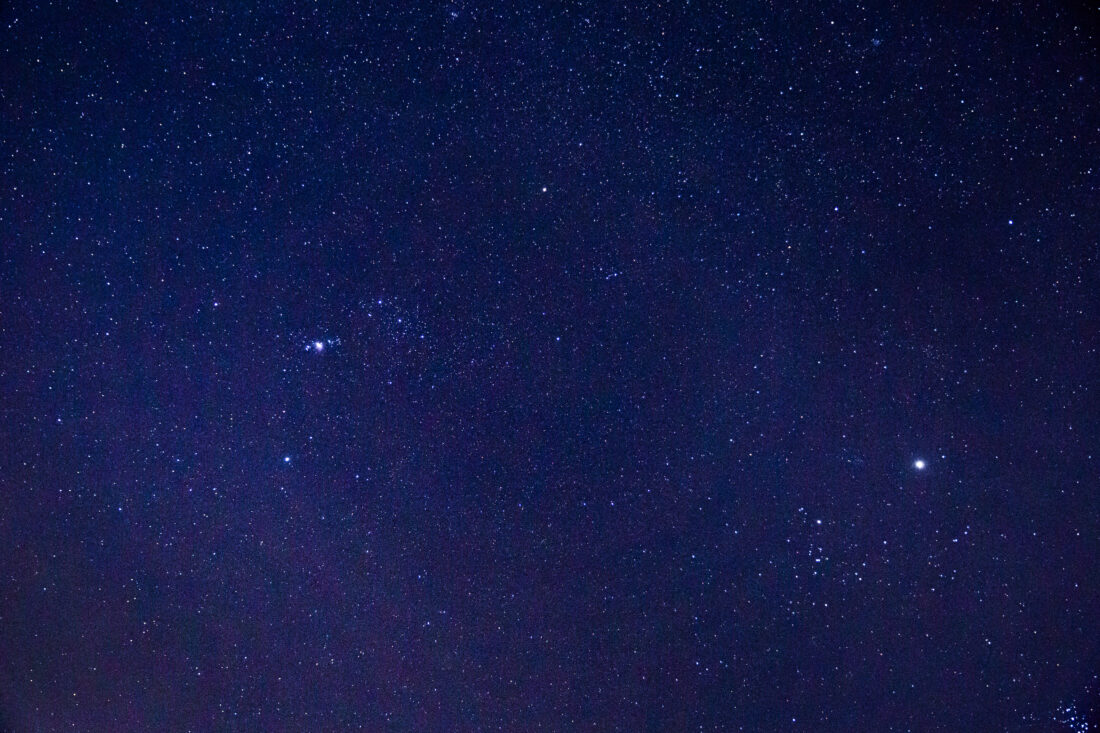
Photo: stevenMillerPix.com
Groveland’s starry night sky.
Becoming the first city in the Southeast to meet the DarkSky requirements—joining a handful in Texas and more out West—was a challenge. Here are three tips from the Groveland playbook.
Harness the energy of youth and the wisdom of age
Proctor connected with DarkSky International and in 2019 became a delegate for the Tucson-based nonprofit, which advocates for outdoor lighting that’s site appropriate, meaning it doesn’t pollute the night sky with more brightness than a place actually needs. Light pollution deprives people of starry skies and harms the fascinating creatures of the night, including owls, bats, and fireflies.
Out West, travelers may be familiar with protected parks known for stellar stargazing, like Big Bend National Park in Texas and Canyonlands National Park in Utah. Groveland’s suburban Southeast location and lack of nearby mentors required creative problem solving. In early 2020, students at nearby Rollins College in Winter Park, Florida,wanted to organize a dark-sky advocacy group and reached out to Andrew Landis, who then taught at Rollins. Shortly after, the campus shut down due to the pandemic, so dark-sky activists aimed higher and formed the Central Florida DarkSky Chapter.
These energetic students, local astronomy groups, Proctor, and the Orlando photographer Steven Miller decided to pursue official certification. Landis, now Groveland’s conservation and strategic initiatives division manager, and Miller, also a DarkSky delegate, researched lighting ordinances from around the world to find those that would fly in Groveland. They also wanted to make their ordinances a model that other Southeastern communities could replicate.
People had “a lot of misconceptions,” says Gabrielle Huffman, a former natural resource specialist for Groveland. “We’ve been working hard to show folks that we’re not saying your outdoor lighting is not allowed. Just that they have to be context-sensitive and shielded, so that the light is only going downwards rather than into the night sky.” Within the many city departments, Landis and Huffman worked to demystify the sometimes overly technical language of the ordinances for their employees.
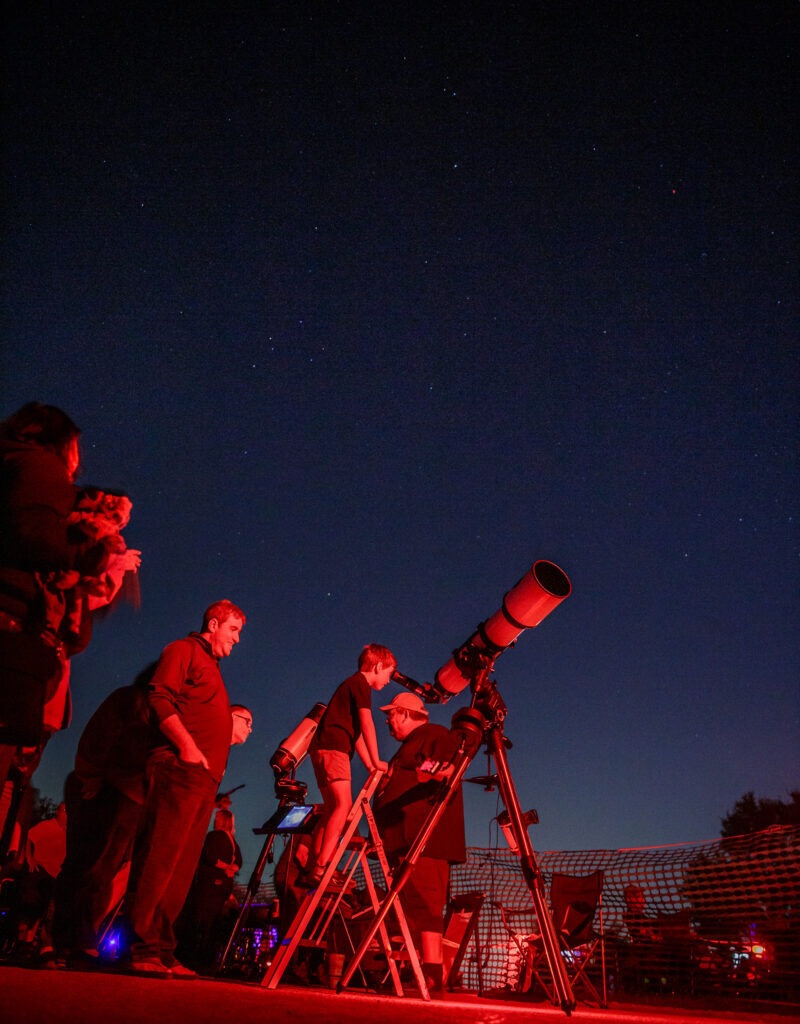
To educate local residents and energize their support, Groveland hosted webinars and threw star parties complete with telescopes. In 2023, 700 people attended an event to admire and learn about the night skies. In 2025, 2,500 people showed up. The fact that a full 60 percent of these eager stargazers came from outside the county—and likely purchased meals, hotel rooms, and sundries while visiting Groveland—proved that dark skies could generate tourism dollars.
Show examples rather than getting preachy
The stats don’t lie: Light pollution increases nearly 10 percent per year worldwide, according to Science magazine. But how could dark-sky champions communicate this in a meaningful way rather than with dry stats?
They wanted to show the cost of light pollution in action. At a community meeting, Groveland’s city manager, Mike Hein, shared photos of a new subdivision that followed dark sky standards and compared it to photos of one across the boulevard that didn’t. “Which do you want?” he asked. That strong visual swayed the audience. As a growing community, Hein says, they mainly needed to focus on making new lighting compliant, rather than retrofitting older lights. DarkSky International gives communities ten years, or until 2028 for Groveland, for existing lighting to comply with the ordinance standards.
One of Miller’s shots also became a powerful educational tool. After volunteering at a Groveland star party, Miller spent the night at Proctor’s home. Glancing upward, he decided to snap some photos using his tripod. A resulting image shows both the magnificent Milky Way and the encroaching light dome. This vivid, in-your-own-backyard photo is “evidence that [Groveland’s dark skies are] still there and still worth fighting for,” Miller says. The town has used the photo in its promotional materials.
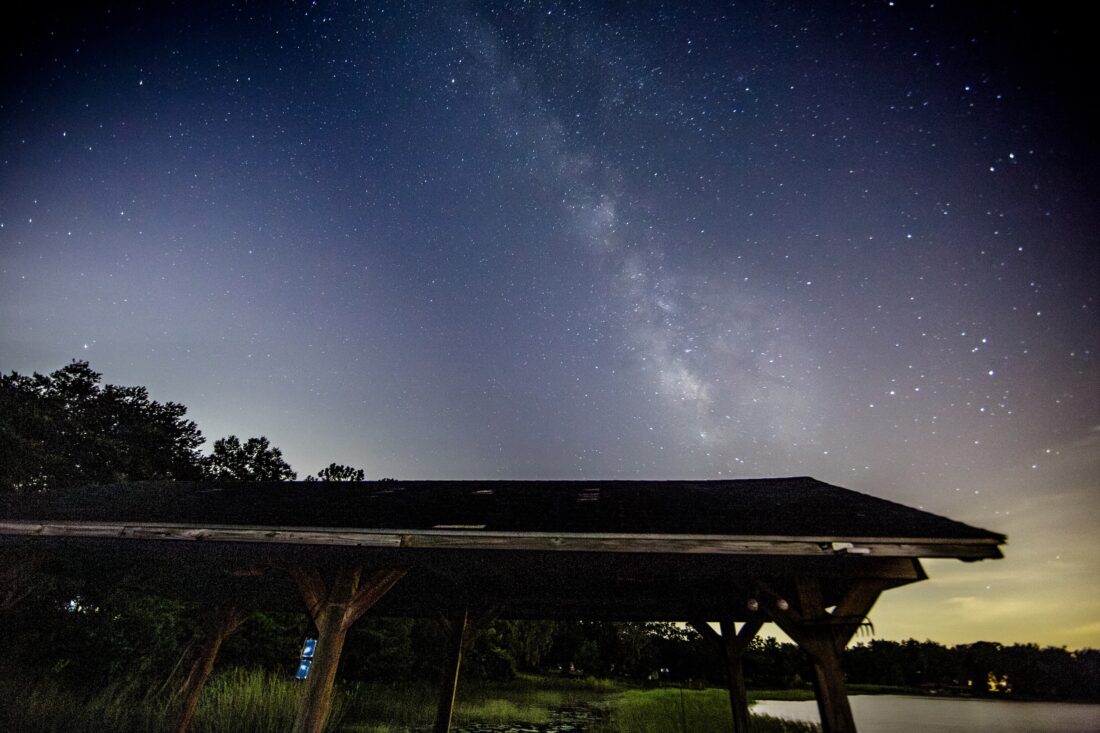
Photo: stevenMillerPix.com
The Milky Way above Groveland.
Within a week of the town’s official designation, stargazers showed up looking for the best nighttime spots, says Landis. DarkSky communities aren’t necessarily the darkest sky-viewing locations around, but they demonstrate how people value and are working to preserve darkness. Groveland’s designation also underscored its adopted moniker as the City with Natural Charm. “It fit perfectly,” Hein says. “And we have an opportunity to preserve a fragile ecosystem for future generations.”
Work with businesses big and small
The “most daunting challenge,” Hein says, was to get institutions and partners, like electric companies and fixture suppliers, on board. DarkSky’s approved luminaires program helped both businesses and residents find compliant fixtures. The local Ace hardware started carrying them, even though many of their national stores don’t.
As Groveland grows and more national chains want to open their doors there, some—Wawa, Chipotle, Starbucks—are initially surprised by the unfamiliar lighting ordinances. A thriving twenty-four-hour RaceTrac gas station recently came up with innovative solutions, including installing a canopy with the lights positioned away from its outer edge and using fully shielded fixtures. When its lumen count came in too high, the owners agreed to permanently switch off some unneeded lighting on poles and use more dimmers to comply. “Now they’re the model,” Landis says. “We’re pointing everyone to what RaceTrac was able to do.”
Groveland has won both national and statewide awards, and other area communities have looked to their team for ideas. “Inspired by Groveland, the nearby town of Oakland, Florida, is pursuing DarkSky designation,” says Oakland town manager Elise Hui. Oakland boasts a 150-acre nature preserve in the middle of town. Most recently, the organization certified the first Dark Sky Place in Oklahoma, Black Mesa State Park, and Caprock Canyon State Park (the seventh Texas Parks and Wildlife site certified).
Light pollution is one issue that “each one of us can have an impact on by making personal adjustments in our own homes and encouraging others to do the same,” Proctor says. “We never know what impact the things we say and share are going to have with other people.” Or how a thoughtful gaze up at the night sky might inspire someone, of any age, to rethink what their community is capable of.