
1 / 4
CITY OF SANIBEL
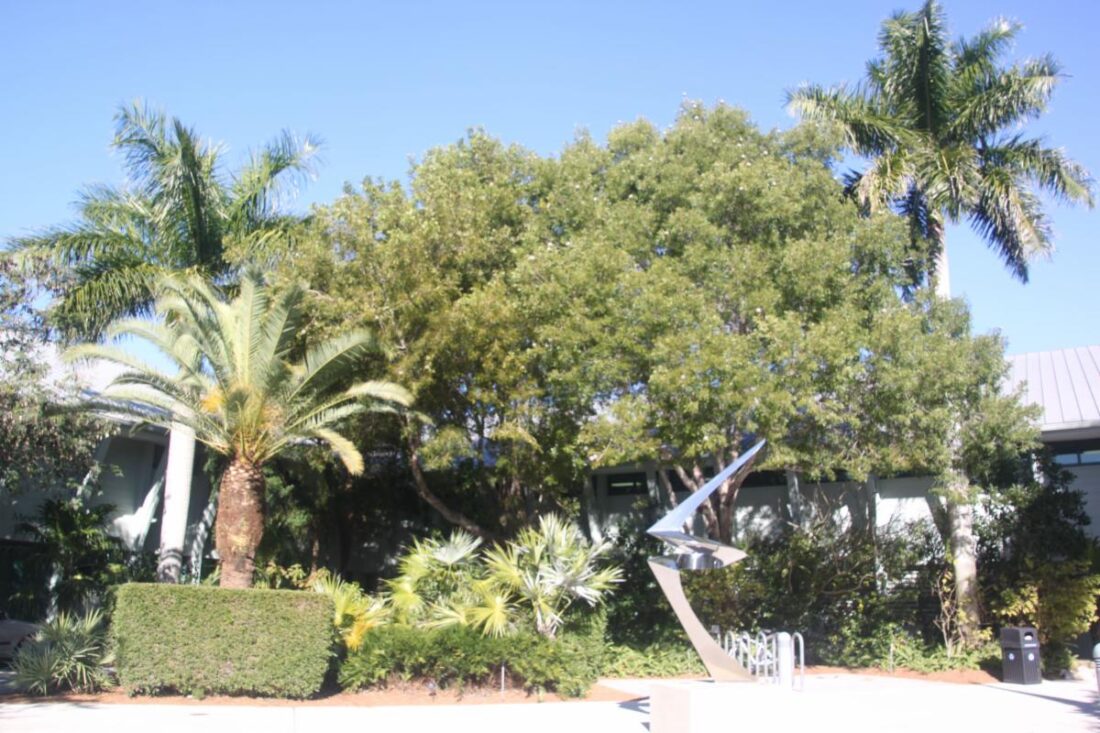
Mahogany (Swietenia mahagoni)
2 / 4
CITY OF SANIBEL
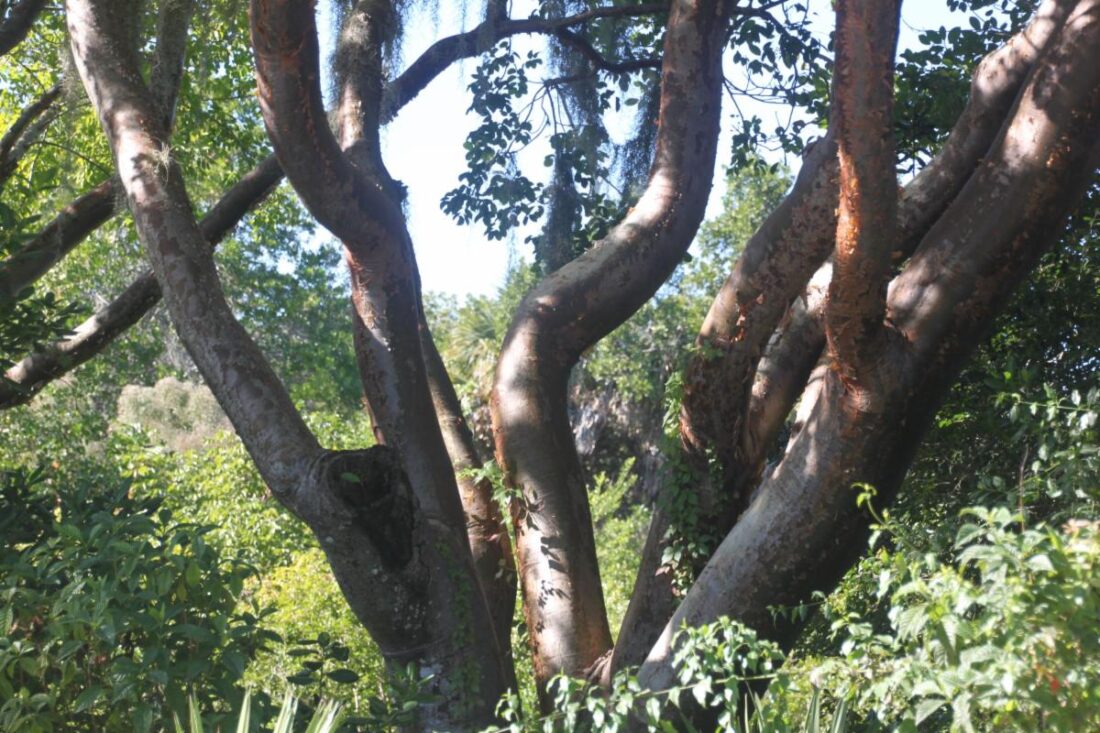
Gumbo limbo (Bursera simaruba)
3 / 4
CITY OF SANIBEL
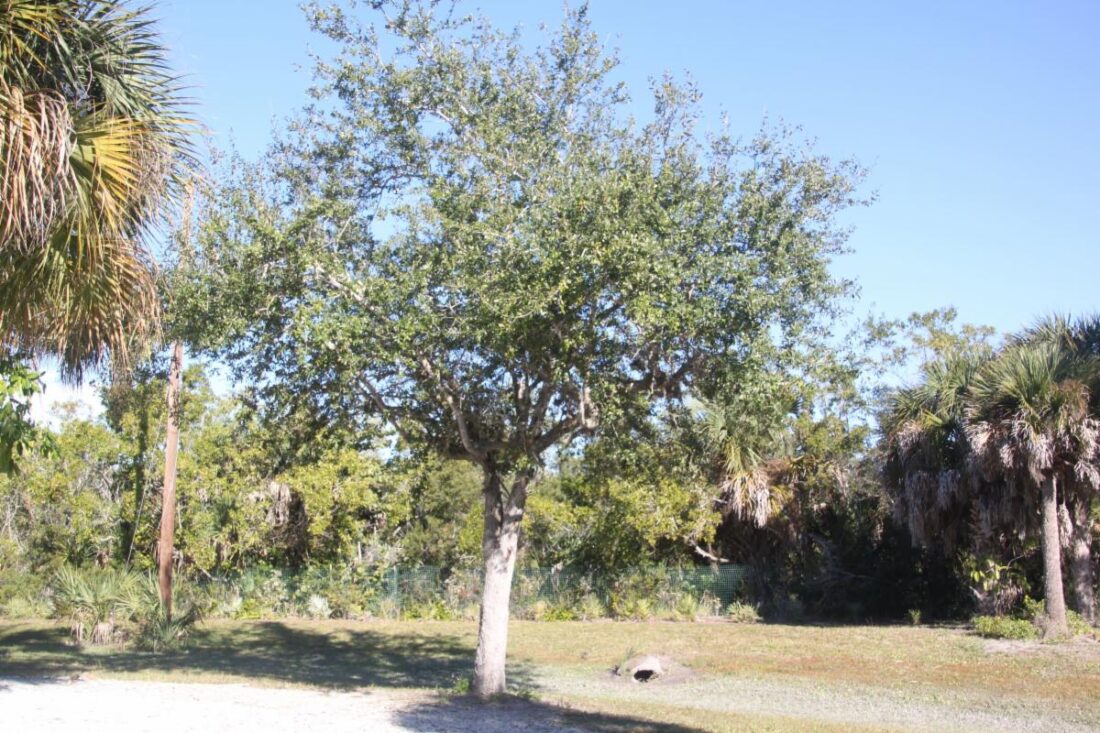
Live oak (Quercus virginiana)
4 / 4
CITY OF SANIBEL
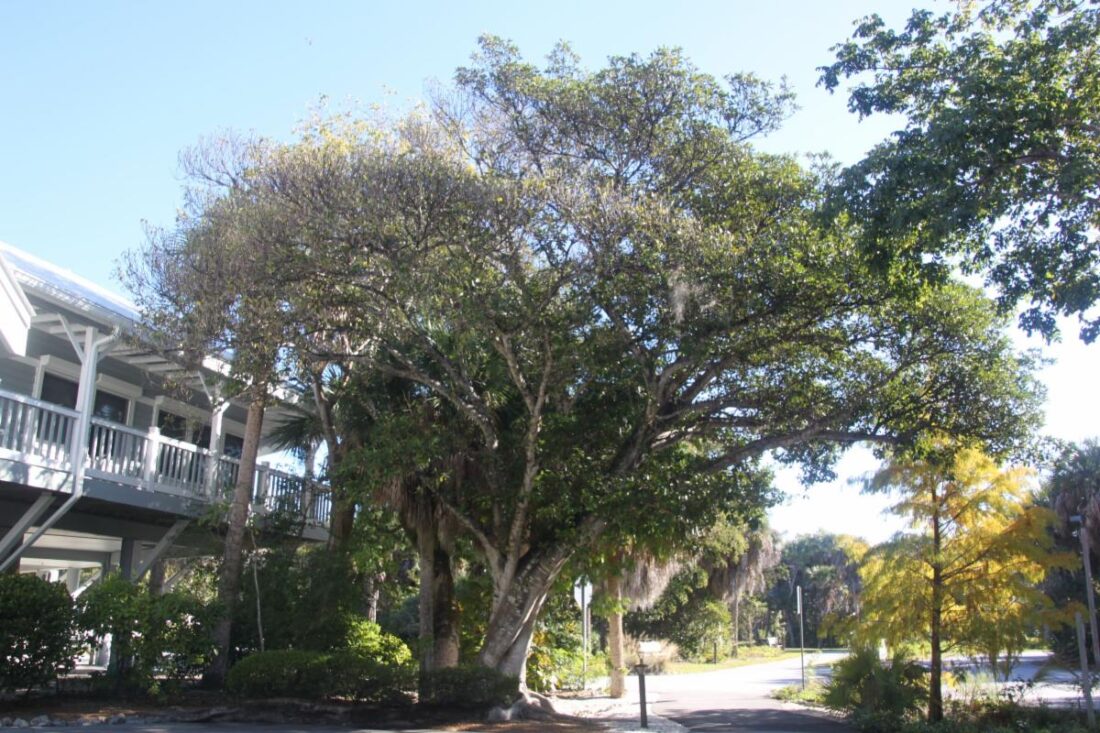
Strangler fig (Ficus aurea)
[expand]
close
The city of Sanibel’s Natural Resources Department reported that when people think of Florida, they often think of palm trees. While the state does have an abundance of palms, Florida also has several beautiful shade trees that rival those found up north.
The term shade tree usually applies to large trees with a spreading canopy, and quite a few of Sanibel’s native trees fall into the category. While some are deciduous, many are not which means the tree is never completely bare.
– The mahogany (Swietenia mahagoni) is a large tree with dimensions of 40-60 feet by 40-60 feet. It is briefly deciduous in the spring when old foliage is shed suddenly and is quickly replaced by new growth. It has a moderate to fast growth rate, grows in full sun to part shade, tolerates a wide range of soil from dry to moist but does need to be well-drained, is drought tolerant, and resistant to salt spray. Because of the color and durability of the mahogany wood, harvesting the timber has resulted in the tree being placed under legal protection in Florida on the State Threatened Species list. Several examples of the mahogany can be seen in front of Bank of the Islands and the Sanibel Public Library.
– The gumbo limbo (Bursera simaruba) is a medium to large tree, 25-50 feet by 25-50 feet. It is briefly, but not usually obviously, deciduous and begins to sprout while old leaves are falling. The gumbo limbo is one of the fastest growing native trees and often has contorted limbs with an open and asymmetrical crown. The distinctive peeling bark can be either a thin, reddish-brown to coppery color or thin gray to silvery, and exposes a smooth dark green, greenish-brown or coppery under-bark. The tree grows in full sun to partial shade, adapts to a variety of soil from alkaline to sandy, has high drought tolerance, and tolerates moderate salt spray. A trimmed limb from the gumbo limbo can be placed in water until roots begin to erupt and then planted as a new tree.
– The live oak (Quercus virginiana) is a medium to large tree reaching 30-40 feet with a broad-spreading canopy wider than the tree is tall. Young live oaks grow quickly, as much as 3 feet in height and 1 inch in trunk diameter each year, and are wonderful for wildlife, although it takes about 20 years for the tree to begin producing acorns. It will grow in partial shade but prefers full sun, likes moist, acidic soils of sand, clay or loam, has a high drought tolerance, and tolerates salt air and is moderately tolerant of salt in the soil. The live oak is considered semi-deciduous, pushing old growth out to make way for new, but is nearly evergreen since it never goes completely or even noticeably bare. Epiphytic plants (air plants), such as night-blooming cereus, staghorn fern and especially Spanish moss, are often seen growing on older trees. A large stand of mature live oak trees can be seen at the entrance to Health Park off of Summerlin Road, and younger trees have been planted along much of Periwinkle Way.
– The strangler fig (Ficus aurea) is a medium to large tree reaching 30-40 feet with an almost equal canopy. It is a fast-growing evergreen that grows in full sun or shade, tolerates a variety of well-drained soil, has high drought tolerance, and moderate salt spray tolerance. In nature, animals leave the sticky seed from the strangler fig in a tree branch or the crevice of a palm, and the seed grows as an epiphyte on the tree’s surface. Long roots descend eventually reaching the ground and entering the soil. Over time, the latticework roots become grafted together and enclose the host’s trunk, sometimes killing the host but leaving the strangler fig with an apparent trunk that is actually a gigantic cylinder of roots.
All of these trees can become massive, so planting location is important. In general, recommended planting distance is at least 20-25 feet from buildings, and a good distance from sidewalks and curbs which can be displaced by the root system of many native trees. The Sanibel vegetation standards require that any tree or shrub that exceeds 20 feet in height at maturity be planted at least 10 feet from the vertical plane of the overhead power line. In the case of these trees, the building and power line recommendations would not be adequate, so know what you are planting. Always call 811 before you dig so that any cable, electric or utility lines can be marked.
There are many more wonderful native shade trees to choose from such as the Jamaica dogwood and wild tamarind. Both, as well as the others above, can be seen at the Sanibel City Hall’s grounds.
For more information, call the Natural Resources Department at 239-472-3700 or visit https://www.mysanibel.com/246/Natural-Resources and click on “Vegetation Information.”