
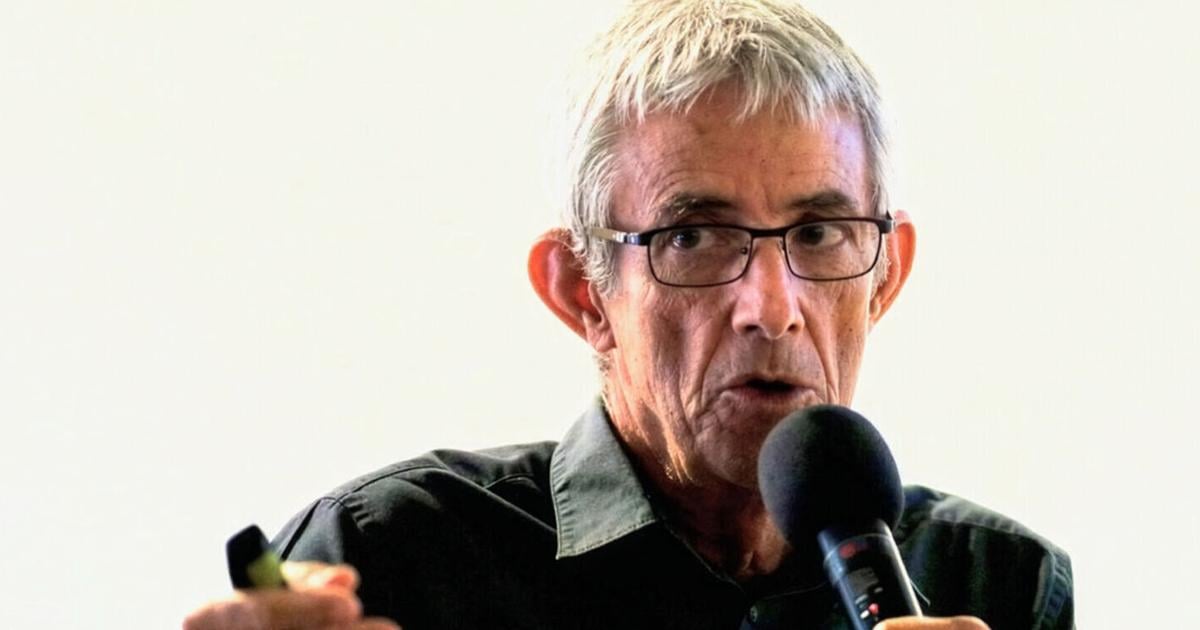
You could hear a pin drop during Jose Leal’s hour-long seminar titled Southwest Florida Amazing Mollusks, Friday, January 16, at the Collier County Public Library on Marco Island. A crowd of about 50 local shell enthusiasts—mostly women—eagerly listened to every word from the soft spoken Leal, science director and curator of the Bailey-Matthews National Shell Museum and Aquarium on Sanibel Island. The program was sponsored by the Marco Island Shell Club.
Perhaps most interesting was Leal’s explanation of why the shelling is so strong in this area—among the strongest in the world.
“They like to say Sanibel is the shelling capital of the world,” Leal said. “I do consider Southwest Florida, especially here in Collier County, in this whole area, to be one of the real shelling capitals of the world. Because there’s a lot you can find here, between Keewaydin Island all the way south to Cape Romano. It’s a real paradise for shelling.”
Leal said there’s a scientific reason why we have so many shells on our beaches.
“One of the reasons why we have so many shells here,” Leal said, “is that we have a very broad continental shelf that’s so wide that there’s a lot of area for animals to grow. And because it’s so shallow, when you have a big storm or you have winds coming from the northwest like we’re having right now over the last couple of days with the cold front, that’s when the shells pop up on the beaches.”
Leal wants everyone to know that the Bailey-Matthews Museum is back and better than ever after receiving extensive hurricane damage in September of 2022.
“During Hurricane Ian,the museum sustained severe damage,” Leal said.“We had infiltration of water through the drywall in our gallery, which we call the Great Wall of Shells. So we just reopened that about three months ago. If you’re ever in our neck of the woods, in Lee County, stop in and see us. Our museum is totally different from the museum you knew before Hurricane Ian.”
Leal spent much of the seminar sharing information about the anatomy, behaviors, and subtle shell variations among many of the most popular shells found on our beaches. He examined egg capsules of tulips, lace murex, lightning whelks, and others, describing embryo development, escape hatch membranes, and laying behavior. Predation and feeding strategies were also discussed.
Leal encourages those interested in shelling to visit the Bailey-Matthews online Southwest Florida Shells Guide at shellmuseum.org. He said it’s a guide shellers can use while they’re on the beach collecting shells.
“It’s a good ID guide,” Leal said, “and you can use it on your phone. I just counted them yesterday; we have 408 local shells in the guide. This is a typical shell guide page where you have a main image with the shell, and then you have images of the animals in the environment and the shell and the scientific name of the colony.”