
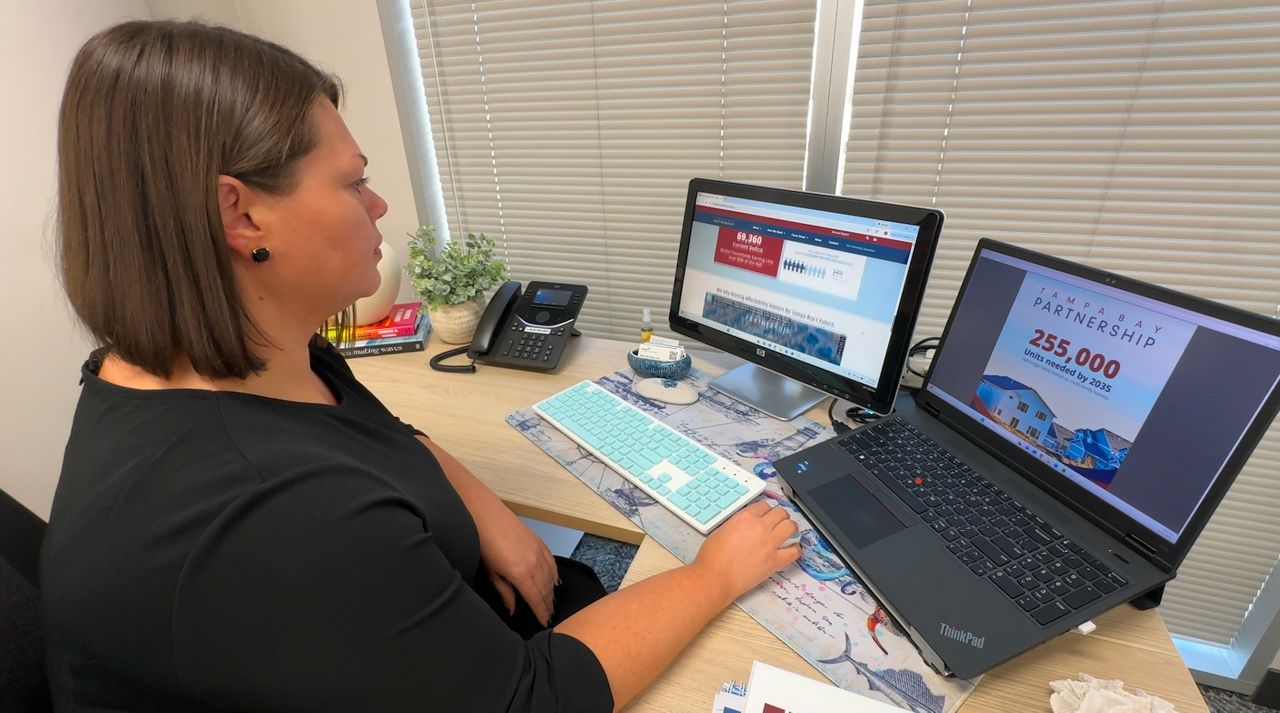
TAMPA, Fla. — Housing affordability issues in the Tampa Bay area are nothing new, but the Tampa Bay Partnership is hoping its recently released regional housing affordability report will help bring about solutions now and in the future for residents.
What You Need To Know
The Tampa Bay Partnership recently released the regional housing affordability report and is hoping it will help bring about solutions now and in the future for residents
According to the report, median rent surged nearly 50% in five years, while wages rose nearly 30%
Tampa Bay is projected to add 564,000 residents and 211,000 households by 2035, a surge that will reshape housing needs
Yet, recent production hasn’t kept pace, according to the research
The 137-page report is called The Housing Equation, Supply, Demand & Affordability in the Tampa Bay Region. The report focused on Hillsborough, Pinellas and Pasco Counties.
Sarah Burgoyne is a senior director with the Tampa Bay Partnership. She said leaders had been asking for the data that examines past, present and future housing prices.
“This report was made possible with funding from J.P Morgan and Chase, and it allowed the partnership to hire a team of researchers to provide data that our leaders in the community had been asking for,” Burgoyne said.
According to the report, median rent surged nearly 50% in five years, while wages rose nearly 30%.
Homes under $200K made up 30% of sales in 2019 and dropped to just 5% in 2022. Tampa Bay is projected to add 564,000 residents and 211,000 households by 2035, a surge that will reshape housing needs.
Yet, recent production hasn’t kept pace. The research shows that between 2018 and 2023, the region added nearly 100,000 households but built only 82,000 units, fueling rising costs and widening affordability gaps.
When looking to the future, the report details that by 2035, the region needs to add approximately 254,700 new housing units, an average of 21,225 units per year, to keep pace with projected growth. That includes 10,685 single-family units and 10,540 multifamily units annually.
One of the possible solutions is a regional action plan and a regional action plan committee. Community input is also needed. The Tampa Bay Partnership is hosting a webinar Feb. 5, from 10 a.m to 11 a.m. Click here and scroll down the page to register.