
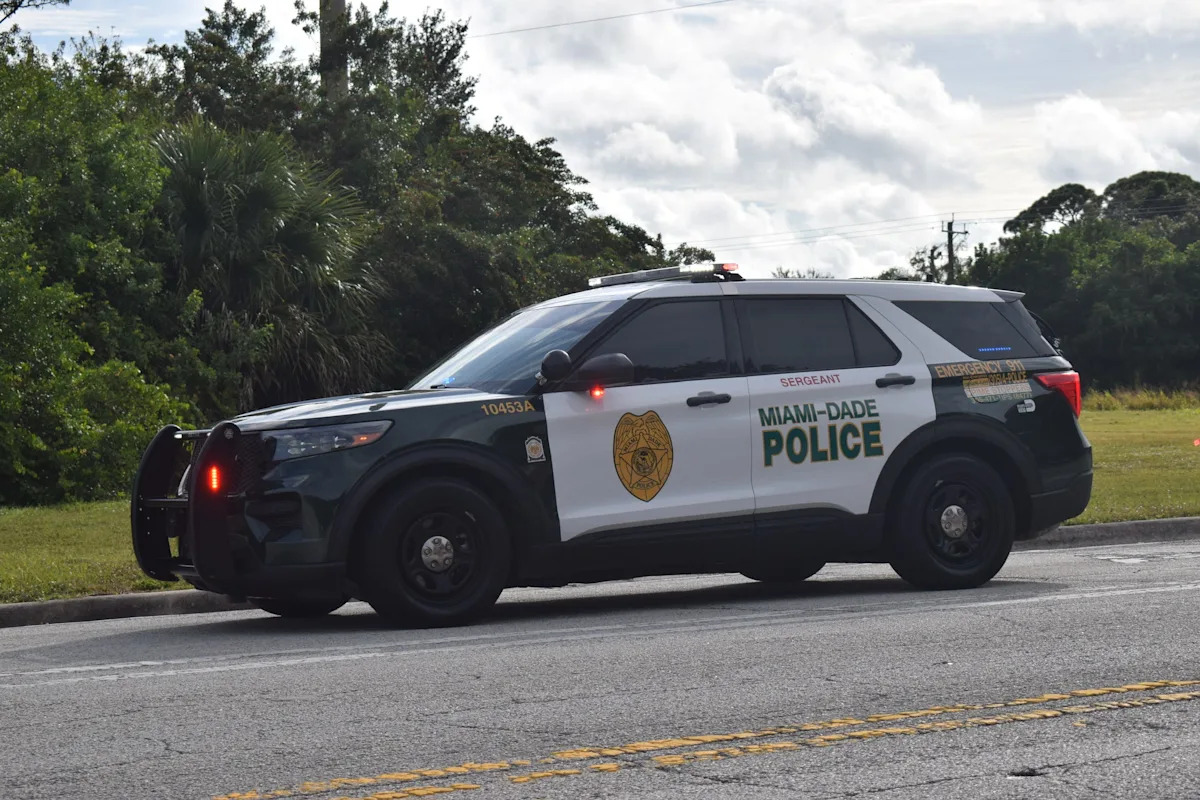
When Miami Beach police questioned Raquel Pacheco over critical comments she made about the city’s mayor on Facebook, First Amendment experts said she did exactly what she needed to affirm her constitutional rights.
On Jan. 12, Pacheco, who lives in Miami Beach, was questioned after she commented on Mayor Steven Meiner’s Facebook post, in which he called the city a “safe haven for everyone.”
“The guy who consistently calls for the death of all Palestinians, tried to shut down a theater for showing a movie that hurt his feelings, and REFUSES to stand up for the LGBTQ community in any way (even leaves the room when they vote on related matters) want you to know that you’re all welcome here,” Pacheco’s comment read, which the officer read aloud to her.
What happened next became a two-and-a-half minute conversation that alarmed First Amendment experts across the country because it appeared that law enforcement was interrogating a resident about protected political speech.
“The woman questioned in the video responds exactly as she should,” said Lee Rowland, executive director of the National Coalition Against Censorship. “I think that is how we should all be responding to government overreach, which is knowing our rights and insisting on retaining those rights, even in the face of government officials or law enforcement who would attempt to intimidate us out of our free speech.”
The Miami Herald, which first reported the story, reported that Meiner’s office complained to the department, and in a statement, the police chief said the mayor didn’t direct the police officials to take action.
“… (O)ur police department believed that inflammatory language that is false and without any factual basis was justification for follow-up to assess the level of threat and to protect the safety of all involved,” Meiner said in a statement. The police department when contacted referred questions to the city manager’s and police chief’s previous joint statement.
This instance is the second in recent months in which officers have questioned a person at their doorstep about speech. In October, officers visited a Pinellas County man after he sent a postcard to Florida’s chief financial officer, reading “YOU LACK VALUES.”
More: Police visit over ‘You lack values’ postcard sparks First Amendment debate
Pacheco has been an outspoken critic of the Miami Beach mayor and has a history of running for office, including the Miami Beach City Commission and the Florida Senate. She’s a military veteran and has lived in Miami Beach since 2004.
“It’s incredibly insulting coming from a man who has never served a day in uniform that he would send two sworn officers to my door, a veteran’s door, to violate my First Amendment rights,” Pacheco said of Meiner.
What First Amendment experts say
The Foundation for Individual Rights and Expression (FIRE), a national free speech group, sent a letter Jan. 16 to the Miami Beach police chief demanding the department affirm First Amendment rights and vow to never send officers for the “purpose of discouraging lawful expression.”
“Our constitutional tradition rests on the premise that the right to criticize those in power – even in scathing terms – is a defining characteristic of a free society,” Aaron Terr, the director of public advocacy, wrote in the letter. “No American should have to fear that expressing a political opinion will lead to a knock on the door from the police.”
Such a scenario underscores the importance of understanding and advocating for rights to free speech, Rowland said. She called this situation a “wildly outrageous violation of the First Amendment.”
“When law enforcement officers show up at your home because of something lawful and political that you said online, that is not a hallmark of a free society. That is a marker of a society that punished political opposition,” Rowland said.
The major effect of these interactions, even though she didn’t get arrested, is the “chilling effect” on speech, said Kevin Goldberg, a First Amendment attorney and expert at the Freedom Forum. Although she didn’t get punished, a visit from law enforcement could scare someone to stop engaging in speech, he said.
“The First Amendment is violated when you feel as though you cannot engage in that type of protected speech again, and other people see this and feel that they cannot engage,” Goldberg said. “If she has to stop and think and not post, she’s been chilled.”
This reporting content is supported by a partnership with Freedom Forum and Journalism Funding Partners. USA Today Network-Florida First Amendment reporter Stephany Matat is based in Tallahassee, Fla. She can be reached at SMatat@gannett.com. On X: @stephanymatat.
This article originally appeared on Tallahassee Democrat: Police visit over Facebook post fuels First Amendment clash in Florida