
One summer more than 40 years ago, two women were raped and murdered in Tampa.
Barbara Grams and Linda Lansen never met. Yet four decades after they died, their names are entwined at the center of a court case that may never have come together if not for one man’s wrongful conviction.
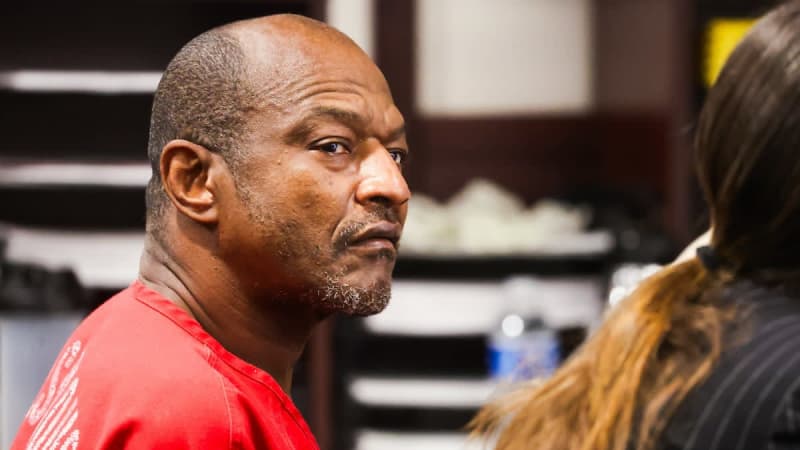
On Friday, a crack opened on the past and out fell Amos Robinson, who rolled in a wheelchair into a Tampa courtroom ahead of what’s set to be two back-to-back trials in March for the two killings.
Prosecutors say Robinson, who has already spent most of his life in prison for another killing, is responsible for the rapes and murders of Grams and Lansen.
The trouble for the state is that they once accused a different man of killing Grams.
That man, Robert DuBoise, went free in 2020 after new evidence cast substantial doubt on the integrity of his conviction and led to his exoneration. He later won a $14 million legal settlement. His story was the subject of the 2024 Tampa Bay Times narrative series, The Marked Man.
Friday’s hearing was the first time Robinson, 62, has been in court since shortly after a grand jury first charged him and another man, Abron Scott, with the slayings in 2022.
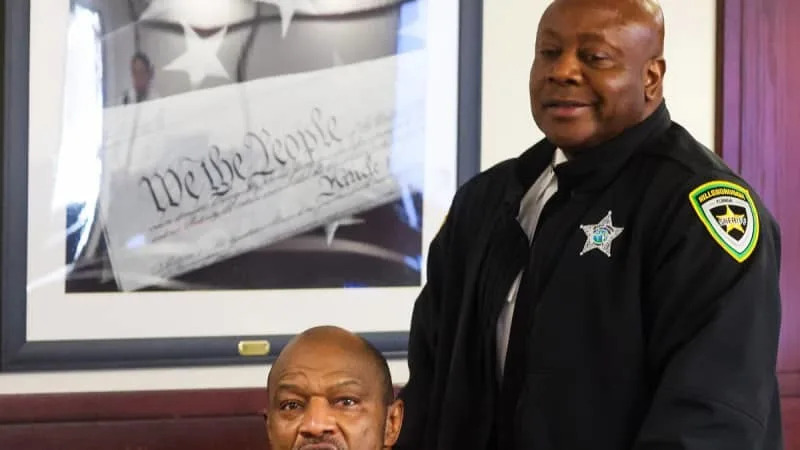
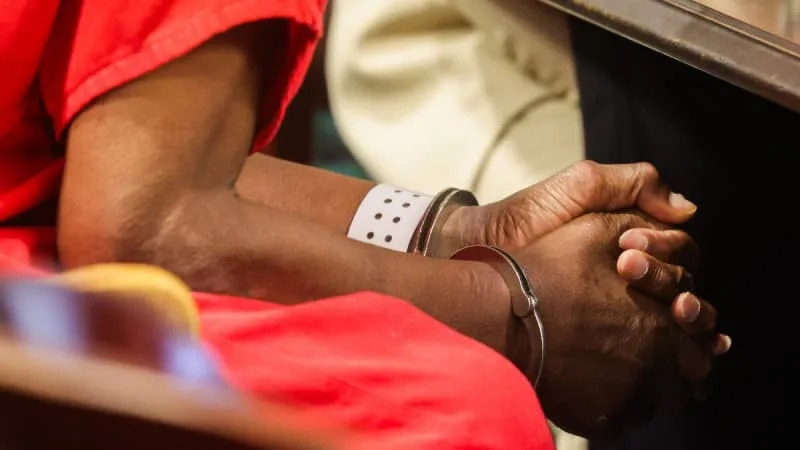
Bald, stooped, shackled and wearing a red uniform, he stared as cameras captured his image while a deputy wheeled him into court.
Seated at a defense table, he leaned forward and craned his neck throughout a nearly three-hour hearing that hashed out much of what jurors will and will not hear about the the circumstances surrounding the uncommonly complex case.
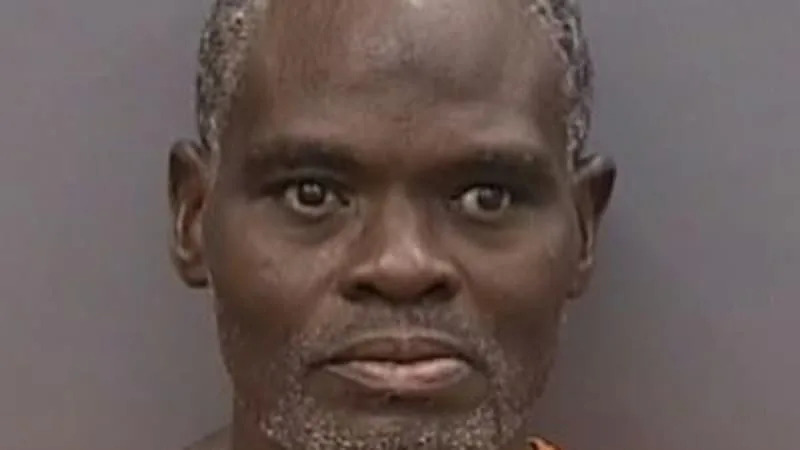
Scott, 60, his co-defendant, pleaded guilty in 2024 to his role in the crimes and agreed to testify against Robinson in exchange for a life sentence.
As Robinson now heads toward trial, his defense attorneys appear poised to raise doubt about his guilt by pointing to DuBoise.
In court Friday, Assistant Public Defender Jamie Kane mentioned that the defense plans to bring as a witness their own DNA expert, who “cannot exclude” DuBoise as the source of foreign DNA found on Grams.
“Yes, Mr. Robinson is in there. Yes, Mr. Scott is in there,” Kane said. “However, there is a third unknown contributor.”
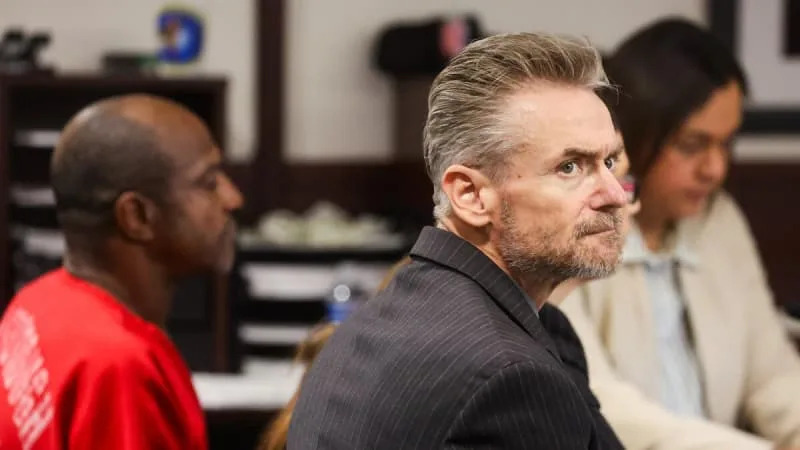
The defense lawyer divulged no other details in court. But the phrasing “cannot exclude” is not the same as saying the DNA is a match.
Indeed, records of DNA testing in DuBoise’s case showed he was excluded as the source of two DNA profiles identified on rape kit slides taken during Grams’ autopsy and long stored in the Hillsborough medical examiner’s office. Those two DNA profiles were matched to Robinson and Scott, prosecutors say.
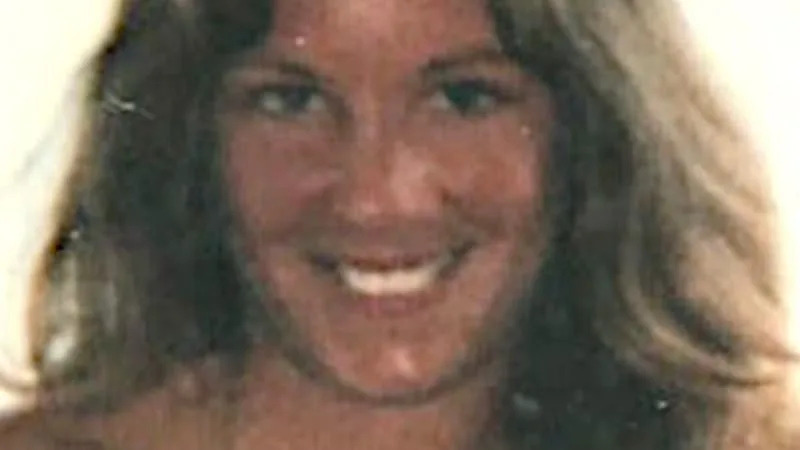
Grams, 19, was attacked one night in August 1983 as she walked home from her job at the Hot Potato restaurant in the defunct Tampa Bay Center shopping mall. She was found the next morning behind a North Boulevard dental office, raped and beaten with a wooden board.
DuBoise, who went to trial in 1985, was convicted largely on bite mark analysis. He was one of numerous people from whom police took tooth molds, which were compared to a mark on Grams’ cheek.
Bite mark analysis has since come to be widely regarded as unreliable. It has been identified as a factor in more than 30 wrongful convictions nationwide. A dentist consulted by DuBoise’s lawyers in 2020 opined that the mark on Grams was not even a bite mark at all.
Yet Robinson’s defense is also poised to use the same evidence. Their listed witnesses include Richard Souviron, the forensic dentist who in 1983 opined that DuBoise’s teeth were a match to the mark on Grams.
Souviron years later expressed regret for the certainty of his testimony in DuBoise’s trial, saying the most he could say now is that he could not exclude him as a source of the mark on Grams.
The state unsuccessfully argued Friday for a ruling barring the defense from trying to suggest that DuBoise or any other person might have committed the murder.
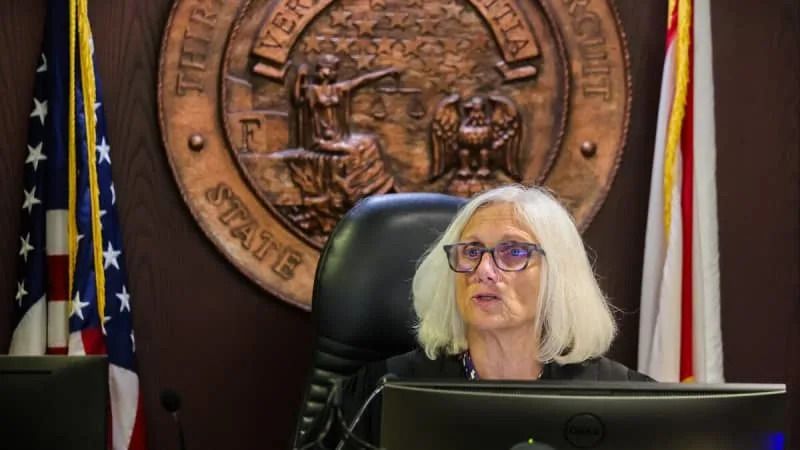
Hillsborough Judge Lyann Goudie said that, under the law, the defense is allowed to make such arguments.
“You can have your theories,” Goudie told the defense. “We all know what true science says about bite mark identification.”
DuBoise spent 37 years in prison — the first three on death row — before an unlikely collaboration between the Innocence Project and the State Attorney’s Office conviction review unit uncovered the DNA evidence that spurred his release.
His exoneration spawned a renewed investigation that focused on Robinson and Scott, whose DNA matched the rape kit slides from Grams, according to prosecutors.
A grand jury later indicted the pair for her murder and the killing of Lansen, whose case was long unsolved.
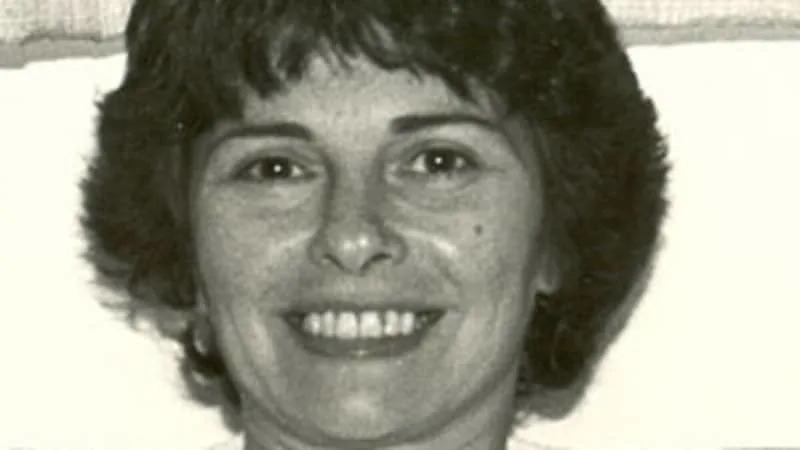
Lansen, 41, a single mother and freelance photographer, vanished one evening in July 1983 after leaving her Tampa apartment. A teenager that nightfound her purse discarded by a Clearwater roadside.
A man out walking the next morning found her body lying amid weeds at a dead end of Old Memorial Highway in Town ’N Country. She, too, had been raped. She’d been shot four times in her head with a small-caliber gun.
Her car, a 1981 Dodge Diplomat, was later found abandoned in Tampa’s North Bon Aire neighborhood. In 2007, a fingerprint on her car window was identified as a match to Scott’s thumb. Advanced DNA testing in 2020 identified both Scott’s and Robinson’s genetic profiles on rape kit samples in Lansen’s case.
Former Hillsborough State Attorney Andrew Warren, who created the conviction review unit that identified DuBoise’s wrongful conviction, announced the indictments against Robinson and Scott on Aug. 4, 2022.
Coincidentally, it was the same day that Gov. Ron DeSantis suspended Warren from office and appointed Suzy Lopez to replace him. Lopez later defeated Warren in the 2024 election, a hotly contested race that saw DuBoise’s case become something of a political football.
Scott later admitted in pretrial testimony that he and Robinson committed both murders. No one else was with them,he said.
Robinson faces the death penalty if convicted.
Much of Friday’s hearing centered onarguments from Assistant State AttorneysRonald Gale and Chinwe Fossett that the two murder cases should be presented together before a single jury in a single trial.
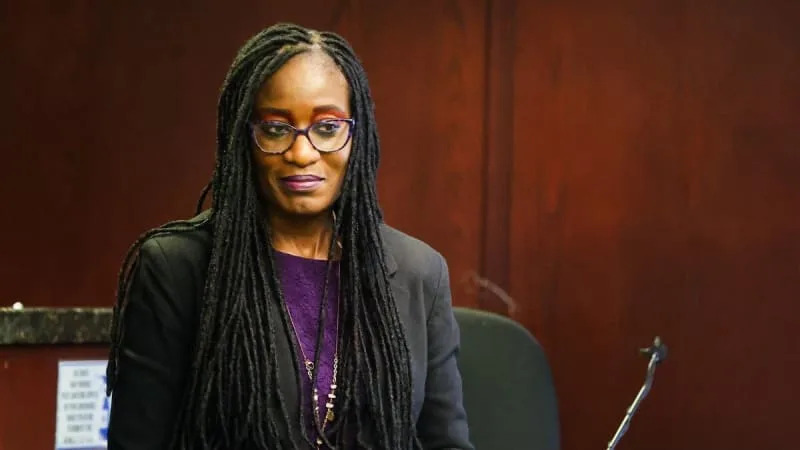
But the judge found that the circumstances of the Grams and Lansen murders were too distinct for them to be tried together.
That means two trials and two juries.
The case is the fifth time in Robinson’s life that he has been accused of murder. It is at least the fourth time that he has faced the threat of a death sentence.
Still unclear is how much the juries in the Grams and Lansen trials will hear about evidence in the other. Also unclear is how much they will hear about the crime that first put Robinson in prison.
He and Scott were originally sentenced to death for the October 1983 murder of Carlos Orellana. A Honduran immigrant, Orellana was attacked in the parking lot of a Tampa bar, forced into his car, then driven to an isolated area of Oldsmar, where he was run over.
Both Robinson and Scott admitted to that crime. Both later had their sentences reduced to life.
In 1990, both were charged with a third man in the September 1983 murder of Herminia Castro. The Tampa seamstress was found shot to death in the trunk of her burning car early one morning near an East Tampa cemetery. That case fell apart after a witness gave the trio an alibi.
Robinson later was convicted of two more murders. The victims were men he killed in prison.