
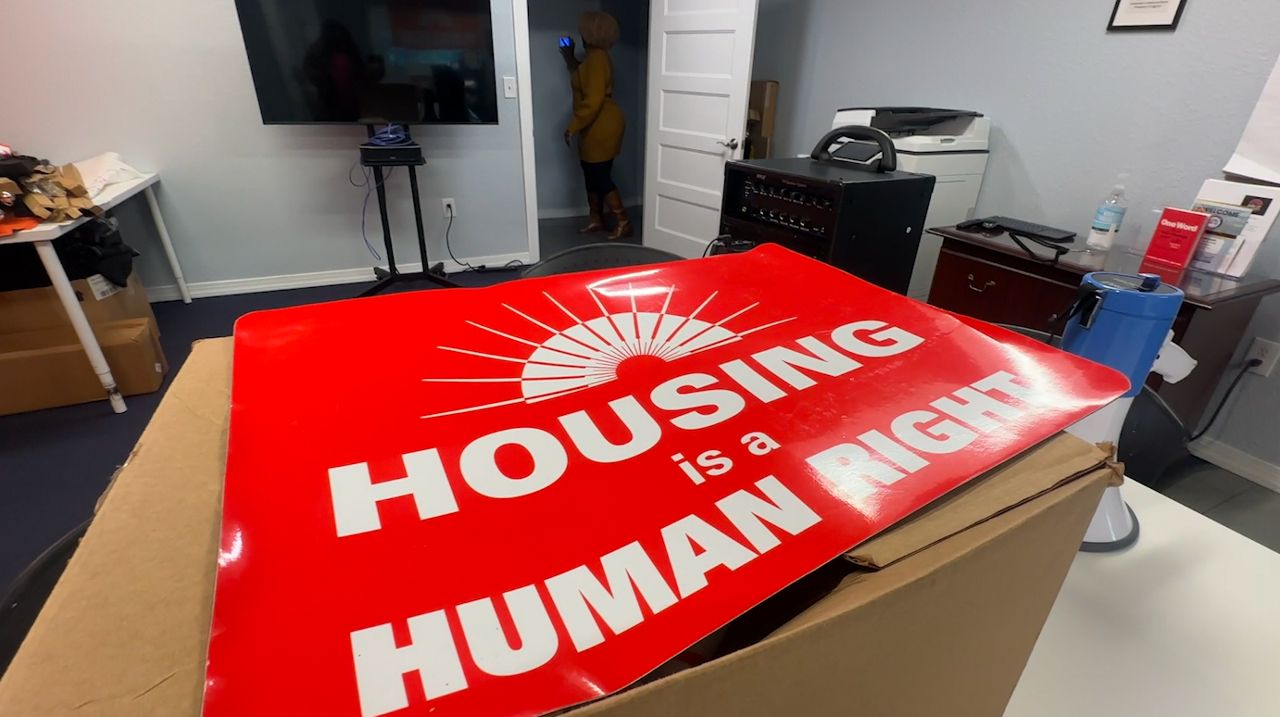
TAMPA, Fla. — A local housing justice advocacy group is calling on the city of Tampa to bring back a landlord registry, arguing it would give renters more transparency and protection in an increasingly competitive housing market.
Florida Rising said the tool would allow tenants to identify property owners, track repeat code violations and avoid unsafe living conditions — information, they said, is especially critical as rents rise and affordable housing becomes harder to find.
What You Need To Know
Florida Rising is calling on the city of Tampa to bring back a landlord registry, arguing it would give renters more transparency and protection in an increasingly competitive housing market
For years, Tampa required landlords to register rental properties through a rental certificate program. That policy was repealed on May 4, 2023. City officials confirm property owners are no longer required to formally register each rental unit, though landlords must still obtain a city business tax receipt to legally operate
According to a 2025 statewide rental market study from the University of Florida’s Shimberg Center for Housing Studies, demand for housing has outpaced supply
Florida Rising argues a landlord registry would not solve the housing crisis on its own, but could give renters more confidence when choosing where to live and who to rent from
“Renters need to know who they are renting from because they are signing a contract,” said Robin Lockett, regional director of Florida Rising Tampa Bay.
Lockett, who also serves on the city’s Affordable Housing Advisory Committee, said a registry could help renters evaluate landlords the same way they research other major financial decisions.
“How do they treat the the clients or the customers? What eviction rate do they have? Where do you know everything? How clean do they keep the apartment complex? Are there complaints about it? Have those complaints been verified?” she said.
Registry repealed in 2023
For years, Tampa required landlords to register rental properties through a rental certificate program. That policy was repealed on May 4, 2023.
City officials confirm property owners are no longer required to formally register each rental unit, though landlords must still obtain a city business tax receipt to legally operate.
Lockett said removing the registry weakened accountability.
“They used to have a business registry, but there is no way to enforce it,” she said.
Rental market pressure growing statewide
Florida Rising’s push comes as housing pressures continue to mount across the state.
According to a 2025 statewide rental market study from the University of Florida’s Shimberg Center for Housing Studies, Florida added more than one million households between 2019 and 2023, including nearly 200,000 new renter households. During that same period, the state gained more than 240,000 multifamily units.
But demand has outpaced supply, driving median rent from $1,238 to $1,719, a 39% increase.
Lockett said the consequences are visible on the streets.
“To be honest, because of the housing market and the foreclosures and so forth, I see a lot more people homeless,” she said.
Advocates say registry would empower renters
Florida Rising argues a landlord registry would not solve the housing crisis on its own, but could give renters more confidence when choosing where to live and who to rent from.
“I think with the people that are able to rent. The first step is for them to find out who they’re renting from and for them to make a decision as to whether they fit in regards to that business transaction,” Lockett said.
The group said it plans to raise the issue with city leaders as Tampa continues to grapple with growth, affordability and housing stability.