

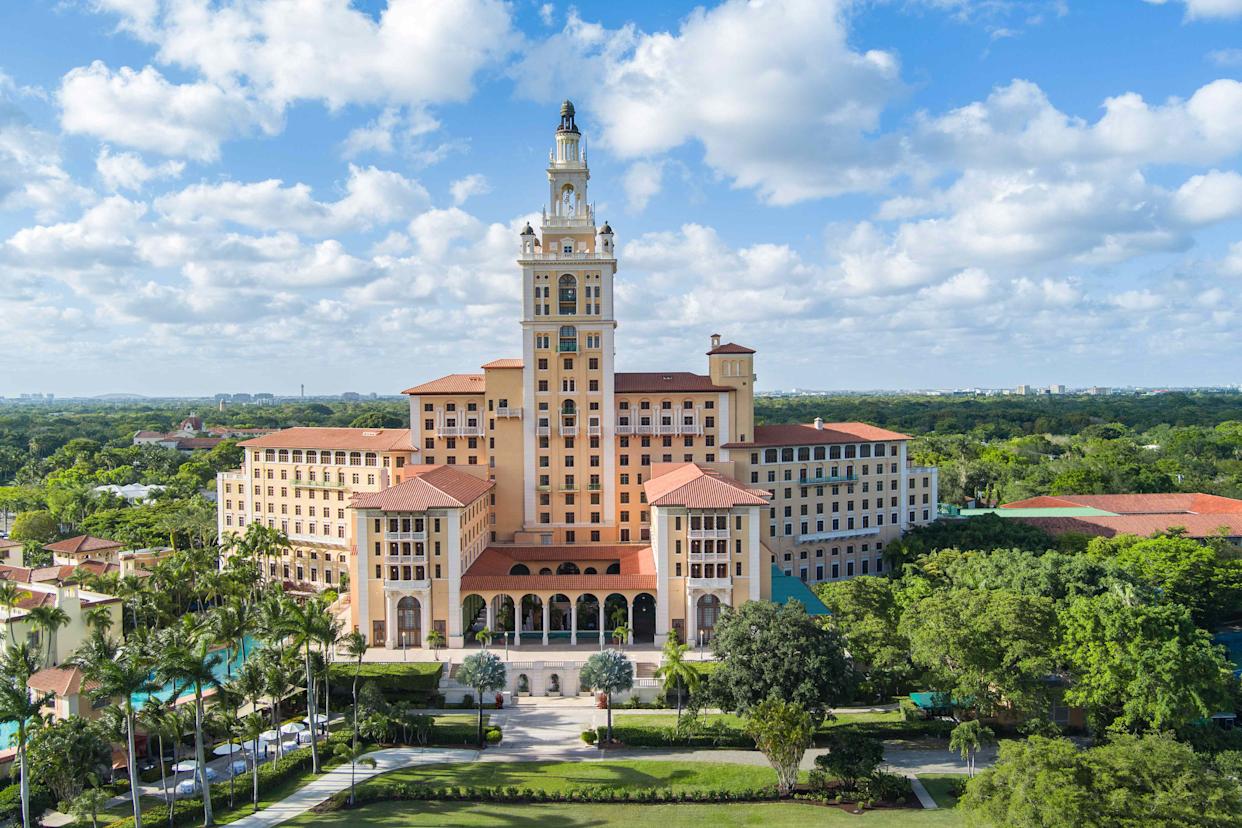
A thousand drones lifted into the night, tracing the Biltmore Hotel’s 315-foot tower in light, a modern tribute to a century-old vision. Below, guests in black tie waltzed across a custom checkerboard dance floor beneath a canopy of white ostrich feathers and crystal. Champagne towers glittered, and a 14-piece big band brought the Jazz Age back to life. This wasn’t just an ordinary gala. It was the celebration of 100 years since George Merrick opened the doors to his Mediterranean Revival masterpiece—and Coral Gables, the city that grew up alongside it, marked its own centennial milestone.
Architectural Legacy and Merrick’s Vision
When George Merrick partnered with hotelier John McEntee Bowman in 1924, he dreamed of a “City Beautiful” showcasing a master-planned community of boulevards, plazas, and Mediterranean Revival architecture. Two years later, the hotel they built opened as the crown jewel of his new city. Designed by the celebrated firm Schultze and Weaver—hotel architects behind New York’s Waldorf Astoria and a collection of landmark Biltmore and luxury properties—the structure rises in Mediterranean Revival splendor, blending Spanish, Moorish, and Italian influences across 150 lush acres.
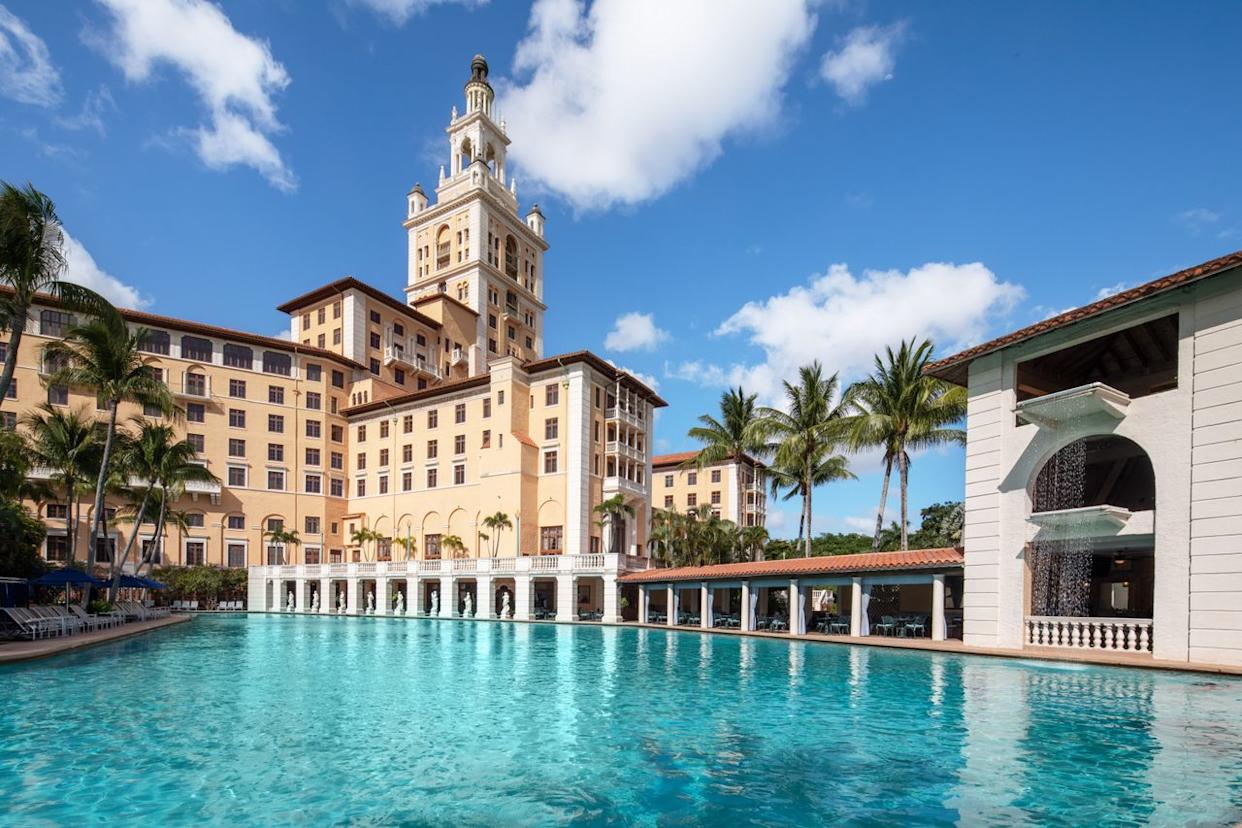
The tower defines the skyline. Modeled after Seville’s medieval Giralda, it soars 315 feet, visible for miles across Coral Gables’ tree-lined boulevards. Inside, hand-painted frescoes grace barrel-vaulted ceilings above travertine floors and Corinthian marble columns. An open-air courtyard centers around a fountain, while the legendary pool—at 23,000 square feet, one of the largest hotel pools in the country and the largest on the East Coast—stretches beneath palms like something from a Gatsby daydream.
 A Century of Transformation
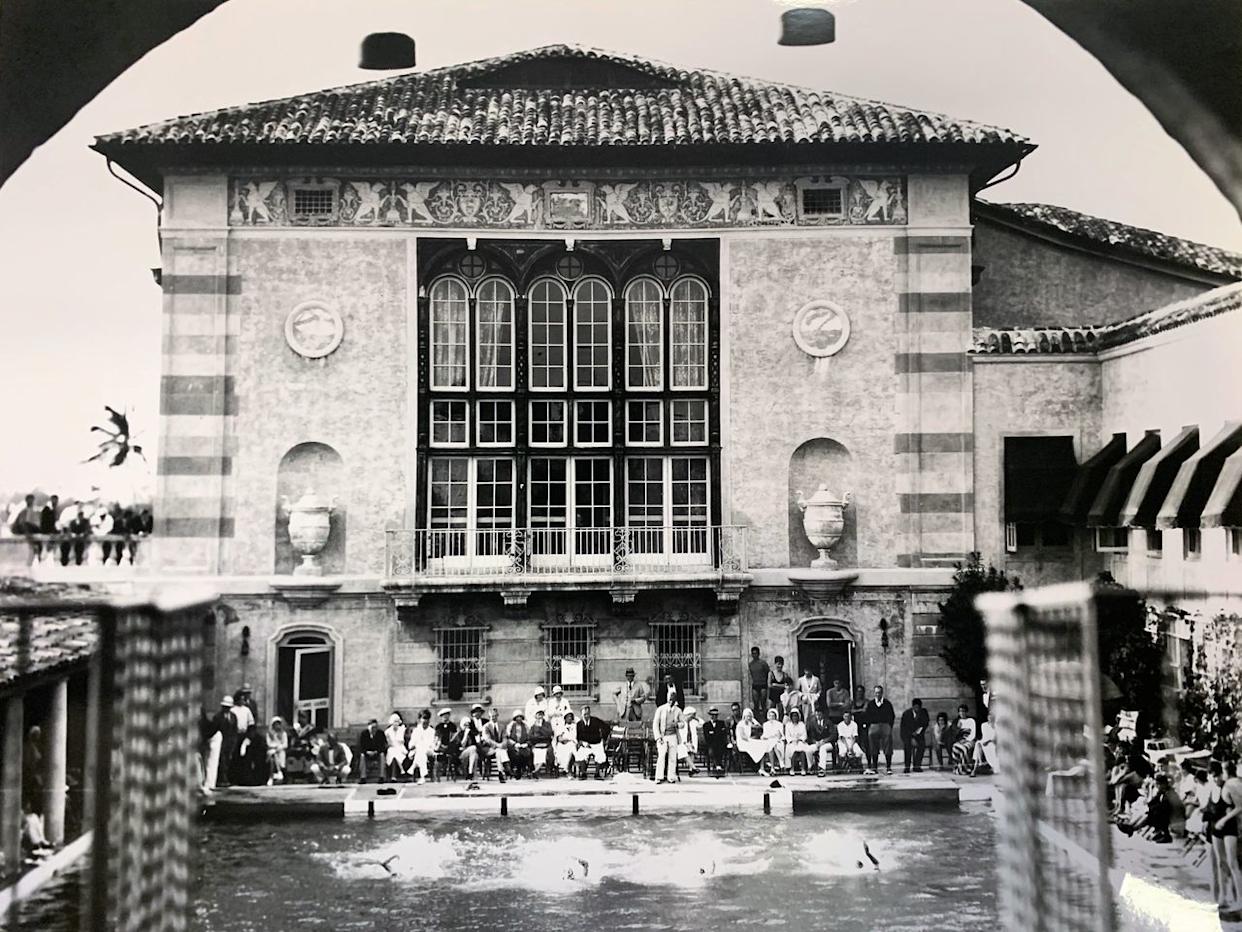
The Biltmore’s early years sparkled with Jazz Age glamour. Ginger Rogers, Judy Garland, and the Duke and Duchess of Windsor swept through its grand halls. Johnny Weissmuller—before his Tarzan fame—worked as a swimming instructor and set world records in that legendary pool. Up to 3,000 spectators gathered on Sundays to watch aquatic shows, synchronized swimmers, and fashion shows that defined an era.
Then came 1942, and glamour gave way to triage. The War Department converted the hotel into a 1,200-bed military hospital for wounded servicemen, sealing windows with concrete and covering marble floors with linoleum. “Thousands of wounded soldiers were treated here,” notes Tom Prescott, the hotel’s President and CEO. “Spaces once designed for glamour became places of healing and resilience.” The building served as a Veterans Administration hospital and University of Miami medical school campus until 1968, when it finally closed.
Years of abandonment followed before the city intervened. In 1992, the Prescott family’s Seaway Hotels Corporation took over, initiating a $40 million, decade-long restoration.
 Southern Hospitality Meets Miami Glamour
“The Biltmore’s hospitality is rooted in graciousness, discretion, and a sense of welcome,” Prescott explains. “There’s a Southern warmth to how we treat guests that is attentive but never intrusive. It’s paired with Miami’s natural flair, elegance, sophistication, and confidence.”
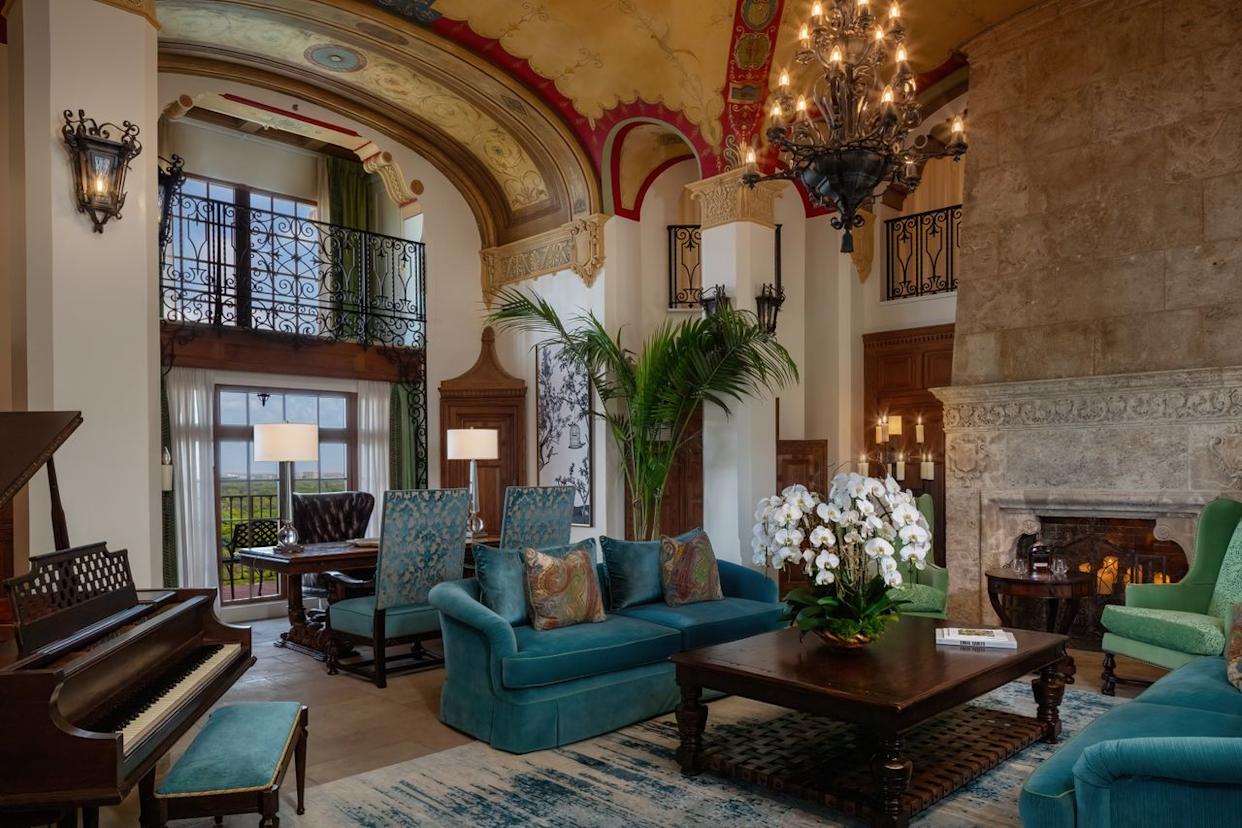
That philosophy extends through every detail of the 271-room resort. The 174 suites—dressed in plums, silver sage, and regal gold—open onto balconies overlooking either the Donald Ross-designed 18-hole championship golf course or that famous pool. The European spa offers a Himalayan salt stone sauna, while the 10,000-square-foot fitness center and tennis courts keep guests active. At Fontana, Italian cuisine unfolds around the courtyard fountain, and Sunday’s champagne brunch remains one of Miami’s most celebrated traditions. “We’ve hosted royalty, presidents, and movie stars,” Prescott says, “but the approach has always been the same: everyone is treated as if they belong here.”
Exploring Coral Gables
Incorporated April 29, 1925, Coral Gables grew alongside The Biltmore, both born from Merrick’s Mediterranean Revival dream. Today, those tree-canopied streets still lead to treasures: Fairchild Tropical Botanic Garden with its 83 acres of rare palms and tropical plants, the Merrick House & Gardens, where George Merrick’s family home stands preserved, and Miracle Mile’s shops and restaurants. The neighborhood feels worlds away from typical Miami—gracious, walkable, and utterly timeless.
 The Next 100 Years
When The Biltmore earned its National Historic Landmark designation in 1996, it joined the rarest of American treasures—just three percent of historic structures achieve that honor. But Prescott sees beyond preservation. “What I hope remains unchanged is the soul of the Biltmore,” he reflects. “The feeling you get when you arrive, the calm confidence if you will, should and will always remain under our stewardship.”
A century after that first opening night, The Biltmore proves that vision endures—and that a century-old tower in Coral Gables can still set the tone for an entire city. “If, 100 years from now, people still say that the Biltmore feels timeless, welcoming, and deeply connected to its community, then we will have done our job.”
Read the original article on Southern Living