
During the second week of the 2026 legislative session, high-profile health care and education bills passed their respective committees, but equally important was the movement of several bills addressing past and future local government preemptions.
The focus on local government this session includes the ongoing Tallahassee-based DOGE efforts initiated by state Chief Financial Officer Blaise Ingoglia, the multiple bills filed to phase out homestead property taxes, and the steady stream of bills to preempt local government authority on land use and comprehensive planning.
LOCAL GOVERNMENT PREEMPTION BILLS
Local Government Enforcement Actions — HB 105 passed with little debate by a vote of 16-0 out the Civil Justice and Claims Committee, the first of its three committees. The bill is reminiscent of the powerful 2023 local government preemption bill, SB 170 — Local Ordinances, that became law. Both of the bills make it easier for local governments to be sued if businesses or the public do not like decisions made under local rules or regulations, which could add to lengthy, costly legal battles. In its current form, HB 105 is very broad and applies to any local government decision, citation or denial, or any unreasonable enforcement action or regulatory action by a local government or special district that impedes economic development — think single-use plastic bans and sea turtle lighting ordinances.
Local ordinances have successfully protected the unique environments on Sanibel and Captiva, which serve as the backbone of our economy. It is imperative that local leaders have the ability to address local needs.
The Senate version, SB 588, had not yet been scheduled for its first committee hearing as of Jan. 23.
Land Use Regulations for Local Governments Affected by Natural Disasters — SB 840, the “fix” to last session’s far-reaching SB 180 preemption bill, was heard in its second of three committees last week and passed by a vote of 9-0. Public comments were supportive of the bill and happy that it returned control of important development decisions to local decision-makers. SB 840 will be heard next in the Rules Committee, its third and final committee stop. The comparable House version, HB 1465, had not yet been heard in its first committee as of Jan. 23.
BILL OF THE WEEK
The 2026 legislative session is well underway, and for our first “Bill of the Week” we are taking a look at is SB 840 — Land Use Regulations for Local Governments Affected by Natural Disasters. The bill is sponsored by Sen. Nick DiCeglie and aims to provide a legislative fix to some of the more problematic provisions of SB 180 that passed last year.
Those who were following along with the 2025 session will probably remember SB 180’s passage and the uproar that followed. While initially intended to support communities impacted by Hurricanes Helene and Milton, amendments warped the bill into a preemption of local governments’ ability to adequately protect their communities.
Contained in the bill, as signed, were provisions that prevented counties and municipalities from implementing any changes to their land development code that could be deemed “more restrictive.” These restrictions would apply to any area within 100 miles of a named storm and persist for a year after the storm.
This severely hampered local elected officials’ ability to respond to their communities’ needs and protect the people, property and resources they are charged with managing. The bill’s signing was met with immediate outcry and lawsuits, and now SB 840 will hopefully address some of the more damaging provisions.
If you would like a deeper exploration of the damage SB 180 is causing to local planning capabilities, check out the Sanibel-Captiva Conservation Foundation’s (SCCF) podcast episode on the issue at https://open.spotify.com/episode/3o28LEXdq5pIDN3aFsFErG.
As written, SB 840 will move up the temporary land use limitations associated with Hurricanes Debby, Helene and Milton from late 2027 to June 30. It would also narrow the geographic scope of restrictions to impacted areas from 100 miles to 50 and require a Federal Emergency Management Agency disaster declaration.
It also shifts the one-year moratorium on restrictions to only apply to properties that were actually damaged by the storm. These fixes would allow communities to update their land development codes and land use plans to be responsive to the needs of their people in the face of stronger storms, without impeding rebuilding efforts.
The house companion bill, HB 1465, is similar but still retains some provisions from the previous bill. Namely, the 100-mile radius from a storm’s track would still establish the limits on “burdensome” and “restrictive” statutes. However, the bill also defines those terms, something left out of the previous bill.
Check out our 2026 Legislative Tracker at https://sccf.org/what-we-do/2026-legislative-session/ to see a table of the bills that the SCCF is following, updated daily during session.
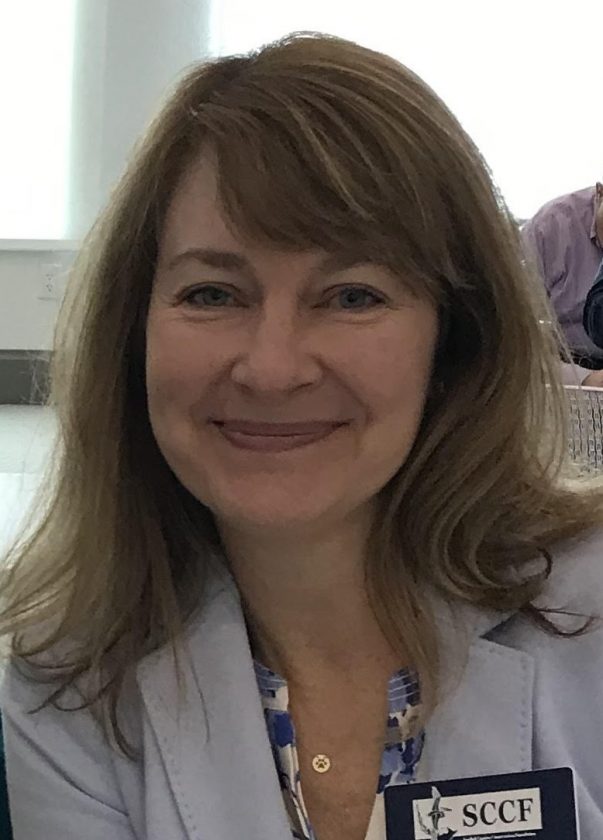
Holly Schwartz is policy associate for the Sanibel-Captiva Conservation Foundation (SCCF). Founded in 1967, the SCCF’s mission is to protect and care for Southwest Florida’s coastal ecosystems. For more information, visit sccf.org.