
The term “naked mom” sounds like internet bait. In reality, it describes something far less dramatic: a mother moving through her own home without turning every day moments like showering or changing into a performance of modesty.
Supporters see it as a way to strip shame from bodies and raise kids who aren’t scandalized by anatomy. Critics, meanwhile, worry about boundaries, privacy and where comfort should — and shouldn’t — begin inside a family.
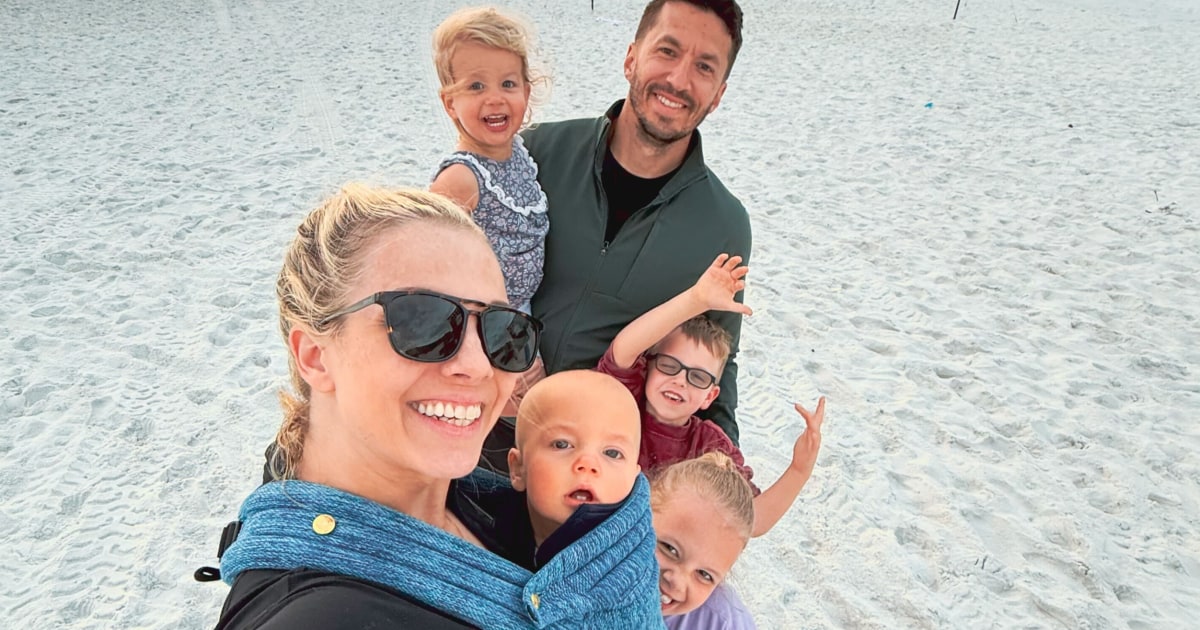
For Bonnie Engle, a health and fitness coach in Tampa, Florida, the label feels less like a philosophy and more like shorthand for daily life with four kids where privacy is often a moving target.
“It’s really just about normalizing bodies and not making it weird,” Engle tells TODAY.com. “If I get out of the shower and there’s no towel, or my clothes are still in the dryer, I don’t see a problem with walking to the laundry room without my clothes on. It just doesn’t feel like a big deal to me.”
She points to her own childhood as part of the reason she feels comfortable with her body, noting that her mother never framed the body as something to hide. As an adult, she says, she’s noticed that friends who didn’t grow up with that kind of openness often seem uncomfortable with nudity and their own bodies.
Recently, Engle turned to her Instagram followers with a question many parents quietly wrestle with: At what point, should she start covering up? Engle and her husband, Andrew, share four children: Evelyn, 7, Atlas, 6, Penelope, 3, and Dallas, 18 months.
The response was immediate. Thousands of comments poured in reflecting a wide range of experiences, from enthusiastic agreement to cautionary personal stories.
“I am a naked mom and had a naked mom. I think that society over sexualizes the naked body when it comes to children. When I stopped bathing and seeing my oldest naked he stopped seeing me naked, it’s really that simple. A mother’s body shouldn’t be shameful in the eyes of her children…”“I didn’t not have one and am one. I pray it helps my kids know what bodies look like. My sons are 10 and 8 now and I keep the nakedness to my room, but if they barge in (almost daily) there is no anger/surprise/concern. But they do barge in a little less now.”“Always been a naked mum, I’m raising 5 boys and they don’t bat an eyelid. They do come out with funny questions sometimes, but love that they are just comfortable asking and don’t feel any awkwardness around something as natural as the human body.”“Naked mom when the kids were younger. When they started wanting more privacy for changing/bathing, that was my cue to be more discreet around them, too.””Coming in from different perspective as a child of a naked mom. Dealing with lots of issues later in life because of this. I’m 38 and still struggling. You do what’s right for your family, but just from my perspective there are healthy and unhealthy ways to go about this. I think a lot of comments saying when privacy starts being an issue to back is on point. My mother did not, she continued to change in front of me when I hit a point I wasn’t comfortable with it.”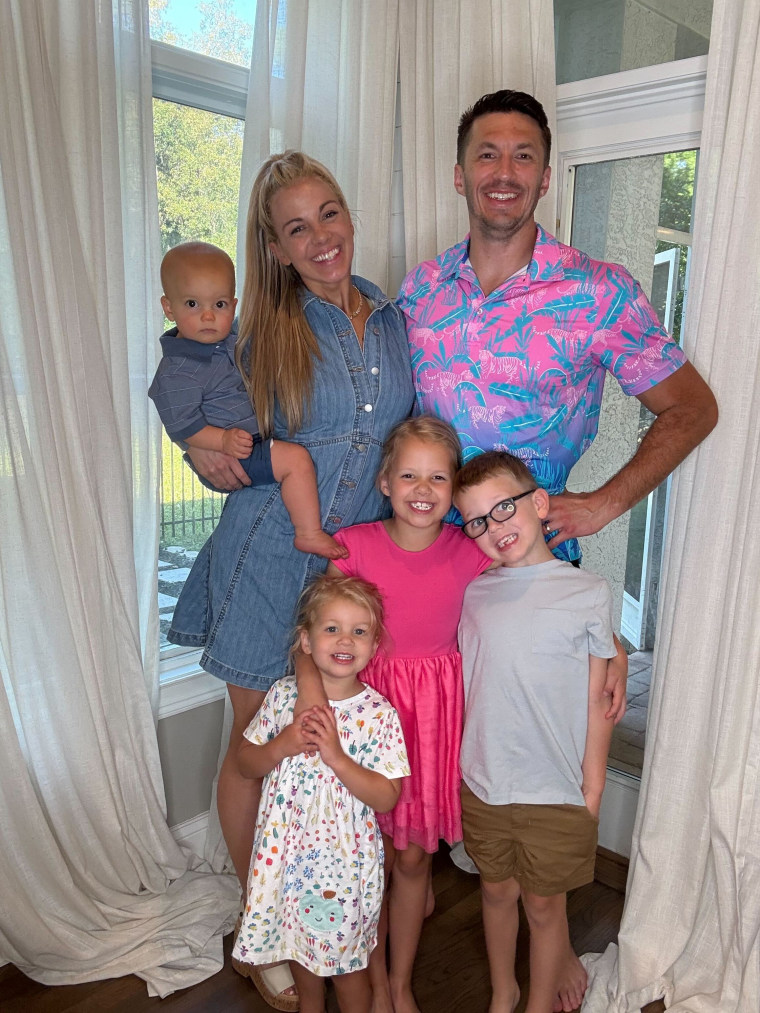 For Tampa mom Bonnie Engle, being a “naked mom” is just life with four kids and very little privacy.Courtesy Bonnie Engle
Megan Michelson and Mary Flo Ridley, educators behind the parenting platform Birds & Bees, say there is no universal age at which parents need to change their level of openness. Instead, they recommend regularly reassessing everyone’s comfort as children grow. Awareness of privacy often emerges during the elementary school years, with some children remaining unfazed and other seeking more boundaries.
“We always say: respect the most modest person in the home,” Michelson tells TODAY. “That might be a child, a parent or a partner. When someone starts showing signs of discomfort, that’s the cue to adjust.
Ridley says parents should pay attention to verbal and nonverbal signals and be willing to shift boundaries as children mature. What works for a toddler, Ridley points out, may not feel appropriate for a preteen, and that evolution isn’t a failure, but a sign of healthy development.
Engle says none of her children have shown signs of unease so far. When she and her husband check in, they emphasize that privacy is always an option. “They find the question strange,” Engle says. “Like, ‘Why should I feel uncomfortable?’”
Keneisha Sinclair-McBride, a clinical psychologist at Boston Children’s Hospital and an assistant professor of psychology at Harvard Medical School, says the discussion is playing out against a backdrop of unprecedented access to sexualized images online. With pornography increasingly easy for children to encounter, she says that what kids see, and how adults help contextualize bodies, can shape early ideas about anatomy.
Just as important, Sinclair-McBride says, is the way parents talk about their own bodies.
“Regardless of whether a parent is more open or modest, talking positively about our own bodies is what really sets the tone,” she tells TODAY. “Even offhand comments — especially negative ones, don’t go unnoticed. Children are always listening, and they internalize how parents speak about their bodies.”