
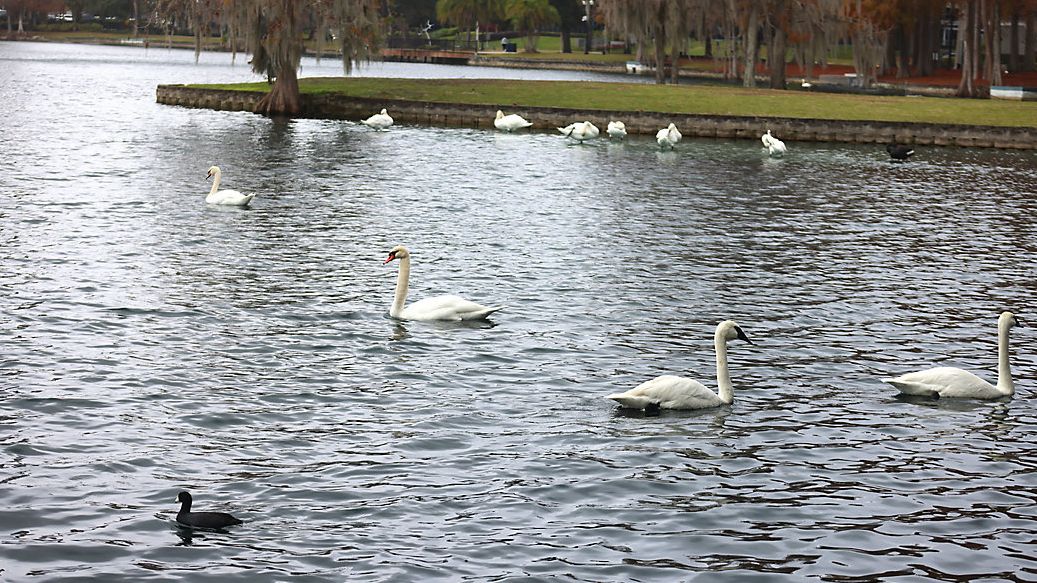
ORLANDO, Fla. — A group of Orlando residents is raising concerns about the recent deaths of swans at Lake Eola, weighing how to best care for the birds while keeping one of the city’s most popular parks safe for visitors.
What You Need To Know
Nearly half of Lake Eola’s swan population has died amid an avian influenza outbreak, raising alarm among residents
Concerned citizens are calling for improved animal care, transparency and expert involvement from the city
The group says issues go beyond bird flu, pointing to water quality, infrastructure and missing swans
City officials say they are reevaluating the Lake Eola swan program as a petition gains thousands of signatures
The group says changing conditions at the lake — including water quality, wildlife interactions and public feeding — are prompting a reevaluation of current policies.
The swans have long been a symbol of downtown Orlando, drawing tourists and locals alike, and any changes could affect how the city manages one of its most recognizable attractions.
It has been a tough season for wildlife around the historic lake.
According to the city, thirty-seven birds, including 29 mute swans — four of them fly-ins — have died because of avian influenza.
That represents nearly half of the swans that live around the lake.
A group of concerned citizens gathered at City Hall, saying the welfare of the swans goes beyond the recent flu outbreak.
They are requesting better animal care from the city, ranging from trash removal to infrastructure repairs in areas where the swans live.
“Transparency would include water quality. Transparency would include avian expertise, preferably on staff,” said Orlando resident Andrew Marshall said. “Because we know that they’re not regularly consulted throughout the year. And decisions are not made in partnership with avian care.”
The group is also calling for more resources to be directed toward the well-being of the birds.
Marshall says additional swans died or disappeared during the 2024–25 time frame, and that those losses were not linked to avian influenza.
“Thirty swans died. In addition, during the roundup, we found that 13 additional swans were unaccounted for,” Marshall said. “So, they either died or they were stolen.”
City officials say they are actively reevaluating the Lake Eola swan program to ensure the highest standard of care.
Meanwhile, the advocacy group says more than 2,000 people have signed its “Protect Lake Eola Swans” petition, urging responsible stewardship of the birds moving forward.