
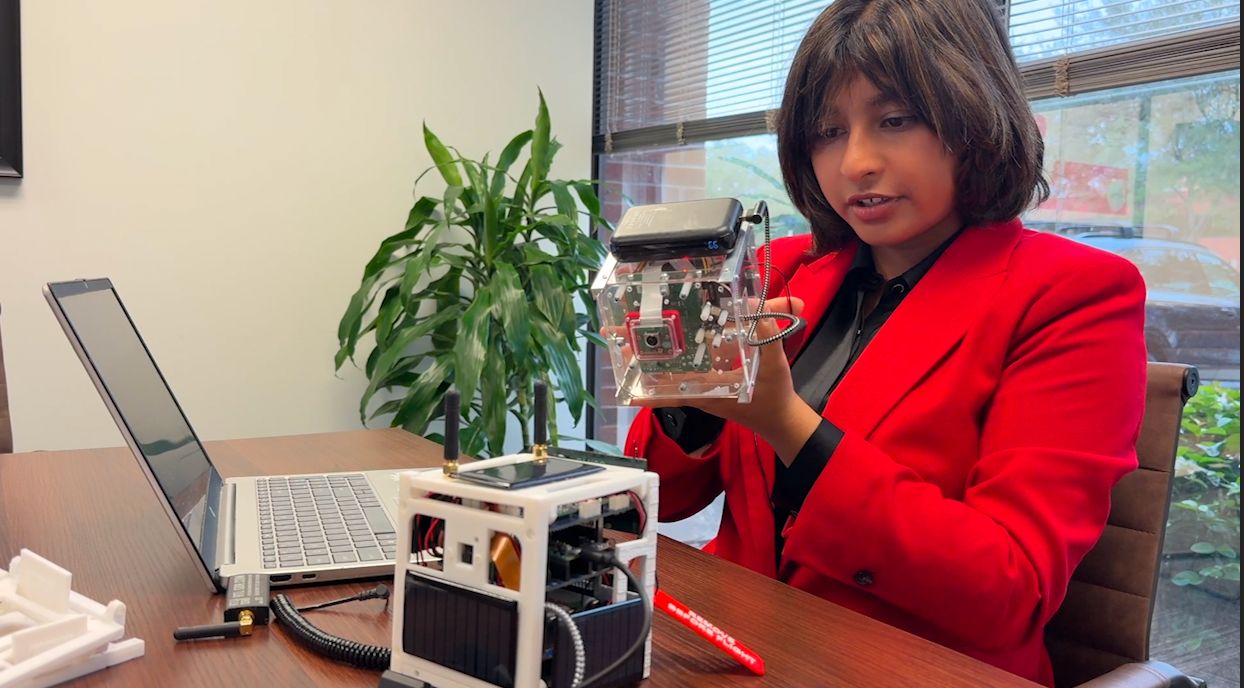
ORLANDO, Fla. — By using new technology to help save lives and check for damage during floods, 15-year-old Orlando Science Schools sophomore Abigail Merchant is already taking her ideas beyond Earth’s atmosphere.
“I noticed that there was plenty of flooding and natural disasters that happened in our area,” she said. “It caused millions of infrastructure loss and thousands of lives every single year.”
What You Need To Know
A 15-year-old Orlando Science Schools sophomore has designed satellite technology to help detect flooding and assess disaster damage during a natural disaster
Her CubeSat uses high-resolution imagery and machine learning to assist first responders
Merchant earned national recognition through MIT’s Beaver Works Build a CubeSat Challenge
Educators say her passion and leadership set her apart as a young innovator
Merchant took that problem and ran with it to new heights, literally. She designed a small CubeSat designed to detect flooding, assess damage, and help locate survivors faster than current systems.
The satellite takes high-resolution images from space, analyzes them using machine learning, and can send alerts to first responders.
“By going and finding the most affected areas, we are no longer sending first responders into areas with potentially no people,” Merchant said.
Merchant’s work has caught national attention, earning her a spot in MIT’s Beaver Works Build a CubeSat Challenge.
“We try to be hard on our kids, to ask those questions. Is it marketable? How will it be successful? How will it work?” said Judith Bright, the science fair director at Orlando Science Schools.
Bright said Merchant isn’t just learning, she’s leading.
“I met Abigail years ago back in middle school,” Bright said. “Abigail is following her passions.”
Merchant’s drive started early.
“Once she broke it down exactly what she was doing, I was blown away,” said Stephanie Szymczyk of Orlando Science Schools. “I’m not going to lie, though. I wasn’t completely shocked. From the day I met Abigail, I knew she was capable of doing things that most humans are not capable of doing.”
Now, that curiosity has turned into an invention that could make a real difference and potentially save lives during disasters around the world.
“You have people around you, you have community, and there are problems that need to be solved,” Merchant said.
Merchant is still working out details on next steps for how this technology can be used in local communities.