
Health officials say measles cases were confirmed in Hillsborough, Manatee and St. Johns counties.
TAMPA, Fla. — The Florida Department of Health (FDOH) confirmed three new measles cases in the state, with two being in the Tampa Bay area.
Health officials say measles cases were confirmed in Hillsborough, Manatee and St. Johns counties, all among adults between the ages of 20 and 24 years old.
While two of the cases were acquired in Florida, the person infected with measles in Manatee County contracted it outside of the U.S., FDOH says.
As of Jan. 22, 2026, there have been 416 confirmed measles cases reported in the U.S. so far this year, according to the Centers for Disease Control and Prevention (CDC).
Measles, also known as rubeola, is an illness caused by one of the most contagious viruses, according to FDOH. Characterized by a red rash that starts on the face and neck, it can lead to serious complications, especially in children younger than 5 years old.
Common measles complications include ear infections and diarrhea, while more serious complications include pneumonia or encephalitis, FDOH says.
Experts say that while encephalitis is rare, this swelling of the brain requires hospitalization and intensive treatment. This can cause seizures, hallucinations, permanent brain damage, blindness, hearing loss and memory loss.
Is measles deadly?
While measles typically doesn’t lead to long-term medical issues, it can be deadly in severe cases, particularly in children younger than 5 and those with weakened immune systems, the Mayo Clinic reports.
According to data from the CDC, there were three measles deaths in the U.S. in 2025.
Measles symptoms in kids
FDOH says measles symptoms appear 7-14 days after contact with the virus and include:
High feverRed and watery eyesCoughRunning noseRash that can start on the face and neck before spreading to the entire body. Rashes appear 3-5 days after the first symptoms.
Koplik spots
About 2 to 3 days after the first measles symptoms appear, tiny white spots called Koplik spots may appear inside the mouth, according to the Mayo Clinic.
How does measles spread?
Measles can spread through the air when someone infected breathes, sneezes or coughs. It can stay infectious in the airways and surfaces for up to two hours, according to the CDC.
Health experts say if one person has it, up to 9 out of 10 people nearby will become infected if they are not protected. The Mayo Clinic adds that a person with measles can spread the virus four days before the rash appears and four days after.
Those most at risk include children and adults who are immunocompromised or have underlying health conditions, infants under 12 months old and pregnant women.
How to treat measles
There is no specific treatment for measles; however, certain medications can help manage symptoms. Vitamin A supplementation may be helpful when given by your health care provider.
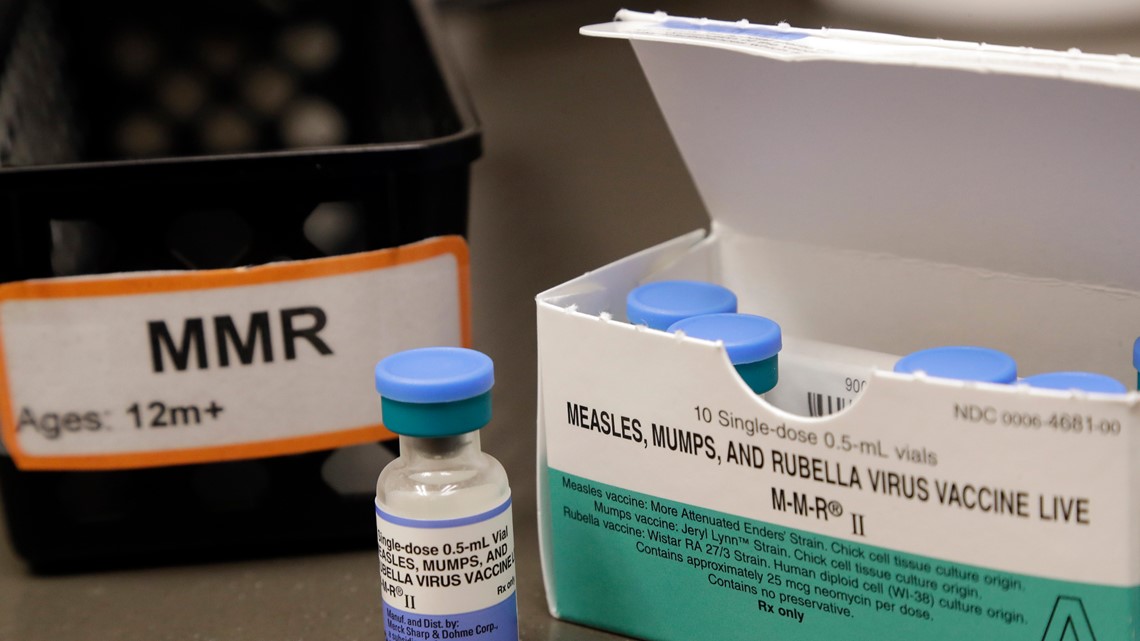
The most effective protection against measles is the measles, mumps, and rubella (MMR) vaccine, the CDC says.
“Most people who are vaccinated with MMR & MMRV will be protected for life,” the CDC states. “Vaccines and high rates of vaccination have made these diseases much less common in the United States.”