
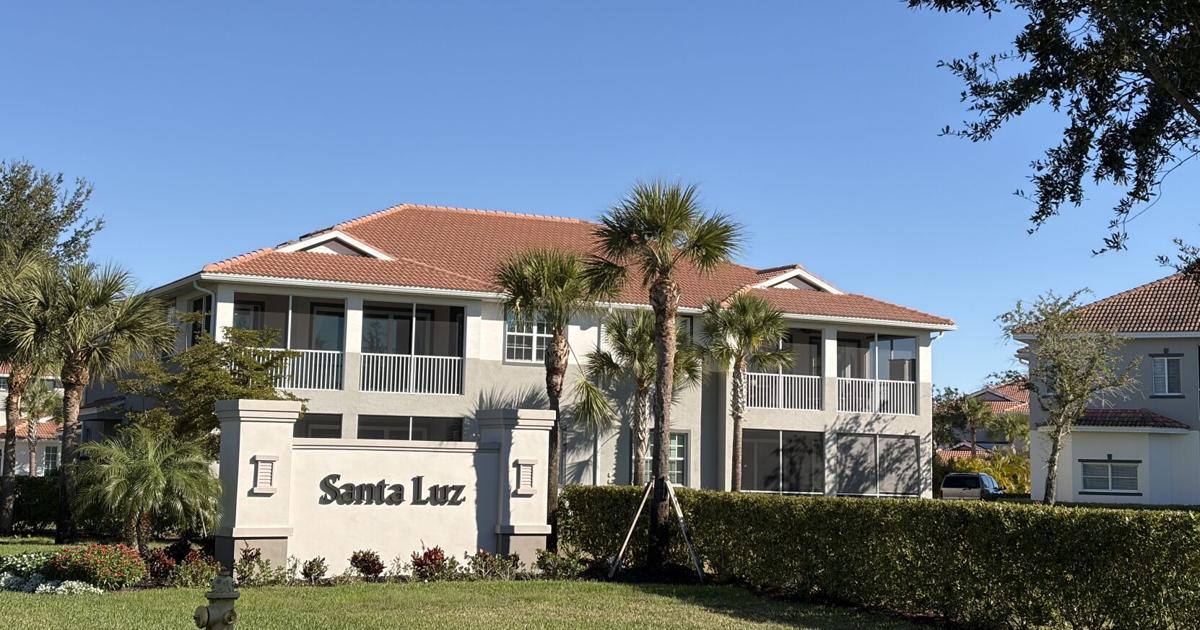
The Naples-Marco Island and Cape Coral-Fort Myers metro areas rank among the nation’s most expensive markets for homeowners association fees, underscoring how monthly dues have become a growing factor in Southwest Florida housing costs.
In Naples-Marco Island, the median HOA fee is $711 a month, accounting for 20.3% of a typical mortgage payment, according to a new report from Realtor.com. That places the area third nationally among large metros where HOA fees consume the largest share of housing costs. Cape Coral-Fort Myers ranked fourth, with a median HOA fee of $475, representing 19.6% of a typical mortgage payment. Both trailed only Miami-Fort Lauderdale-West Palm Beach and Panama City-Panama City Beach.
The Southwest Florida rankings come as HOA fees become increasingly common nationwide. Nearly 44% of U.S. homes for sale now carry monthly HOA dues, up from 34.3% in 2019, Realtor.com found. The median HOA fee rose to $135 in 2025, up from $125 in 2024 and $108 in 2019, continuing a multiyear climb.
“HOAs are no longer confined to condos or brand-new developments,” said Joel Berner, senior economist at Realtor.com. “The HOA-heavy construction boom earlier in the decade is now filtering into the existing-home market.”
Florida dominates the list of metros where HOA fees account for the largest share of housing costs, reflecting both the prevalence and expense of associations across the state. In addition to Naples-Marco Island and Cape Coral-Fort Myers, Panama City, Port St. Lucie, North Port-Bradenton-Sarasota and Sebastian-Vero Beach all ranked among the top 10.


The 2021 collapse of the Champlain Towers South condominium in Surfside prompted sweeping safety reforms in Florida, increasing inspection and reserve requirements that have contributed to higher HOA fees statewide.
Getty Images
Insurance costs and regulatory changes are major drivers. After the 2021 Surfside condominium collapse, Florida enacted stricter inspection and reserve requirements, increasing operating expenses for associations. Rising property insurance premiums, especially in coastal markets, have compounded the pressure.
“Between rising insurance premiums and stricter safety and reserve requirements, many associations are facing higher operating expenses that ultimately get passed on to homeowners,” Berner said.
Nationally, the spread of HOAs reflects shifting patterns in housing development. Nearly 68% of new homes built in 2025 carried HOA fees, compared with 38.9% of existing homes. But the share of existing homes subject to HOAs is growing faster as properties built during the 2020–2022 construction boom enter the resale market.
HOAs remain most common in condos and townhomes, where 84.8% of listings include monthly dues. Yet about one-third of single-family homes now carry HOA fees, up sharply from pre-pandemic levels.
Homes governed by HOAs also tend to be larger and more expensive. Single-family homes with HOA fees have a median size of 2,306 square feet and a median price of $216.76 per square foot, compared with 1,818 square feet and $205.10 for those without dues. Overall, the median listing price for homes with an HOA is $450,000, versus $374,900 for those without.
Despite higher monthly costs, Realtor.com found that HOA status had little impact on how long homes stayed on the market, suggesting buyers increasingly accept dues as part of the cost of ownership.
For Southwest Florida, the combination of coastal exposure, luxury development and stricter insurance and safety rules has made HOA fees a central part of the housing equation and a growing consideration for buyers weighing affordability in an already expensive market.