
GROVELAND, Fla. — A Central Florida horse rescue is on high alert as a cold snap moves into the Central Florida area this week.
What You Need To Know
A blast of cold weather is forcing Lakota Farms in Groveland to take extra measures to protect dozens of rescued horses
Caretakers are using extra hay, blankets, electrolytes, and shelter as temperatures drop below normal
The sanctuary provides a lifelong home for unwanted, abused, and surrendered horses across 50 acres
The cold snap is increasing costs at a rescue that already spends hundreds of thousands of dollars each year to operate
At The Sanctuary at Lakota Farms in Groveland, caretakers are working around the clock to keep rescued horses warm as overnight temperatures fall into unusually cold territory.
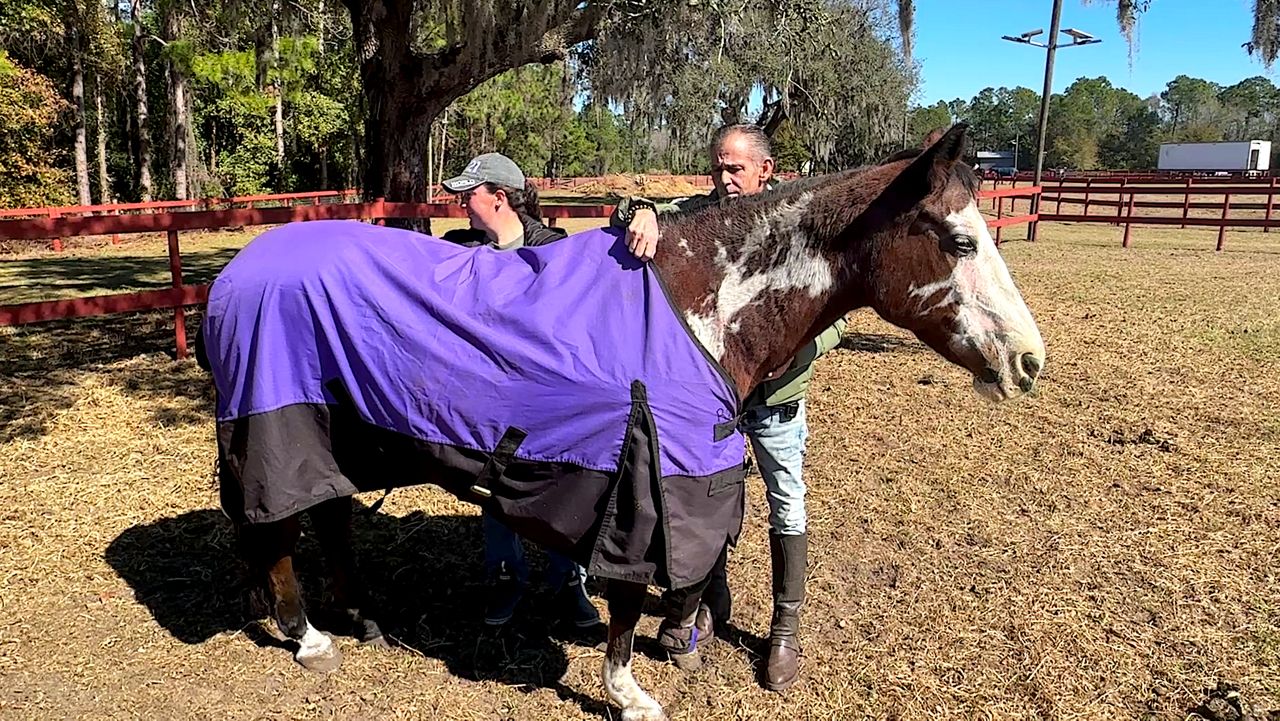
While many people are covering plants during the cold snap, barn manager Kambrie Warner is focused on covering horses — nearly 70 of them — spread across the property.
“This is a nightmare. It’s a freezing nightmare,” Warner said.
She says the concern isn’t necessarily freezing temperatures, but how the cold affects the horses’ health.
“So, we don’t worry about them necessarily freezing to death, but their stomach stops working, so they get unhappy. They stop eating, they stop drinking,” Warner explained.
To prevent that, caretakers provide electrolytes and constant food and water, ensuring the animals keep eating and drinking as temperatures drop.
“He’s got a drink in this cold, so his gut stays working so he stays happy,” Warner said while tending to one of the horses.
Lakota Farms spans 50 acres and serves as a sanctuary for unwanted horses.
Owner Bob McErlean said that many of the animals come from owner surrenders, abuse cases, and police seizures.
“You know, a lot of owner surrenders. People can’t afford them any longer. Abuse cases, you know, police cases,” McErlean said.
Cold weather brings its own set of challenges for the operation, including protecting the property’s extensive water system.
“Making sure the water doesn’t freeze all the piping. We have miles of piping and probably 75 to 80 spigots out here,” McErlean said.
It costs $800,000 a year to keep the sanctuary running, and McErlean says added expenses like extra blankets and heaters during cold snaps only drive costs higher.