
Written by Genevieve Bowen on January 28, 2026

Advertisement
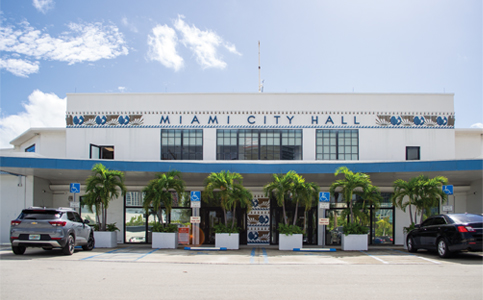
Miami is urging federal authorities to enforce US sanctions laws after scrapping plans for a city-run task force to investigate businesses with possible ties to the Cuban government.
Miami city commissioners on Jan. 22 directed the city manager to coordinate with the Miami-Dade County tax collector on enforcing state and federal law. They also adopted a separate resolution urging the federal government to “vigorously investigate and enforce” laws related to doing business with Cuba. The changes remove the city from a direct investigative role amid concerns about legal liability and ongoing federal litigation.
The legislative item, sponsored by Commissioner Ralph Rosado, was originally intended to create a task force led by the city’s Office of the Inspector General to review all business tax receipts for potential violations of US sanctions against Cuba. Commissioner Miguel Gabela opened the discussion, voicing support for targeting Cuban regime-linked businesses but cautioning against exposing the city to lawsuits.
“My only concern is that we don’t get into legal wrangling, and then it winds up costing money,” Mr. Gabela said, suggesting that Miami-Dade County take the lead on enforcement while the city “piggybacks.”
Chairwoman Christine King echoed concerns about legal exposure and the proposal’s vague language, warning it could unintentionally ensnare business owners who support family members still living on the island.
“I wouldn’t want these business owners pulled into a dragnet and punished unintentionally,” she said.
City Attorney George Wysong explained that a substitute resolution had been introduced the day before, eliminating the Inspector General-led task force. The revised language authorizes the city manager to work with and support the Miami-Dade County tax collector in enforcing existing law.
“The previous iteration called for the creation of a task force headed by the Inspector General,” Mr. Wysong said. “The substitution essentially changes that to … the city manager is authorized to work with and support the tax collector.”
Mr. Wysong noted that under Florida law, local governments can revoke or refuse to renew business tax receipts if a business engages in activities prohibited under state or federal law with Cuba. However, the statute depends on federal determinations and does not clearly define prohibited activity.
He also flagged ongoing federal litigation challenging the statute’s constitutionality, cautioning that while state law is presumed constitutional, uncertainty remains. Asked about city liability, Mr. Wysong said bluntly, “I can’t say there is no liability associated with cooperating with the tax collector. There is a possibility of liability.”
Mayor Eileen Higgins strongly opposed the measure, warning it could revive a history of government overreach against small businesses and expose the city to costly lawsuits. She noted that more than 17,000 businesses hold city tax receipts and argued that enforcing sanctions is the responsibility of the US Treasury Department’s Office of Foreign Assets Control.
“This is not without risk to us or liability,” the mayor said, urging deferral until the federal lawsuit is resolved and adding that she would veto the item if she had the authority.
Mr. Rosado defended the amended version of the proposal, noting that the original version was more stringent and that the revised language no longer calls for the city to investigate businesses independently.
“It would not be our role to determine who is violating the law – that’s outside our purview,” Mr. Rosado said. “This is about coordinating on a regular basis with the county and implementing what is already on the books.”
Commissioner Damian Pardo, while expressing sympathy for the sentiment behind the proposal, said he believed it was premature to move forward and that it would be wise to allow the federal court case to play out. Commissioner Rolando Escalona, who immigrated from Cuba 11 years ago, voiced strong support for targeting businesses that profit from the Cuban regime but repeatedly emphasized protecting the city from legal risk.
After debate over whether to defer the item, commissioners unanimously approved the substitute resolution authorizing coordination with the county tax collector. Mr. Gabela supported the measure only if the commission also pushed enforcement to the federal level.
Commissioners then approved a separate resolution urging the federal government to “vigorously investigate and enforce” laws governing business activity with Cuba. The dual votes effectively scrap the original plan for a city-led task force while positioning Miami to defer enforcement decisions to federal agencies and existing county processes.