
For some, the road out of Florida was paved with a specific kind of exhaustion. It was the heat that never ended, the political climate that felt increasingly like a storm surge — not to mention the actual storm surge.
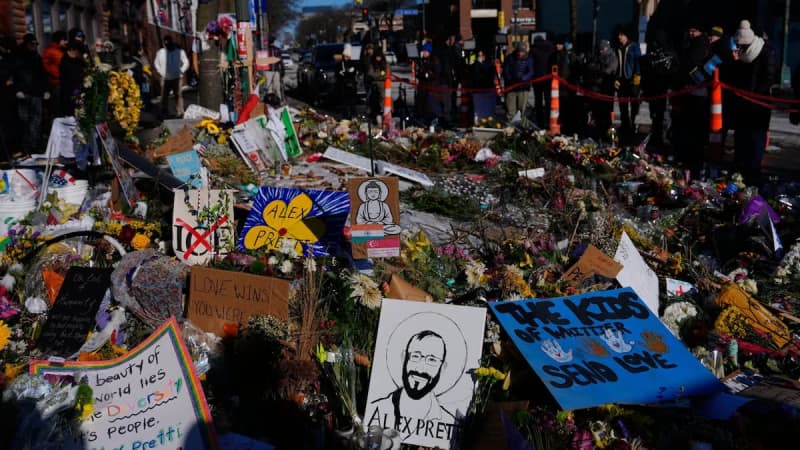
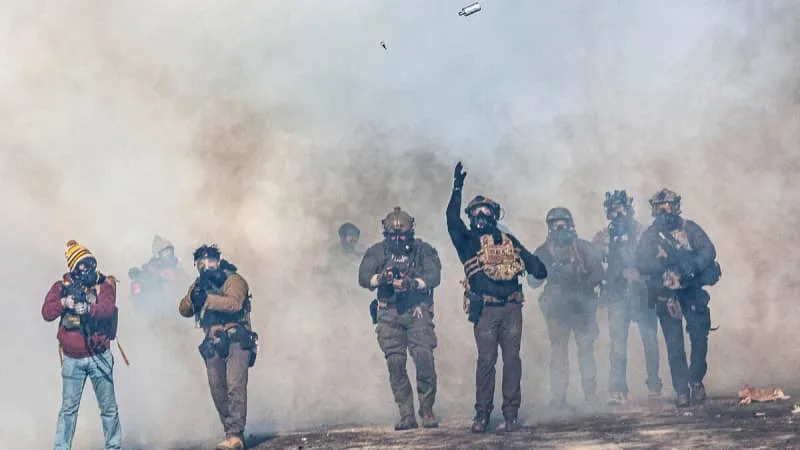
Those who chose Minneapolis for their new start, though, have found themselves in the middle of a different kind of chaos. The city is the center of a massive immigration crackdown after the federal government sent thousands of Immigration and Customs Enforcement agents into the metro area, leading to protests, civil unrest and two deadly shootings.
The administration called the surge a “rule of law” mission to root out alleged fraud among Minneapolis’ large Somali community while deporting undocumented immigrants. Minnesota Gov. Tim Walz has called the operation “political theater.”
The progressive escape sought by some former St. Petersburg residents has transformed into a landscape of locked doors, whistle alerts and armored vehicles.
Maureen McDole’s roots in Pinellas County go back generations. Her family founded Hubbard’s Marina at John’s Pass. As the founder of the literary nonprofit Keep St. Pete Lit, she was a pillar of the local artistic community. But by late 2024, the romance of the area was fading.
“It just didn’t feel sustainable to stay in Florida anymore,” said McDole, 50. Hurricane Helene flooded her home and her partner’s arts studio. The state stripped funding to the arts, and too many nonprofits were competing for the same charitable gifts.
“Everything that mattered… was getting cut or slashed or priced out.”
Still displaced by the 2024 hurricanes, McDole researched climate resiliency across the U.S. While listening to a podcast about Minnesota’s investment in climate infrastructure, something clicked. She went home and told her partner, Oliver Jackson Jr., a visual artist and retired Army Sergeant First Class, that they should move to Minneapolis. There would be more support for the arts, she said. “And my child, who’d just graduated high school and is part of the LGBTQ community, could access the specific healthcare he needed.”
They left in May of 2025.
Now, she said, their new city reminds her of the early days of the COVID-19 pandemic with shuttered businesses everywhere.
McDole’s partner, a Black U.S. citizen, has been carrying his passport with him, worried about racial profiling by ICE agents.
For Lorraine Monteagut, an author and academic from the Miami area who lived in Tampa Bay for 15 years, the move from St. Petersburg to Minnesota was a “long time coming.” While she loved her home, she said the political reality of the state began to feel like a threat.
If there is a contrast to be drawn with St. Petersburg, Monteagut said, it is in the closeness of the neighbors. For starters, she knows the people she lives near for the first time in years.
In Minneapolis, Monteagut has become a community block captain. She distributes whistles to neighbors as part of the signal networks that track ICE movements and warn people when agents are around. She and likeminded neighbors run errands and deliver food to locals who don’t want to leave their homes.
“We have a whistle pattern,” she explained. “Three times if you see them and a continuous blast if you see them detaining someone.” People are doing the same with horn honks. She recently witnessed a crowd of 50 swarm a corner to drive off agents she said appeared to be heading toward a daycare center.
This level of civic mobilization is something she couldn’t imagine back home.
Monteagut, who has a doctorate in communication from the University of South Florida, said she watched as her former colleagues in the Florida university system were censored. Diversity, Equity, and Inclusion initiatives were scrubbed from websites and history curricula were altered. The state takeover of New College was a decisive “bad sign” for her.
“If a revolution were to happen, where would I want to live?” Monteagut, 40, asked herself. As a queer woman and a child of Latino immigrants, she viewed the looming policies of Project 2025 as a direct target on her community.
The final push came in November 2024.
Fresh off a string of chaotic hurricanes and the results of the election, she sold her belongings and moved north. She wasn’t under the illusion that a crackdown wouldn’t happen in Minneapolis, but she wanted to be somewhere where the community would “stand up to it more.”
Despite the minus 20 wind chills and the armored trucks on the street, neither woman wants to return to the Florida they left behind.
“There’s no part of me that’s like, ‘I don’t want to be here anymore,’” McDole said. For her, the sight of neighbors willing to stand on frozen street corners to protect strangers is the part of the change she was looking for all along.
As Monteagut puts it, the political issues of 2026 are inescapable no matter the zip code.
“I feel justified in some way that I was worried this administration would do this. It wasn’t an overreaction,” Monteagut said. “But the more they terrorize, the more we organize. That’s the response we have happening here.”