
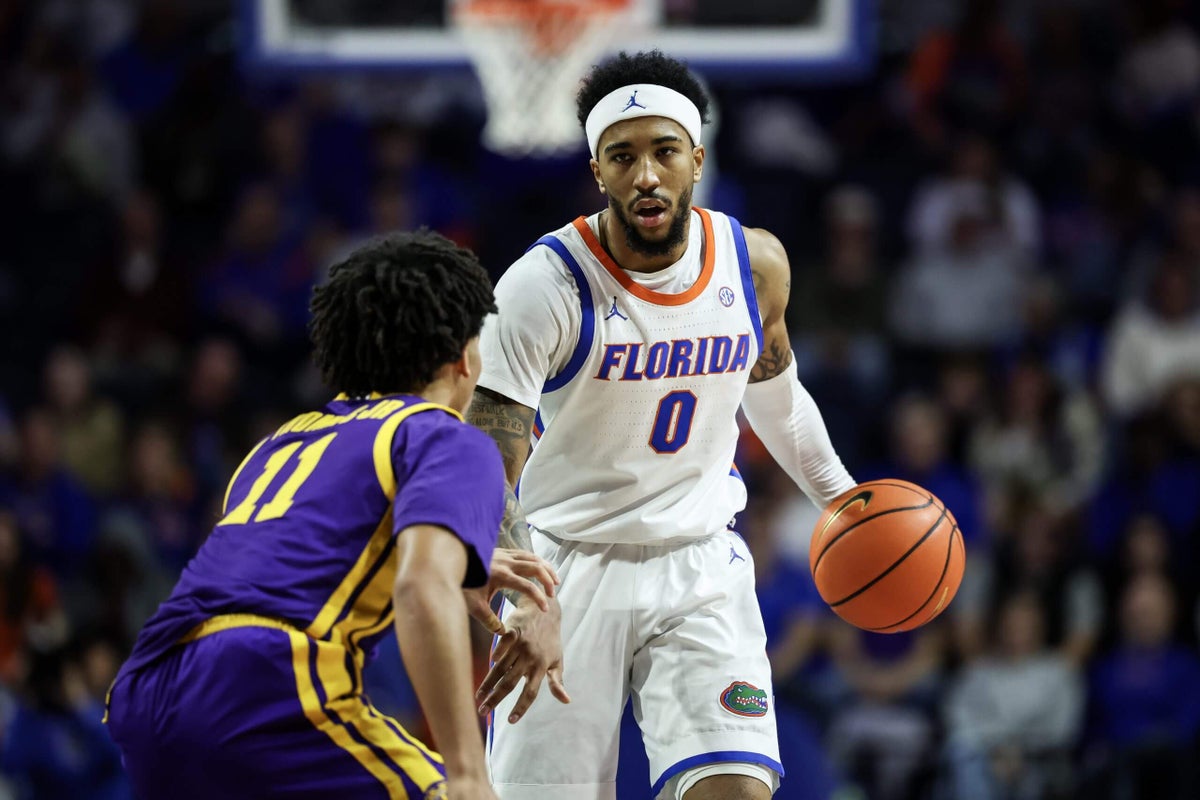
We can’t stop talking about the freshmen in college basketball this season.
I mean, can you blame us? This class is stacked. There are so many potential lottery picks, it’s hard to keep track. But we’ve been talking about them so much that we sorta got called out on it in this week’s mailbag — in a fun way. Let’s let a reader who goes by “G.S.” take it away:
(Note: Submitted questions have been edited for clarity and length.)
I know the talk has been that this is the “year of the freshmen,” so let’s put that to the test. Can we do a mini-bracket challenge by class? Pick an all-star team for freshmen, sophomores, juniors and seniors (top five players in each class that you’d put together, not just best five). First-round matchups are freshmen vs. seniors, then sophomores vs. juniors. Who would you put on each five-person team and who’s winning this tournament? — G.S.
First, this question is awesome. Second, it’s took an Athletic mind-meld to answer it. So the three of us — Brendan Marks, CJ Moore and Lindsay Schnell — built our dream teams together. Many players have been granted medical redshirts and other waivers, so we went by what school rosters listed for class. Players had to be (mostly) healthy; guys who are out or likely out for the season were not considered. And because everyone needs an occasional breather, we went with five starters and three subs; eight-man rotations feel manageable, ego-wise. Here’s what we came up with:
Freshmen: Keaton Wagler, Illinois; Kingston Flemings, Houston; AJ Dybantsa, BYU; Cam Boozer, Duke; Koa Peat, Arizona (Darryn Peterson, Kansas; Brayden Burries, Arizona; Caleb Wilson, UNC)
Sophomores: Jeremy Fears Jr., Michigan State; Tyler Tanner, Vanderbilt; Christian Anderson, Texas Tech; Morez Johnson Jr., Michigan; Patrick Ngongba, Duke (Labaron Philon, Alabama; Isaiah Evans, Duke; Flory Bidunga, Kansas)
Juniors: Silas Demary Jr., UConn; Milan Momcilovic, Iowa State; Thomas Haugh, Florida; JT Toppin, Texas Tech; Rueben Chinyelu, Florida (PJ Haggerty, Kansas State; Pryce Sandfort, Nebraska; Henri Veesaar, UNC)
Seniors: Braden Smith, Purdue; Bennett Stirtz, Iowa; Yaxel Lendeborg, Michigan; Joshua Jefferson, Iowa State; Graham Ike, Gonzaga (Tamin Lipsey, Iowa State; Jaden Bradley, Arizona; Alex Karaban, UConn)
It’s a shame we can’t have a freshmen-seniors final, since those two teams are (in my opinion) pretty clearly the best — but ultimately, because of the scoring prowess, versatility and sheer athleticism, I’m riding with the rookies to win it all. Teams haven’t been able to stop any of those eight guys by themselves, so I don’t anticipate that changing if they team up like the Monstars. — Brendan Marks
The freshmen are clearly the most talented group here and would be the favorites to win, but give me the seniors. Old wins! With the right coach, the combination of Smith and Stirtz working out of ball screens would be a nightmare. Also love the possibility of inverted pick-and-rolls with Jefferson, Lendeborg or Ike initiating. Imagine unleashing Lipsey and Bradley for short spurts and telling them to wreak havoc. Also, a lineup that would include Karaban in Ike’s spot would put five shooters on the floor and be a nightmare to guard. — CJ Moore
I keep going back and forth between the sophomores and seniors, but I’m going to stick with my gut and say sophomores, mostly because I love Fears, and in March, you need a tough point guard to win. (I assume we’re playing this game in March, preferably during the Final Four off day.) Tanner is maybe the best player in the SEC, Anderson can get hot with little to no notice, and can you imagine the jolt of energy in bringing Philon off the bench?! —Lindsay Schnell
Is the Dana Altman era over at Oregon or has he earned the right to go out on his own terms, especially considering all the injuries this season? – D.D.
Real talk, it is shocking to me how bad Oregon (8-12, 1-8 Big Ten) is this year. Yes, they’re currently missing roughly 30 points from the lineup with both guard Jackson Shelstad (15.6 ppg) and big man Nate Bittle (16.3) out with injuries; Bittle should be back in a couple weeks, but Shelstad is likely to miss the rest of the season. Still, I watch them and my eyes practically start bleeding. It’s just flat-out ugly. It’s shocking because Altman is such a good coach, and for years, one of his calling cards was how he could get new groups of guys to play together and win.
That is not the case right now. Part of it is because Oregon did not recruit well out of the portal. The Ducks also don’t have a general manager to navigate the NIL and rev-share game, odd for a high-major as cash-loaded as Oregon. Moving someone into that role would make a difference. The Ducks are in the race for Tyran Stokes, the No. 1 player in the 2026 class. The addition of Stokes would certainly help because there’s an obvious lack of talent on the current roster. But Stokes is not the kind of impact freshman that we’ve seen all over college hoops this year, so he might not singlehandedly save the day.
Altman is not in danger of losing his job, and his seat isn’t even warm. When you win almost 70 percent of your games — he’s 378-170 overall in 16 seasons in Eugene — with multiple regular-season and conference-tournament championships, plus nine NCAA Tournament appearances, you get some breathing room. It also seems Altman, 67, has too much pride to just walk away. My prediction is he coaches at least two more years, gets Oregon back to a respectable level and then one of the premier jobs in college hoops conducts a national search for its next coach. — Schnell
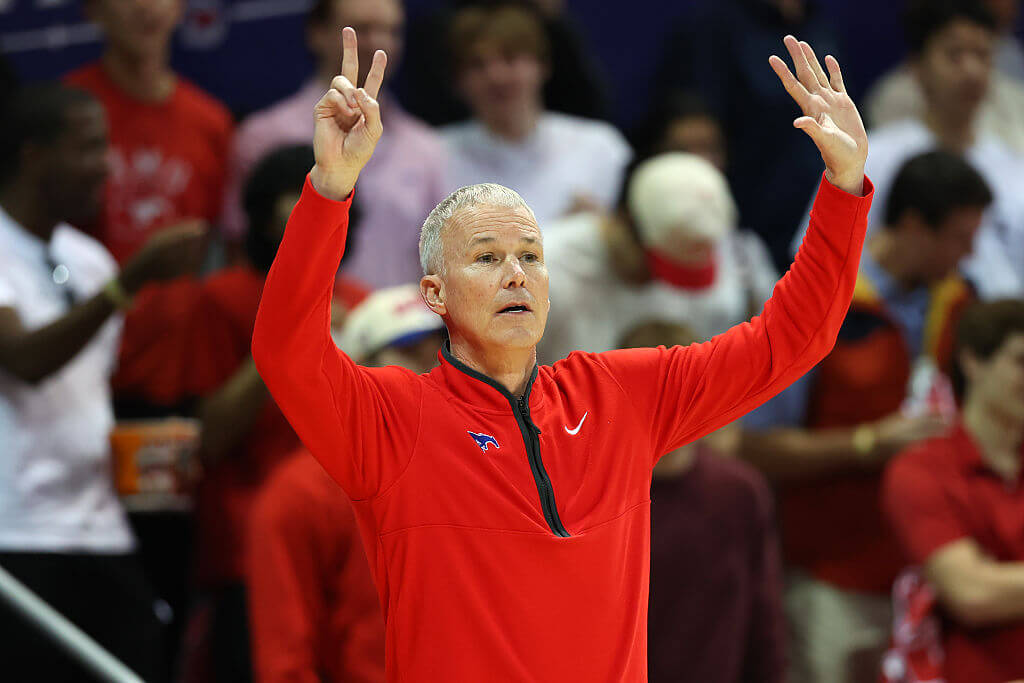
Andy Enfield’s move from USC to SMU in 2024 set off a chain reaction during one of the busier coaching carousels of recent years. (Sam Hodde / Getty Images)
SMU kicked off a coaching carousel in 2024 when it hired Andy Enfield from USC. Of all the schools involved, which one is the happiest with their hire? Who is the least happy? Are your answers different from what they would have been in April 2025, and do you think they will change in April 2027? — Dan K.
I love this question, even if it hasn’t been two full seasons since that epic 2024 coaching carousel. Not only was that one of the most movement-filled offseasons in recent memory, but the multiple high-profile openings (Kentucky, Louisville, Michigan) had a profound domino effect on the entire sport. Other than Enfield, who you already mentioned, the other ten most notable hires (in alphabetical order by new school) were probably:
• John Calipari (Arkansas via Kentucky)
• Kevin Young (BYU via the NBA’s Phoenix Suns)
• Ben McCollum (Drake via Division-II Northwest Missouri State)
• Mark Pope (Kentucky via BYU)
• Pat Kelsey (Louisville via Charleston)
• Dusty May (Michigan via Florida Atlantic)
• Jake Diebler (Ohio State via promotion from interim status)
• Eric Musselman (USC via Arkansas)
• Mark Byington (Vanderbilt via James Madison)
• Darian DeVries (West Virginia via Drake)
Happiest undoubtedly looks like Michigan, which won the Dusty May sweepstakes, then won the Big Ten tournament in his debut season and is now a national title front-runner. It’s hard not to see May having staying power with the Wolverines; he’s my pick for who is still happiest by 2027. Vanderbilt is up there for happiest, too, although Byington’s turnaround efforts in Nashville have been so encouraging that he seems destined to be in the mix for bigger jobs in short order.
As for least happy, do Drake and West Virginia count? Both hires — McCollum (now at Iowa) and DeVries (now at Indiana) — left for Big Ten programs after one season. If not those two, then I probably lean toward Ohio State, which missed the NCAA Tournament in Diebler’s first full season and is on the bubble again this year.
But you’re right, Dan, that those answers are different than they would’ve been in April 2025. At the time, Kelsey and Pope had brought stability to storied programs desperately in need of it, with their arrows pointed firmly upward … and now, they’re two of the biggest underperformers in the sport relative to preseason expectations. Calipari, meanwhile, was seen as being on the downslide of his career after how things ended in Lexington. But he made the Sweet 16 as a double-digit seed last season and has another SEC contender brewing in Fayetteville. To steal a popular line from coaches: It’s a year-to-year proposition. — Marks
Which teams may not have gotten off to great starts with all the player movement, but seem to be playing better as the season goes on, and could be mid-level seeds to watch out for in March? — Nick D.
Florida is the first team that comes to mind. The Gators started the season 5-4, with all four nonconference losses — three top-four teams Arizona, Duke and UConn — coming by a combined 15 points. UF had chances to win late against both the Blue Devils and Huskies, but couldn’t get over the hump while transfer guards Xaivian Lee (Princeton) and Boogie Fland (Arkansas) found their footing. But Todd Golden’s team is 9-2 since then, including marquee wins at Vanderbilt and against Georgia, while looking like a team that can make an NCAA Tournament run. Lee and Fland are improving, while the Gators’ fearsome frontcourt has finally started taking over games.
The other who comes to mind is Kansas. The Darryn Peterson saga has been well-documented at KU, and Peterson’s yo-yoing in and out of Bill Self’s lineup made for an uneven start to the season in Lawrence. But as the Jayhawks proved when they stomped then-No. 2 Iowa State, anything is possible for this team with Peterson back healthy. — Marks
The NCAA appears fairly toothless in its ability to enforce any sort of rules on teams. However, would the selection committee be able to punish teams like Alabama (and any other future offenders) who play temporarily eligible players if those players are subsequently ruled ineligible later in the season? Although the Tide lost with Charles Bediako on Saturday, it would seem like the Committee could easily treat any wins with these players as losses and essentially “vacate” these victories come Selection Sunday. — Chaz C.
Kentucky coach Mark Pope suggested this solution, but it’s not happening. The judge in the case barred the NCAA from “attempting to impose, suggesting or implying any penalties or sanctions” for Bediako or Alabama. Translation: You cannot penalize the Crimson Tide for playing Bediako during the temporary retraining order window. (The original TRO was granted on Jan. 21 for 10 days, but was extended another 10 days on Monday because the attorney for the NCAA was not going to be able to attend Tuesday’s hearing due to weather.)
The NCAA is determined to fight this case, which will have big implications going forward, as Sam Vecenie spelled out recently. But no, the Pope plan is not an actual means for discouraging this behavior. — Moore
Would the sport be better if we saw high-majors start playing more mid-majors, as opposed to low-level Division I gimmes? No good reason Miami (Ohio) isn’t playing a couple Big Ten teams each season, for instance. — Phil T.
Absolutely. If I were commissioner of college basketball, one of my first moves would be to take scheduling away from the coaches. While high-major coaches are getting braver with their nonconference scheduling because of the selection committee rewarding teams with strong strength of schedule numbers, the blueprint has become to schedule other high-majors and fill out the rest against some of the worst Division I teams.
In their eyes, there’s too much risk in playing an actual good mid-major team. That’s how you end up with Miami (Ohio) with only one top-100 opponent this season. Part of the problem is there are too many Division I teams. Let’s say the NCAA cut DI to 200 teams. We’d still have mid-major programs and Cinderellas in March, but it would eliminate a lot of the gimme games in November and December that are boring to watch and bad for the sport. Would love to see a relegation-type system where teams are battling it out for those final spots to remain one of the 200 every year. Maybe if and when the NCAA dies, whatever the governing body of college basketball becomes can institute this system. — Moore