
Southwest Florida water management officials approved a water shortage order that will limit lawn watering to one day a week beginning in February.
The order comes as Tampa Bay, and Florida, continues to wither under drought conditions. Across the region, the drought ranges from moderate to severe, according to the U.S. Drought Monitor.
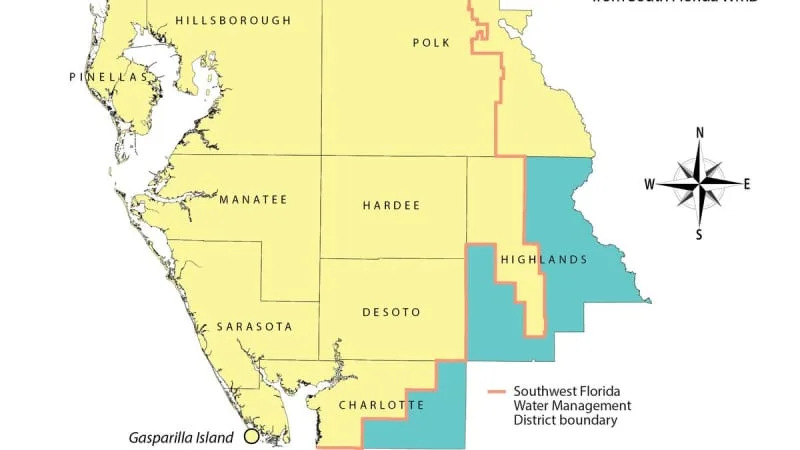
The Modified Phase II “Severe” Water Shortage was approved by the Southwest Florida Water Management District’s governing board on Tuesday, and itapplies to most of the district, including Pinellas and Hillsborough counties.
The water shortage orders are “temporary measures” meant to address dry conditions, the district said.
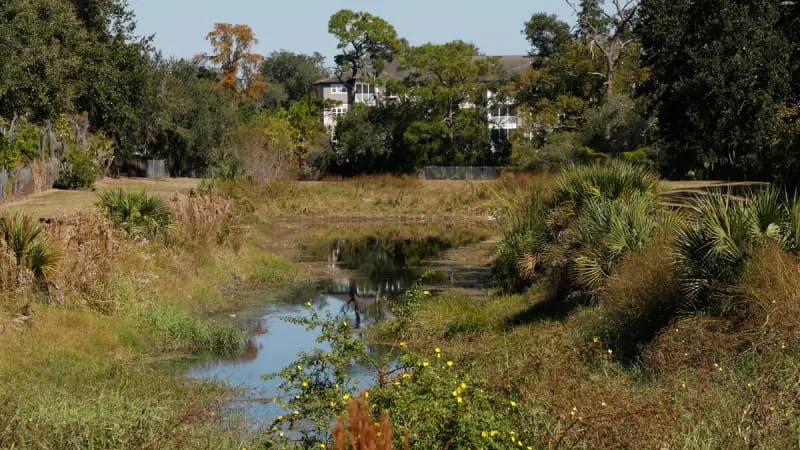
Last autumn — September, October and November — was the driest ever recorded at weather stations in Tampa, the Myakka River State Park and the Sarasota-Bradenton area. Other cities, like St. Petersburg and Tarpon Springs, recorded their second-driest autumn ever.
The parched conditions led the district to place much of the region under a Phase I Water Shortage that began in December but still allowed residents to water twice a week.
Phase II restrictions tighten the water belt.
Residents living within the areas listed under the shortage, including those on private wells, will be required to follow one-day-a-week watering restrictions.
The restrictions begin on Feb. 8 and run through July 1.
The water district recommends residents check with theircity or county for allowable watering days.
The district said watering hours should be before 8 a.m. or after 6 p.m. unless a property is less thanan acre, in which case they may only use one of thosewatering windows.
Across Florida, about 16 million people are under drought conditions, according to the National Integrated Drought Information System. In portions of north Florida, residents are under an extreme drought, which typically leads to widespread water shortages.
The National Weather Service describes the impacts of a severe drought in a few ways — when crops are lost, water shortages begin and water restrictions are in place.
Several indicators led to water management officials recommending the change.
Across the district, regional rainfall is at a 13-inch deficit from the typical yearly amount. Water levels in aquifers, rivers and lakes are declining and running below normal. And public water supplies in Tampa Bay are lower than expected, the district said.
During Tuesday’s meeting, April Breton, the district’s water use permit bureau chief, said the district expects rainfall over the next three months will be below normal.

The region is also under a Stage 1 Drought Alert, which was put in place by Tampa Bay Water, the public supplier that provides most of the area’s water. The alert is considered moderate and means water shortage conditions could be coming.
The region will likely be bumped up a stage as the dry season continues, said Warren Hogg, Tampa Bay Water’schief science officer, during a meeting Monday.
“We were in this situation two years ago … with some continued dry conditions, and we’re back two years later,” Hogg said.
In 2023, the water management district enacted similar watering restrictions. That year’s rainy reason was the driest in more than two decades.
But just a year later, back-to-back hurricanes brought Tampa its wettest year on record.
While Tampa Bay is in its dry season, particularly parched conditions areexpected over the next few months. An outlook from the Climate Prediction Center forecastsbelow-normal rainfall in Florida through April.
For more information on the district’s watering restrictions, click here.
• • •
The Tampa Bay Times launched the Environment Hub in 2025 to focus on some of Florida‘s most urgent and enduring challenges. You can contribute through our journalism fund by clicking here.