
January is National Stalking Awareness Month, so it’s a good time to understand what constitutes stalking under Florida law as well as the legal remedies available.
Florida statute defines stalking as willfully, maliciously and repeatedly following, harassing or cyberstalking another person. But the details, especially in getting an injunction for protection — commonly called a restraining order — are more complicated.
Florida law allows individuals who fear violence, harassment or stalking to seek court protection. Restraining orders are civil court orders designed to prevent future harm by limiting contact, proximity and access to weapons.
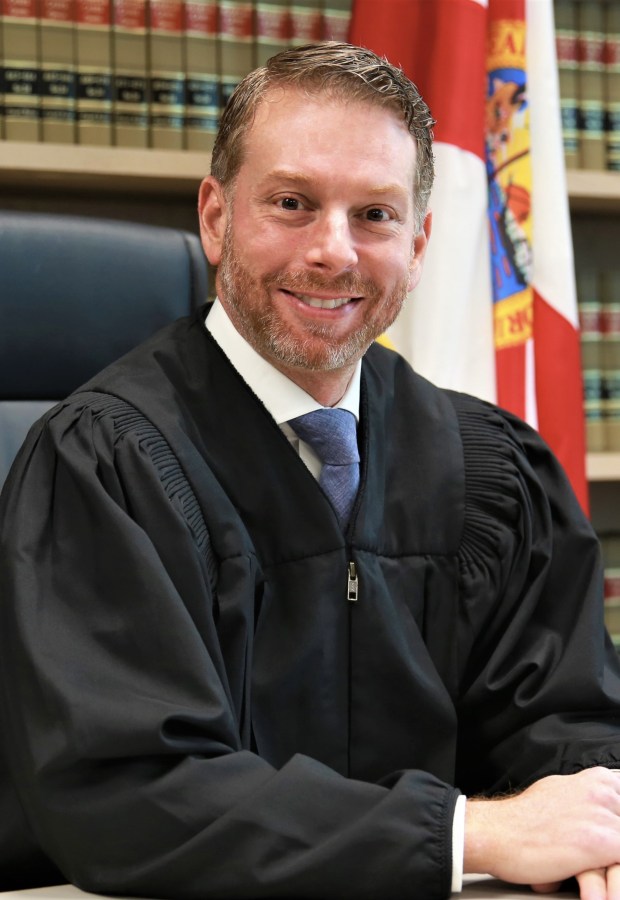 Jose Izquierdo is a Broward County circuit court judge. (courtesy, 17th Judicial Circuit)
An injunction case begins when a person files a verified petition with the clerk of court using forms available through the clerk of court or at FLCourts.gov. (No filing fee is required.) A judge reviews the petition, often the same day, to decide whether there is an immediate and present danger.
In the 17th Judicial Circuit, which encompasses Broward County, a duty judge is assigned to review these petitions 24 hours a day, seven days a week, including weekends and court holidays. The judge completes this initial review based only on what is written in the petition without either party physically present.
If the judge grants a temporary restraining order, the signed order is forwarded to and served by law enforcement, commonly by the Sheriff’s Office, and a final hearing is set, usually within 15 days. At that hearing, both sides may testify, present evidence and call witnesses. And unlike in jury trials, the judge serves as the finder of fact. After hearing all testimony and reviewing the evidence presented, the judge also decides whether to issue a final injunction, which can remain in effect indefinitely unless it is modified or dissolved.
Florida law recognizes five different types of injunctions: domestic violence, repeat violence, dating violence, sexual violence and stalking. Each has specific legal requirements.
For example, a domestic violence injunction applies only to family or household members, such as spouses, former spouses, people related by blood or marriage, individuals who lived together as a family or parents of a child in common. Acts that constitute domestic violence include assault, battery, sexual violence, stalking, kidnapping or false imprisonment. Courts may order removal from a shared home, temporary parenting arrangements, firearm surrender and protection of family pets as part of these injunctions.
A repeat violence injunction requires two incidents of violence or stalking, with at least one occurring within the last six months. No family or dating relationship is required. This type of injunction is commonly used in neighbor disputes, workplace conflicts or ongoing personal disputes.
Dating violence injunctions apply when actual violence or the belief of imminent danger of violence occurs between parties who had a dating relationship within the past six months and involved an expectation of affection or sexual involvement. Casual acquaintances or ordinary social interactions do not qualify. The court may issue temporary or permanent orders restricting contact and proximity.
A sexual violence injunction may be based on a single qualifying incident, such as sexual battery or certain sexual offenses involving minors. In most cases, the petitioner must have reported the incident to law enforcement or be filing shortly before the respondent’s release from incarceration for a sexual offense.
A stalking injunction requires at least two incidents of willful and repeated following, harassment or cyberstalking. Courts may prohibit all contact, restrict online communication and impose firearm restrictions.
Whatever the case, violating an injunction is a serious offense. A willful violation is typically a first-degree misdemeanor, and repeat violations can result in felony charges. Courts may also impose fines, require appearance at compliance hearings or order individuals to undergo mandatory counseling or treatment programs.
It is important to recognize that injunctions for protection are powerful legal tools with lasting consequences for both parties. It is also important to seek legal guidance because each type of injunction has different requirements and potential impacts, including housing, parenting and firearm rights. Understanding the process and the ensuing ramifications is essential.
Jose Izquierdo is a judge in Broward County’s 17th Judicial Circuit.