
Jibrael Hindi is a professional bodybuilder and lawyer, two things only a place like South Florida would pair together. He is also a vlogger and podcaster, offering advice on becoming a multimillionaire lawyer like him. On June 29, 2025, he recorded and posted to Instagram Stories his private tour with Bahia Mar. In the video, an employee gestures to a massive model of the two towers that form the St. Regis Resort & Residences, finely detailed down to a marina full of miniature yacht and sailboat replicas. She then presents the exclusive amenities to Hindi, stating that the shoreline is “two thousand linear feet of private beach club” and that the development group “has that worked out with the city.” The model depicts the beach with a uniform line of miniature blue St. Regis beach umbrellas and chairs.
Hindi wants clarification. “But right now that’s public, right?”
“Yes, it is,” she replies. “But it won’t be.”
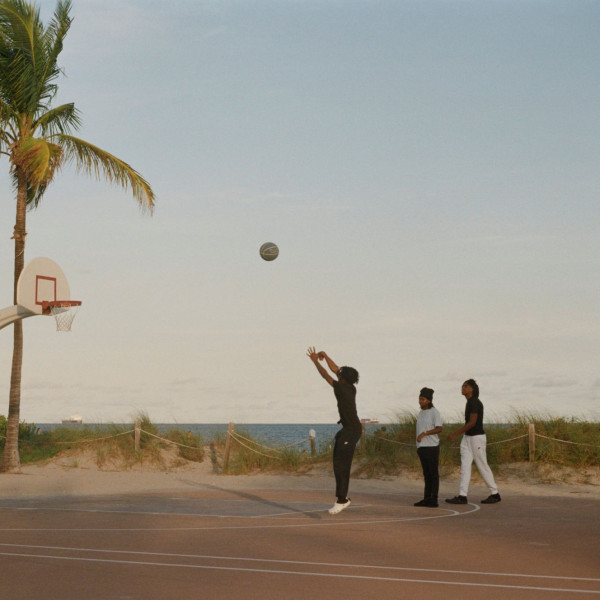
“Holy shit,” Hindi says. “So these people aren’t going to be playing basketball no more.”
She gestures up the coastline of the model and confirms, “All the grills, all the basketball courts, everything will be gone.”
The $2 billion project is planned for construction next to an existing marina and gifts city-owned land to the corporate triad of Related Group, Tate Capital, and Rok Acquisitions under a hundred-year lease. The price of a condo in the St. Regis Residences ranges from $3.5 to $22 million. For those looking for a parking space for their mega yacht, Bahia Mar has allocated a hundred boat slips for lease.
Though the fight for the Central Beach courts is recent, Fort Lauderdale locals have been protesting this beachfront development project for years. In May of 2016, a meeting of the city commissioners finally concluded at 2:15 a.m. after more than fifty constituents spoke out against the proposal. In the end, Bahia Mar was granted conditional approval of the redevelopment plan in a vote of 4-1. Commissioner Steven Glassman of District 2, where the redevelopment is located, insists the new agreement, which the city entered with the developers in January 2024, is binding and, given that Bahia Mar has already sold thirty condos under the auspices of pickleball on the beach, the city’s hands are tied in renegotiation. Otherwise, he told me, “We’d pretty much get sued up the ying-yang and lose.”
When Glassman spoke with me over the phone, he stressed that the prime location of the basketball courts was a key reason a pickleball option couldn’t be constructed elsewhere. “We really are obligated to do the pickleball right across from the pedestrian bridge site,” he said of the beachfront where the basketball courts currently reside. “It would not work if it was not there.”
Glassman is known as the Pickleball Commissioner. In addition to playing the game, he ushered in a forty-three-court, $30 million pickleball complex on public land. Located in Snyder Park and called The Fort, the privately run ten-acre pickleball sanctuary opened in October 2025 and offers memberships ranging from $69 to $139 per month. Like with the Bahia Mar project, the public was outraged, this time over quiet public greenspace being converted to private ownership with parking lots and evening light pollution from the stadium lights.
In an email interview with James Tate of Tate Capital, he confirmed Glassman’s account of the thirty contracted condos, with eleven more in different stages of sale, but he said that, while buyers have seen pickleball courts in their model, Bahia Mar has not surveyed whether the pickleball courts were a driving interest.
“The irony is I played basketball my entire life,” Tate said. “I love basketball. I do not even play pickleball, although I hear it is a lot of fun.“
In a video produced by the real estate firm David Siddons Group, Senior Sales Executive Elaine Tatum advertises the St. Regis Residences as setting “a new standard for ultra luxury living.” Each visual depicts exclusivity, whether within the residential grounds or on the beach, where stretches of empty luxury recliners—butler service included—suggest a private stretch of sand reserved for resident use. All the people in the video are depicted as white, a stark departure from the diversity this strip of beach is known for. The video neither mentions nor shows basketball or pickleball in its digital renderings of the future.
When I asked Glassman about the public fear of privatization, he expressed little credence to the argument that Bahia Mar can or will privatize the beach outside its doorstep. Many hotels to the north, in Las Olas Beach, have stands on the sand for services, and he believes the Bahia Mar will be no different. In his attempt to take the criticism of removing the courts seriously, Glassman and his fellow city commissioners proposed a relocation of the basketball courts to the southern tip of the Bahia Mar marina, where Glassman’s District 2 concludes and Ben Sorensen’s District 4 begins. District 4 maintains the last sliver of the beachfront parking lot along Seabreeze Boulevard before the coastal road cuts inland to accommodate more beachfront hotels. The city is proposing the construction of new courts at that bend into Sorensen’s district.
“I think the city has done a good job of pivoting, once we heard the concern that people were upset about losing the basketball,” Glassman said. “We moved quickly to ease that fear.”
When Fort Lauderdale Beach Ballers call the basketball court removal a racist and classist decision, it riles the developers and Commissioner Glassman. Both view the group’s attempts to depict this battle as one steeped in cultural erasure as disingenuous, with Tate calling it “despicable, insulting, grossly inaccurate and slanderous.” Glassman disputes the historical significance of the courts, given they are seven hundred yards south of the wade-ins. “It’s really not addressing the truth or the facts.”
At an August commissioners meeting to discuss the basketball courts, Mayor Dean Trantalis suggested that “everyone who has complained about the basketball courts, I don’t think plays basketball,” as though the protest movement had not passed an athletic requirement. Lorenz and McRea found the suggestion that the courts lacked public interest the most frustrating message from the city. They used their Instagram account, frequently going live with special events they hosted, to prove the vibrancy of the community who plays and watches games there.
McRea and Lorenz are both lifelong hoopers. Years ago, the same could be said for Tracy Powell, born and raised in Fort Lauderdale, who played basketball growing up, but now mainly focuses on her career as a TV producer (her new docuseries Marines is on Netflix). She hadn’t picked up a ball in years, but after meeting the Beach Ballers she played McRea and Lorenz in 100 and joined a skills clinic run by Lucie Castagne, an ex-Division I women’s hooper at the University of Central Florida.
Powell says she’s “just trying to show up for things that matter,” which, to her, includes preserving the Central Beach courts for the Fort Lauderdale basketball community. “I’ve seen guys here who are international and don’t speak English and just played a pick-up game. It’s the true language of basketball, right? On a gut level it feels wrong to replace these basketball courts with pickleball.”