
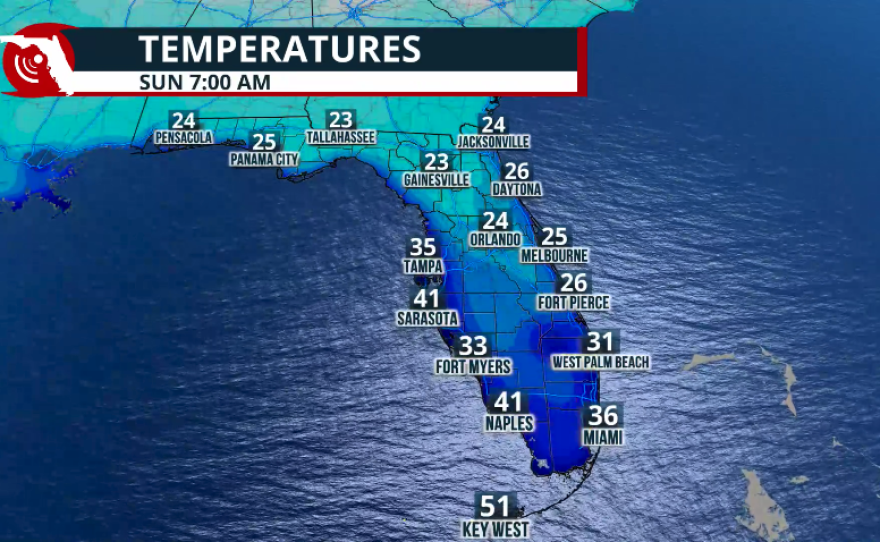
Cold temperatures sunday morning could lead to Gulf effect snow flurries east of Tampa Bay.
Snow flurries in Tampa Bay?
There’s a very small chance it might happen this weekend.
The flurries may come north of Tampa and south of Crystal River, according to Florida Public Radio Emergency Network Meteorologist Andrew Wulfeck.
He said there is a low chance of the flurries happening, and they could occur from about 3 until 8 o’clock Sunday morning.
“If it happens, which is still a big if at this point, it would look like dust in the atmosphere, it would look like speckles. You aren’t looking for any type of accumulations.” Wulfeck told WMNF.
Wulfeck said even predictions of snow around Tampa are rare and something he hasn’t seen in decades. Cold air blowing over the warmer Gulf of Mexico could produce what’s called Gulf effect snow.
“This is just simply a breeze off the water, which is warm, which could create a few snow flurries, a few snow showers. So no accumulations are anticipated, and it won’t be anything like the panhandle has seen over the last couple of years.” Wulfeck said.
He said cold conditions will continue into the weekend, with temperatures in the state feeling below freezing at points from Saturday into Monday.
FPREN | By Irene Sans
Florida’s cold snap continues across much of the Peninsula. Although freeze warnings are likely not to go into effect for Thursday night into Friday morning, temperatures could stay near or just slightly above freezing across parts of North Florida.
Across the peninsula, the winds will on late Friday afternoon, coming in from the southwest. Temperatures on Friday afternoon will be much warmer than they’ve been throughout much of this past week. Thursday will remain in the low 60s across the panhandle. Expect upper 60s across Central Florida, and South Florida by Friday afternoon. The high temperatures will likely hit 70° F across much of the peninsula, but stay between the low- to mid-60s along the panhandle in North Florida.
The next cold front brings very cold air, likely the coldest in over a decade for many
A low-pressure system will be swinging across the Gulf early this weekend. This no-pressure system will become stronger with the help of a low-pressure system in the middle levels of the atmosphere coming in from the north. This low-pressure system in the upper atmosphere will bring Arctic air southward. The low-pressure system over the surface, moving in from the Gulf, will bring moisture across the peninsula.
The timing for the combination of the cold air and the moisture is critical for the chance to have winter precipitation or, at least, in typical Florida style, a few flurries.
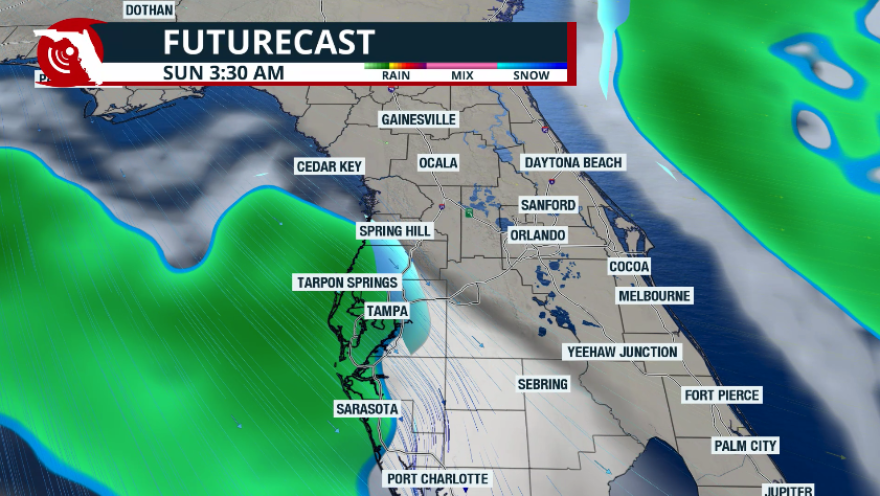 Check out the blue just east of the Tampa Bay area, indicating the possibility of snow.
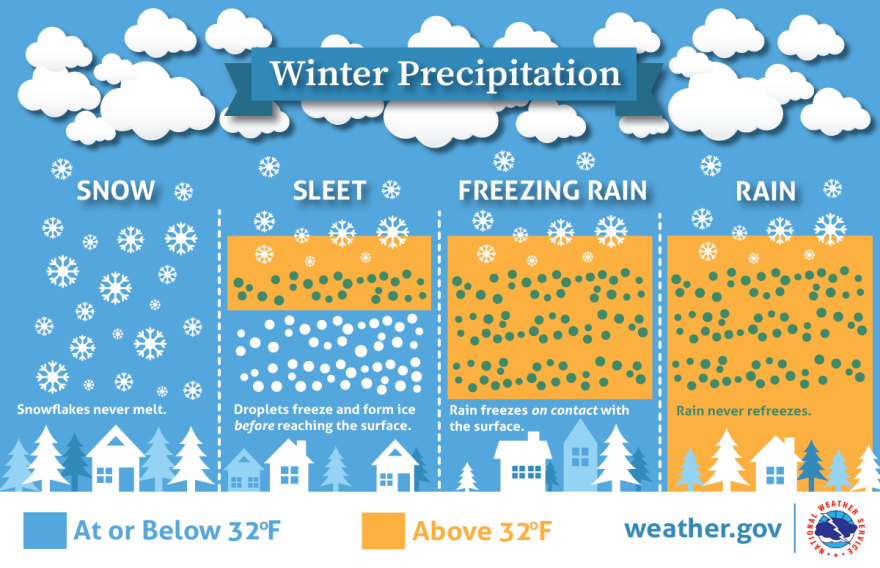 Conditions needed for wintry weather.
It seems like the moisture will move ahead and cross the peninsula before the cold air arrives. For winter precipitation, the entire atmospheric layer must remain below freezing for snow to fall. If across different layers of the atmosphere, the temperature varies between warm and cold, meaning freezing and non-freezing temperatures, the state of the precipitation changes between liquid and frozen precipitation.
READ MORE ABOUT HOW SNOW COULD FALL IN THE TAMPA AREA: GULF EFFECT SNOW
Did you say SNOW is in the forecast this weekend?!? 😱
There is a 10% to 20% of snow flurries along the coast late Saturday night and into Sunday morning. We do not expect this to stick to the ground✅
Cold, blustery conditions are still the main impact this weekend #flwx pic.twitter.com/jF1VQt0kV7
— NWS Tampa Bay (@NWSTampaBay) January 28, 2026
While the surface will continue to be above freezing for much of the peninsula, meaning all the precipitation will likely stay liquid as rain, there could be a few flurries developing across Hillsborough County early Sunday morning. If this were to happen, it would be because there could be enough moisture in the atmosphere created by the difference in temperatures between the Gulf waters (still warm) and the air coming in from the north, which, by this point, is very cold, to create a few flurries. We’re not expecting measurable snow, as it will melt before hitting the surface, or as soon as it does. But if you happen to be out early in the morning on Sunday across parts of the northern Tampa Bay area, you could see a few flurries flying in the strong wind.
Very strong winds after the cold front pushes through
This will be a notable winter storm, pushing through Florida not only because it could bring the coldest air in over a decade for much of the peninsula, but the winds will be incredibly strong, especially on Sunday. After the cold front pushes east, the pressure gradient (this means the difference in pressures between the low-pressure system to the east of Florida and a very strong high-pressure system from Canada over the Central Plains) could bring gusts above 45 mph along the entire Peninsula. The wind will make the radical temperatures feel even colder. In fact, cities as far south as Ocala could have wind chill values as low as 9°F. Orlando could experience wind chill values between 10 and 12°F. Miami’s windshield could be as low as 27°F.
Arctic air to arrive in Florida late this weekend. This will be the coldest air in over a decade for some. Temperatures will be extremely cold, and the wind chill will make it feel dangerously cold on Sunday. Plan carefully. pic.twitter.com/3EkwjO7hM4
— Florida Public Radio Emergency Network (FPREN) (@FloridaStorms) January 29, 2026
The actual low temperatures for Sunday morning will be around the mid-30s for South Florida, while temperatures between the Treasure Coast and North Florida will be between 25 and 21° F respectively. The Tampa Bay area likely will remain in the upper 20s to low 30s. The panhandle will remain the coldest, with actual temperatures in the low 20s.
Cold air is expected to persist on Sunday afternoon in many areas, and temperatures will not reach the 50s. South Florida is likely to stay around the mid-50s on Sunday afternoon, then have a warm-up through the first half of the week. Temperatures are expected to remain between 10 and 20° below average through the first half of next week.
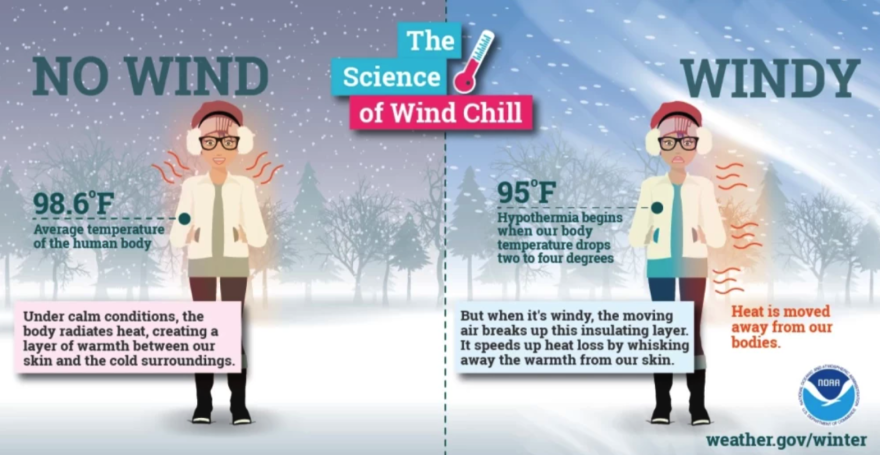 Wind chill – Cold weather preparedness
Cold weather safety
A simple way to prepare for cold weather is to remember the 7 Ps: people, pets, plants, pipes, pools, protecting vehicles, and practicing fire safety.
People: Cold temperatures increase the risk of hypothermia, especially for children, the elderly, and the unhoused. Wearing multiple loose layers, plus hats and gloves, helps retain body heat. Warming shelters typically open when temperatures fall below 35–40°F.
Pets: Pets can suffer from frostbite and hypothermia. They should be brought indoors or given warm, dry shelter. Salt and deicers can irritate paws, so wiping pets’ feet after walks is recommended.
Plants: Tropical, flowering, and newly planted vegetation is vulnerable to frost. Watering the soil before a freeze, covering plants, or moving potted plants indoors helps protect them. Frost and freeze alerts end once the growing season is over.
Pipes: Frozen pipes are a major cause of winter damage. Pipes can freeze quickly when temperatures drop near 20°F. Insulating pipes, disconnecting hoses, and letting faucets drip in very cold weather can help prevent freezing.
Pools: Pools can freeze and be damaged in cold weather. Running the pump during freezing temperatures and maintaining proper circulation helps prevent ice damage.
Protecting Vehicles: Cold weather affects batteries, tire pressure, and fluids. Regularly checking tire pressure, fluids, and battery health helps keep vehicles running safely.
Fire Safety: Winter is peak season for house fires, often caused by heaters and fireplaces. Space heaters should be placed on nonflammable surfaces, kept at least three feet from combustibles, and monitored carefully. Chimneys should be cleaned annually, and smoke and carbon monoxide alarms are strongly recommended.