
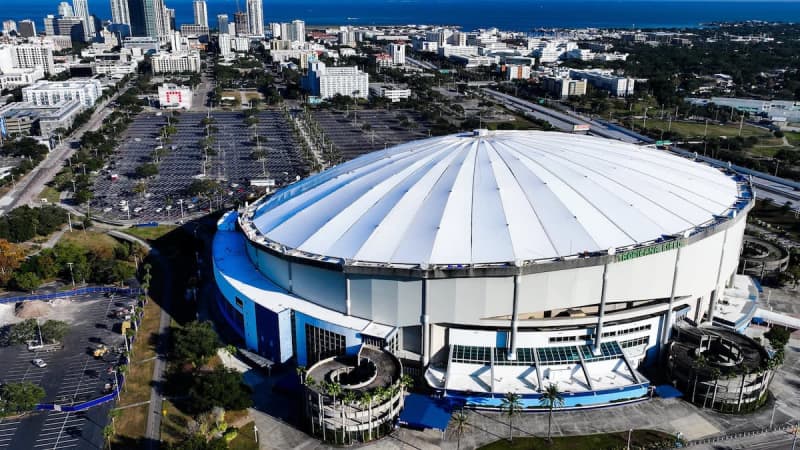
We are now just days from the Tuesday deadline set by Mayor Ken Welch for real estate developers to submit “Master Developer” proposals for the purchase and redevelopment of the Historic Gas Plant site, our remarkable 86-acre parcel of city-owned land in the heart of booming downtown St. Petersburg. I strongly encourage City Council to ignore this flawed bidding process and instead pursue a do-it-ourselves path for the site.

The Gas Plant site decision facing Mayor Welch and City Council should be about as easy to solve as a two-piece puzzle. But sadly, the same city leaders who brought you the Rays/Hines debacle seem poised for another major fumble.
Puzzle piece #1: St. Pete faces a multi-billion-dollar bill for flood prevention and water/wastewater upgrades, a daunting sum for a city of our size. Piece #2: The city controls the Gas Plant site, which realistically could be worth as much as $1 billion. Most cities could only dream of such a windfall. In the same situation, a responsible city would quickly decide to harvest the big cash windfall and apply the proceeds to the massive costs facing taxpayers and water utility customers for the needed capital projects.
But St. Pete has an unfortunate tradition of questionable deals involving city-owned land. When the city owns a valuable parcel, instead of doing the right thing for taxpayers and selling it for optimal value, the city sells it for a fraction of its true value to favored developers in exchange for commitments to develop the parcel in ways which override true market preferences and instead satisfy whatever key policies or pet projects the mayor has in his head at that moment. Class A office space! Convention center! Senior housing! More parking garages! New museum! A bandshell! Business incubators! A grocery store for the imaginary food desert!
The Rays/Hines deal also included lavish charitable contributions, new social services and other giveaways targeted specifically for the mayor’s key constituencies.
The results of this arrangement: The politically connected master developer gets land for a song, the mayor sees key constituents rewarded and his handpicked projects built, and the taxpayers who actually own the land get quietly robbed of the land’s true value. The city should not repeat this sketchy arrangement for a significant site like the Gas Plant, which has a substantial valuation that could cover much of the city’s long-term capital needs.
The do-it-ourselves path that I and others have vocally supported for over two years is straightforward. The city, presumably with the help of an independent design and planning firm, keeps control of the overall site re-development plan and makes key design decisions such as zoning densities, green spaces, street grid and common area features. The city builds infrastructure, such as roads and sidewalks, and sells the developable land, small parcel by small parcel, in an orderly, patient fashion at true market value. The people who buy the parcels develop them using their own money. Importantly, the city also retains the power to change development objectives over time, a flexibility it loses if it accepts a deal with any master developer.
The do-it-ourselves path is not novel. It’s the exact same philosophy that led to such diverse and authentic St. Petersburg neighborhoods as Grand Central, Edge, Beach Drive, Warehouse Arts and others.
City Council members must be further confused by the bizarre decision to structure the Gas Plant bidding process as a winner-take-all contest. After the Rays/Hines deal mercifully collapsed, multiple developers with solid credentials and direct experience in the St. Pete market self-identified as having interest in the Gas Plant site — builders like Kolter, Red Apple, Blake and others. Yet despite knowing the breadth of interest in the site, the mayor’s team still chose a winner-take-all process in which one developer will receive an unearned transfer of land worth hundreds of millions of dollars from taxpayers. All the others will be frozen out of the project, and the site’s development will inevitably proceed at a far slower pace than if the city chose the do-it-ourselves path.
In the coming days, supporters of the do-it-ourselves approach expect to see competing real estate players submit proposals tailored more to Mayor Welch’s known political hot buttons than to authentic market needs. We would not be surprised if proposals contain such fatal flaws as:
Purchase prices for the Gas Plant site materially below its fair market value.
Tiny up-front payments to the city for the site, with the remaining purchase price paid in small installments over a long period of years, structured such that the master developer captures the benefit of future growth in land value.
The chosen master developer won’t commit its own money beyond just a few percent of total project costs and instead tries to bamboozle the city with vapid assurances of its ability to raise the billions of debt and equity capital needed.
If the city accepts a proposal, our main concern is that the master developer will struggle to raise the capital it needs from arm’s-length sources due to inevitable flaws in a politically dictated project design. When this happens, the master developer will come back to the city seeking to re-negotiate the purchase price, eliminate or downsize promised elements or pause development entirely. This is not a theoretical risk. If you look at three of thebiggest deals done recently in St. Pete for city-owned land — Orange Station, Rays/Hines and Tangerine Plaza — all three were micro-managed by city officials, and all three failed to secure financing and subsequently collapsed or got heavily re-negotiated.
Tom Mullins is a St. Petersburg resident and former Raymond James executive.