
When Gov. Ron DeSantis unilaterally declared America’s largest Muslim civil rights group and its Florida chapter a “terrorist organization” last year, he disregarded both the facts and the law.
For one thing, the Council on American-Islamic Relations is a registered 501(c)3 nonprofit organization with 25 affiliated offices and hundreds of staffers across the country. Like the ACLU and the NAACP, our civil rights group advocates for free speech, religious freedom, and civil rights across the country, including in Florida, where I serve as executive director.
As part of CAIR’s advocacy for peace, we have also opposed unjust wars, genocide, ethnic cleansing and terrorism. In fact, CAIR spoke up against ISIS so often that the militant group called for the assassination of our national director. CAIR has also worked with law enforcement to thwart and investigate terrorist attacks, including a threat to President Donald Trump during his first term.
Point being, CAIR is obviously not a terrorist organization.
The other problem with the governor’s declaration: he did not have the power to enact it.
Only the federal government has the power to designate foreign entities as terrorist groups. If the government wants to hold Americans or American organizations accountable for terrorism, it must charge them with a crime, like providing material support to a designated terrorist group, and then pursue a conviction in a court of law.
State governors do not have the power to invade or override federal authority, much less declare American organizations “terrorists.” That’s why CAIR has sued DeSantis to block enforcement of his proclamation, which threatens to ban CAIR-Florida and any Floridians who support us from using state services or entering into contracts with the state.
As that lawsuit proceeds, a new and bigger threat to the rule of law has arisen.
In an effort to reinforce DeSantis’s campaign against CAIR and other advocates for Palestinian human rights, several Florida legislators have introduced bills that could upend the foundations of the American criminal justice system.
Every American knows how that system is supposed to work.
The government investigates a crime, identifies a suspect, seeks a warrant to arrest that suspect, asks a grand jury to approve criminal charges, puts the suspect on trial in front of a judge or jury, tries to prove the defendant guilty beyond a reasonable doubt, and if successful, recommends a punishment to a judge, who makes the final decision.
Due process is not optional. It is the system.
HB 1471 and SB 1632, which are under consideration right now, would turn the state into an enforcement network for unilateral terrorism designations.
Under this new system, there is no need for police officers, evidence, warrants, trials, judges or juries. A handful of state officials can simply declare an American organization the governor dislikes a “terrorist group” and pursue felony criminal charges.
Once labeled, the consequences are immediate and devastating. State agencies, local governments, schools, colleges, and universities must cut funding, dismantle programs, sever affiliations, and expel students that support or work with the targeted groups, all without any proof of criminal conduct. Membership and association alone become the crimes.
Two other bills, HB 1473 and SB 1634, ensure this abuse of power operates in secrecy.
Under HB 1473, the factual basis for terrorism designations can be withheld from public records. Under SB 1634, meetings where those designations are discussed can be closed entirely. Together, these bills would effectively turn Florida into a police state. The people of Florida cannot allow this to happen.
Even Floridians who support Israel or adore Ron DeSantis should recognize the danger here. No governor should have the power to label American organizations “terrorists,” strip them of their rights, and authorize criminal charges against their members and supporters, all based on secret evidence without any due process.
Stopping these bills is not just about protecting one civil rights group from Ron DeSantis. It’s about preventing him and future governors from targeting every nonprofit they dislike, whether the ACLU, the NRA, Planned Parenthood, National Right to Life or any other group on different sides of the issues that divide our nation.
Although these bills will likely face immediate legal challenges if enacted, the people of Florida have a chance to avoid that outcome by contacting their legislators and delivering a clear message: vote “no” on these bills to ensure that the Sunshine State does not become a police state.
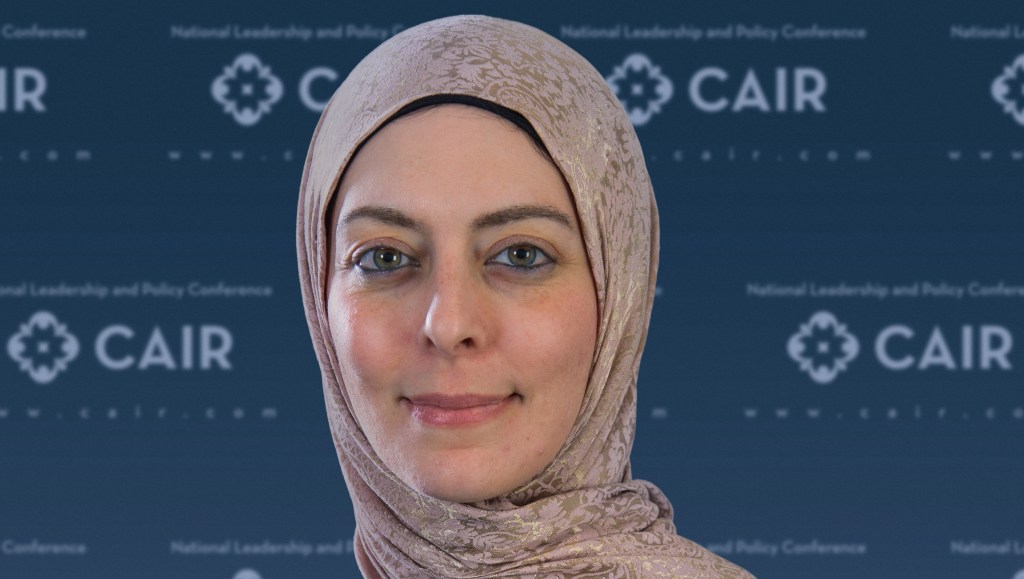
Hiba Rahim is the interim executive director of the Florida chapter of the Council on American-Islamic Relations (CAIR-Florida).