

Is there a Bruckner problem?
Let’s face it: The music of the Austrian composer Anton Bruckner is a tough sell, as his colossal, unhurried works require stamina on both sides of the proscenium.
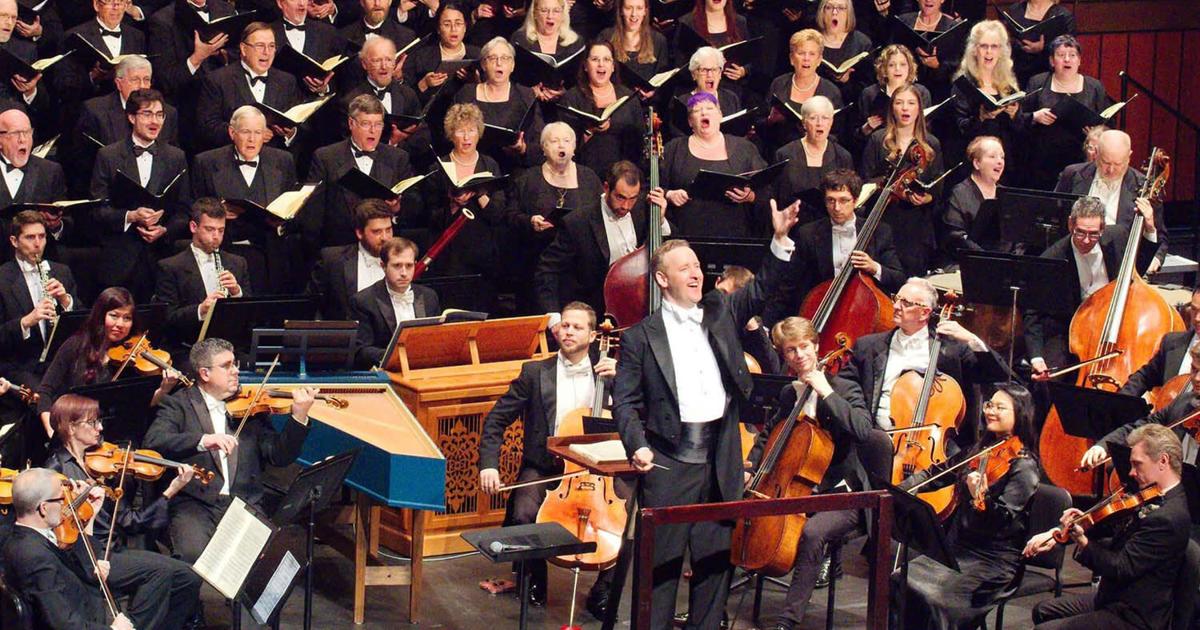
The Florida Orchestra presents a case in his defense with the Symphony No. 4, known as the Romantic, in two masterworks programs Feb. 6-7 at the Straz Center in Tampa. Music Director Michael Francis also conducts Beethoven’s Triple Concerto.
“People are always nervous about Bruckner, but the Fourth is so beautiful, and when you hear it live, it’s intoxicating,’’ he said. “What makes Bruckner so unique is he connects the ancient and modern worlds, and probably better than anyone. When you let the sound wash over you, it’s one of the most mesmerizing experiences in music.”
Why then, does Bruckner challenge so many listeners and performers? Aside from the sheer length and density of his nine symphonies, they require constantly swirling string tremolos, protracted brass lines that seem to deplete a player’s lungs, and vast crescendos of oceanic dimension. This can be daunting for those trying to make it all seem effortless.
“I admit I love playing Bruckner — an unusual statement for a string player,’’ said principal second violinist Sarah Shellman. “As a result of the massive architecture, a musician really needs to pace their concentration and physical output.’’
Performers say Bruckner demands intense focus over long stretches that can lead to muscle fatigue. For this reason, rests at much-needed intervals are critical. The brass and woodwinds also employ staggered breathing, inhaling at different times to keep a phrase cohesive and unbroken. This affects orchestral dynamics as well, when everyone jumps from playing pianissimos (very quiet) to triple fortes (extremely loud) at a moment’s notice throughout four movements.
“Bruckner writes very well for the brass and the parts are gratifying to play,’’ said Andrew Karr, who plays principal horn. “An important challenge for the brass section as a whole is to not wallow too much in the glorious sound but to make sure that the music still has horizontal momentum. It’s easy to get stuck in loud chords.’’
Aside from such technical concerns, players say it’s important not to “read’’ too much into Bruckner, as his symphonies carry no literary theme or program. The music is absolute, and not tied to an extra-musical description.
“His symphonies are best understood architecturally and not programmatically,’’ Karr said. “They don’t tell stories; they’re giant, detailed architectures, like a cathedral. But every small piece contributes to a logical, unified whole.’’
The globe-hopping conductor Daniel Barenboim, a long-time advocate, said the more he performs Bruckner the more it mirrors a dig for musical artifacts: “I feel every section, especially in the late symphonies, is like going deeper and deeper underneath the earth,’’ he told National Public Radio. “And then you’re at the bottom and left with some incredible result of an archaeological excavation.’’
When planning a program with Bruckner on the bill, orchestras have another consideration: what version to play, as the composer was forever altering his work. This constant tweaking became known as the “Bruckner Problem,’’ a term coined by the musicologist Deryck Cooke to describe the complexities of multiple (and confusing) versions of the composer’s scores. Bruckner suffered from an obsessive-compulsive disorder and shortage of self-confidence, and succumbed to those hoping to “improve’’ his scores.
“The result of such advice was to awaken all the insecurity in the nonmusical part of Bruckner’s personality,’’ Cooke wrote. “Lacking all self-assurance, he felt obliged to bow to the opinions of his friends.’’
For all the challenges and tweaks, Bruckner offers epic moments in the concert hall, his sound unique in the classical canon. While the experience demands perseverance, added Shellman, it rewards the commitment.
“For me, it’s a lot like going for a long run: a steady and measured effort, just letting the experience unfold,’’ she said. “Patience is key, both with oneself and the music.’’
Kurt Loft is a journalist and music critic who has written for various newspapers, magazines and arts groups for more than 40 years. A member of the Music Critics Association of North America, he lives in St. Petersburg.