

When I was growing up, my family had a huge, old tree in our backyard, just over one of those big plastic playhouses that toddlers play house in. But I discovered pretty quickly that if I climbed up to the roof of the playhouse, I could reach up to the tree’s lowest and largest branch and begin my climb as high up as I could.
This was the ‘90s, of course, so my parents were a little less helicopter-esque, but there was something exhilarating about the climb. I also know that if I had lost my footing or stepped on the wrong branch, I could easily have been injured, perhaps even permanently. Climbing a tree takes incredible focus to avoid the danger.
Like the vines that climbed their way up our old tree, the Talmud is a source of Jewish wisdom which twists and winds its way through a variety of discussions. One such discussion came into my mind as we celebrate the holiday of Tu BiShvat, the birthday of the trees. In Tractate Brachot, which explores the details of how we are supposed to pray, we read that a laborer working at the top of a tree cannot recite the Amidah, the central prayer of any service, without first descending from the tree. Why? Because the Amidah requires a level of focus at which one would risk losing their footing and falling off the tree. A very practical idea but one that I think speaks to the world in which we live.

We know that Jewish existence in the United States seems to be more precarious now than it ever has been. Acts of violence and hate leave scars on our hearts, especially in this last month, the arson attack on Beth Israel, Jackson, Mississippi’s only synagogue, a community that several of my colleagues served. It feels to many of us that the rug has been pulled out from under us as we realize that post-Holocaust acceptance of Jews was simply the Jew hatred baked into western civilization going underground for a little bit. Like climbing to the top of a tree, our footing feels unsteady and we have put so much of our focus on simply staying upright. So many of my conversations with congregants and colleagues center everything that has gone wrong, that is going wrong and that could go wrong. And yet, if all we focus on is survival, are we letting Judaism fulfill its highest potential to give meaning to our lives?
In Mussar, the study of Jewish ethics, one of the middot, positive traits is hakarat hatov, recognizing the good. When we highlight only the “oy” of Judaism, we lose sight of the joy. Celebrating with a community where we feel safe, learning inspiring lessons from our tradition, and finding that uplift helps us find safer footing, to come back down to the ground where we’re focusing on more than not getting hurt. When we expand our vision beyond the hate targeted against us, which has never really defined who we are, we find our sturdy roots and resilience in Jewish community.
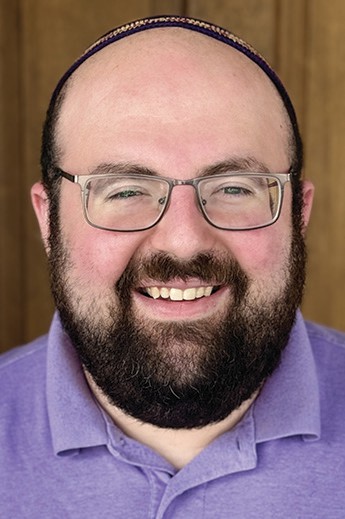
This column is published as a public service by the Jewish Press in cooperation with the Tampa Rabbinical Association, which assigns the column on a rotating basis. The views expressed are those of the rabbi and do not necessarily reflect the views of the Jewish Press or the TRA.