
More than 400 grassroots members spent a day in Tallahassee to meet with elected officials at the state level during Farm Bureau Day. The day featured a legislative breakfast briefing, where members heard from key policymakers representing the Florida House and Senate and UF/IFAS leadership. The day concluded with a Taste of Florida Agriculture reception that celebrated Florida’s farmers and ranchers.
Members shared their story and discussed key policy issues that are important to them with their state legislators. Priorities discussed included the Florida Farm Bill, the preservation of farmers’ access to essential agricultural tools, wildlife management and crop protection laws and securing funding for projects and programs that strengthen Florida’s food supply.
“Farm Bureau Day gives elected officials a firsthand look at the breadth of Florida agriculture and the role it plays in our state’s economy,” said Tripp Hunter, Florida Farm Bureau’s Director of State Legislative Affairs. “Our grassroots members were in Tallahassee to directly engage with policymakers on issues that impact their farms, Florida’s natural resources and the long-term security of our food supply.”
The annual advocacy day concluded with the Taste of Florida Agriculture reception, a partnership between Florida Farm Bureau and the Florida Department of Agriculture and Consumer Services. Guests sampled locally grown Florida foods, visited with farm families, networked with public officials and learned about the diversity of Florida agriculture. Florida Farm Bureau President Jeb S. Smith and Florida Commissioner of Agriculture Wilton Simpson welcomed more than 1,000 guests to the public reception.
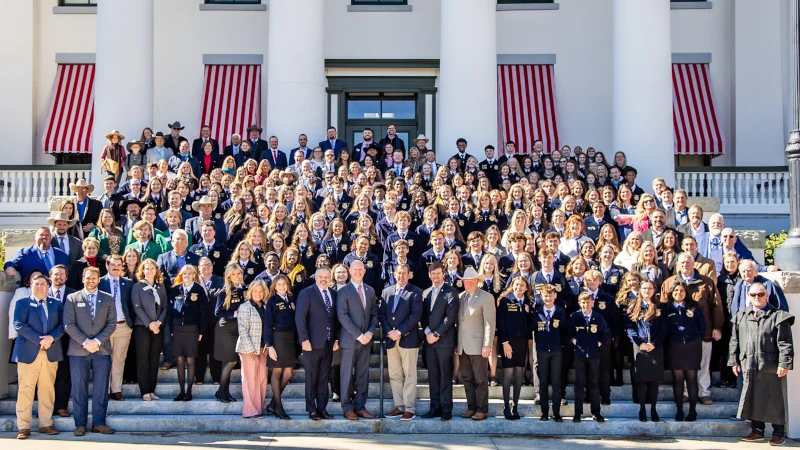
More than 400 grassroots members traveled to Tallahassee on January 27 to meet with elected officials at the state level as part of Florida Farm Bureau’s annual membership advocacy trip.
Florida Farm Bureau, the state’s largest general agricultural organization, represents more than 132,000 member-families. We serve to enhance farm enterprise and improve rural communities.