
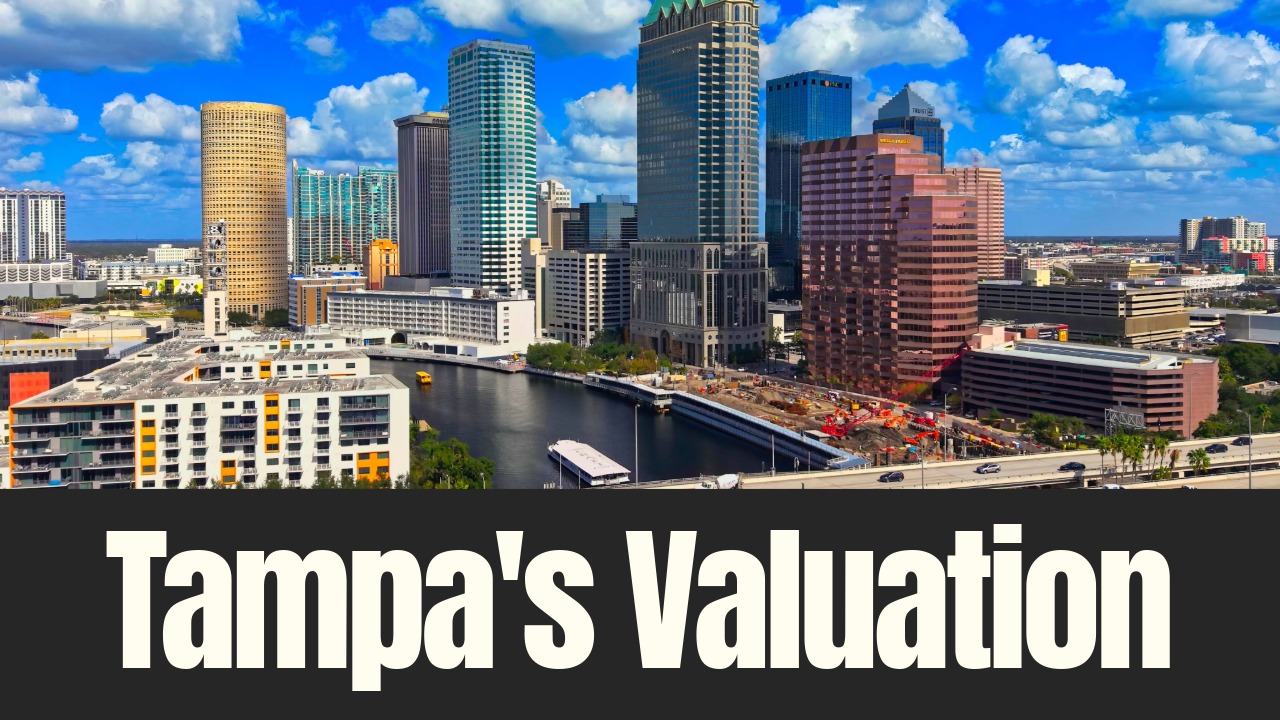
Tampa is rapidly growing. New residents continue to arrive. Capital keeps flowing in. Development cranes are everywhere.
For business owners and investors, the pace creates both opportunity and pressure. Deals move quickly. Decisions are made faster than they were even a few years ago.
That speed is exactly why valuation has become more important, not less.
In a market like Tampa, valuation is no longer a formality at the end of a transaction. It is one of the few tools that forces discipline before capital is committed.
When growth accelerates, valuation is often the last moment where optimism meets reality.
READ: ST. PETERSBURG BUSINESS NEWS
Kendra Stevens Barry, senior managing director of Integra Realty Resources – Tampa Bay, has spent more than two decades working inside that moment.
Her work sits quietly behind many of the region’s largest transactions, helping lenders, investors and business owners understand whether a deal truly works once the numbers are stripped down.
“In fast-growth markets, people tend to anchor to headlines and recent sales,” she said. “But value is not what someone hopes a property is worth. It’s what the income, expenses and risk actually support.”
Where deals break down
When deals go wrong, it is rarely because of one dramatic mistake. More often, it is because several small assumptions went unchallenged.
Rising insurance costs are a clear example in the Tampa Bay Area. Insurance is no longer a line item that can be absorbed quietly.
It has become a structural variable that directly impacts net operating income.
Utilities and property taxes are also climbing. In many cases, rents are rising but not fast enough to offset those increases.
READ: TAMPA BAY BUSINESS NEWS
“When operating expenses rise at the same pace as rents or faster, the math just stops working,” Barry said. “That shows up quickly in valuation.”
This is especially true in multifamily and income-producing properties, where higher interest rates have already tightened margins.
Even in sectors like industrial and retail, where Tampa has remained relatively resilient, valuations often reveal pressure points that are easy to miss amid a competitive bidding process.
The quiet role behind real estate decisions
Appraisal is often misunderstood as a deal killer. In reality, its role is closer to translation.
A valuation asks a simple but uncomfortable question: if the bank had to take this property back tomorrow, what could it realistically do with it?
Could it lease it? Could it sell it? Would the numbers still hold? That perspective matters more during periods of uncertainty.
READ: TAMPA RETAIL & HOSPITALITY NEWS
In slower markets, Barry sees more refinancing work, estate-related valuations and situations where owners are trying to understand their exposure rather than chase growth.
“We’re not here to stop deals,” she said. “We’re here to make sure the deal makes sense beyond the best-case scenario.”
Tampa as a case study
Tampa’s growth makes it a useful lens for understanding what is happening in real estate markets nationwide.
Population growth and job creation continue to support demand. Florida remains more active than many other parts of the country.
At the same time, ownership costs are rising in ways that are difficult to predict or control.
READ: BUSINESS INSIGHTS & THOUGHT LEADERSHIP
That combination rewards speed but it punishes shortcuts.
“In hot markets, people get used to everything working,” Barry said. “When conditions shift, that’s when valuation really matters. It forces you to look at fundamentals instead of momentum.”
Looking ahead to 2026
After a slower period tied to interest rate uncertainty, market activity picked up late last year. Barry expects that momentum to continue into 2026, particularly if rates ease further.
Lower rates tend to bring buyers and refinancers off the sidelines. But she cautions that activity alone is not a sign of health.
“The goal isn’t just to do deals,” she said. “It’s to do deals that still make sense when conditions change.”
A decision point for leaders
For Tampa Bay business leaders, valuation is less about compliance and more about clarity.
It creates a pause in a fast-moving environment. It forces conversations about risk, cash flow and long-term viability. And it helps separate durable growth from reactive growth.
As Tampa continues to attract capital and attention, leaders face a choice.
They can let speed define their decisions or they can use valuation as a tool to guide them.
In a market that rewards momentum, discipline is often the quiet advantage that lasts longest.
Gohst written for Kendra Stevens Barry, Senior Managing Director, Integra Realty Resources – Tampa Bay. Click here to get in touch with Kendra.
Stay Informed