
By: Lauren Comander | February 02, 2026 | 22 min. read |
Summary
Cardiovascular specialists from around the world gathered at Miami Valves 2026, a meeting focused on the fast-evolving field of transcatheter therapies for valvular and structural heart disease.
Dr. Jeffrey Popma received this year’s Miami Valves Lifetime Achievement Award.
A number of Miller School faculty members spoke about the role technology and AI play in cardiovascular medicine.
Cardiovascular specialists from around the world gathered at Miami Valves 2026, a three-day meeting focused on the fast-evolving field of transcatheter therapies for valvular and structural heart disease. Through a mix of keynote lectures, expert panels and collaborative, case-based sessions, leading experts in the field shared new research, procedural strategies and emerging ideas shaping day-to-day practice.
Hosted by the International Medicine Institute of the University of Miami Miller School of Medicine for the 12th year, Miami Valves 2026 continued its longstanding mission of accelerating progress in the field.
“Miami Valves brings together the best minds in the field,” said conference director Eduardo De Marchena, M.D., professor of cardiovascular medicine and associate dean for international medicine at the Miller School. “Each year we push the boundaries of what’s possible in transcatheter therapies, and 2026 is no exception. Beyond the science, Miami Valves is about building relationships that drive progress in our field. The collaboration that happens here is truly inspiring.”
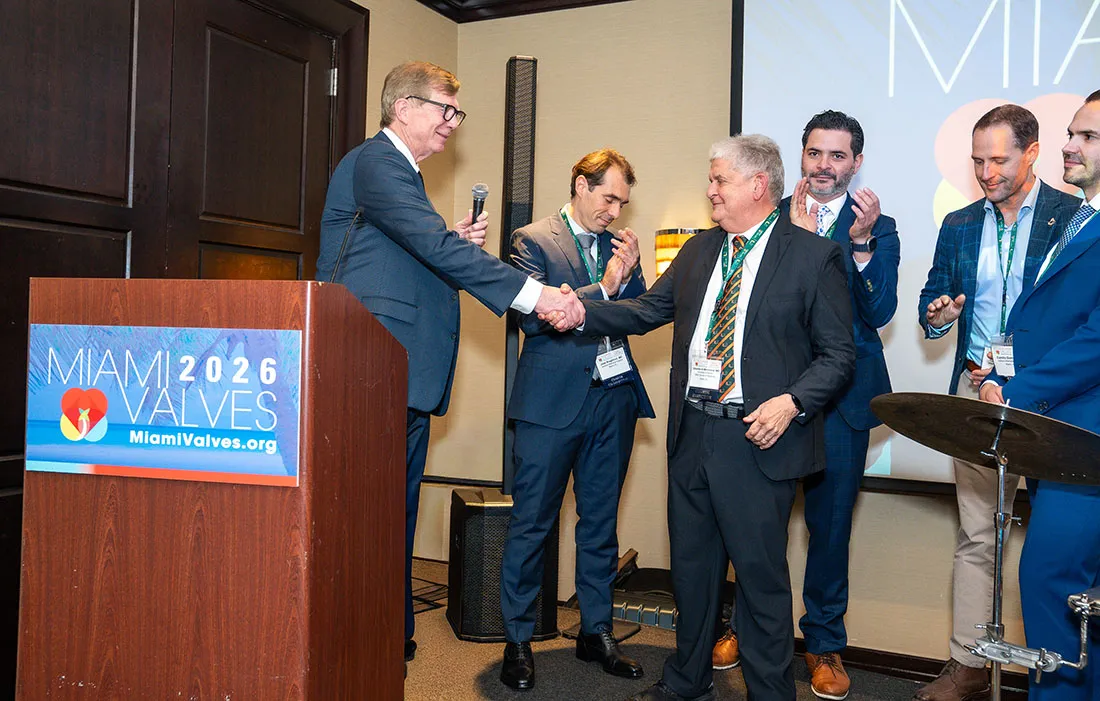 Lifetime Achievement Award recipient Dr. Jeffrey Popma (left) shakes hands with Dr. Eduardo De Marchena at Miami Valves 2026.
Key opinion leaders also explored advances in cardiac imaging, coronary interventions, electrophysiology and heart failure care, alongside the growing role of artificial intelligence in pre-procedural planning. The wide-ranging meeting also celebrated this year’s recipient of the conference’s Lifetime Achievement Award, Jeffrey Popma, M.D., an interventional cardiologist from Harvard Medical School.
An Emphasis on Valve Therapy Research
True to the conference’s name, valvular intervention topped the agenda, with in-depth sessions on transcatheter aortic, mitral and tricuspid valve therapies. Complex, real-world cases anchored many sessions, giving attendees the opportunity to dissect technique, troubleshoot complications and exchange lessons learned across institutions.
“This blend of science and community is what brings clinicians back year after year,” said Yiannis Chatzizisis, M.D., Ph.D., professor and chief of the Division of Cardiovascular Medicine at the Miller School. “Miami Valves is a unique opportunity for networking, to come together with old friends and make new friends. We learn the latest in the field of coronary and structural heart disease and surgery, and we become aware of the new techniques and new technologies that are showcased here.”
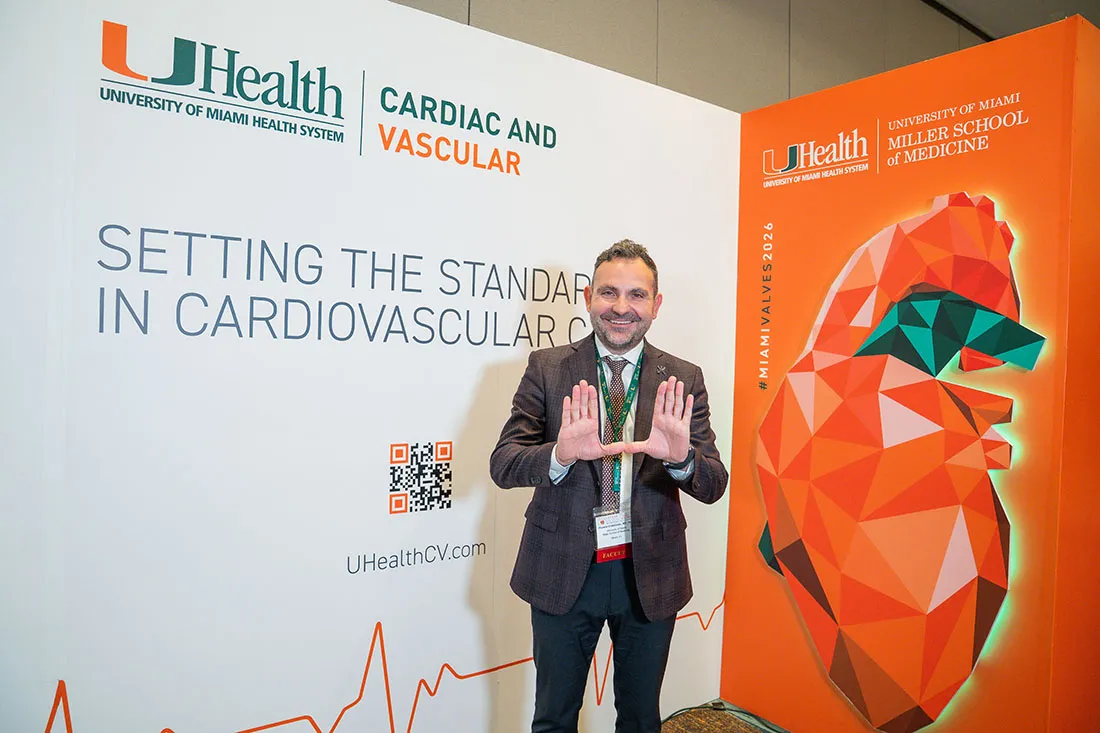 Dr. Yiannis Chatzizisis describes Miami Valves as “a blend of science and community.”
Miller School faculty moderated sessions that included dozens of presentations on structural heart disease and also addressed heart failure, electrophysiology and promising technologies in development. Fellowship programming drew young learners from across Florida.
Structural Cardiology: The State of the Field
The opening structural cardiology plenary session, moderated by Dr. De Marchena, took stock of what he called structural heart’s “breakout year.” Framing the session as both a progress report and a preview of the meeting ahead, he said, “I always like to start the meeting with a review of what we’ve learned, where we are now and what moved the field in the last year.”
At the center of the discussion was transcatheter aortic valve replacement (TAVR), now the leading approach to aortic valve replacement in the United States. Outcomes have steadily improved, he noted, reflecting better devices, more refined techniques and a patient population that increasingly includes lower-risk candidates.
But with TAVR’s maturity comes a new set of problems, especially reintervention. As more valves are implanted, the reality is that more valves will fail.
“As TAVR becomes the dominant valve, the valve we are going to see failing is TAVR,” Dr. De Marchena said.
That shift is pushing operators to think further ahead about lifetime management like maintaining coronary access after TAVR, preventing obstruction and deciding when advanced techniques once reserved for rare cases should move closer to routine practice.
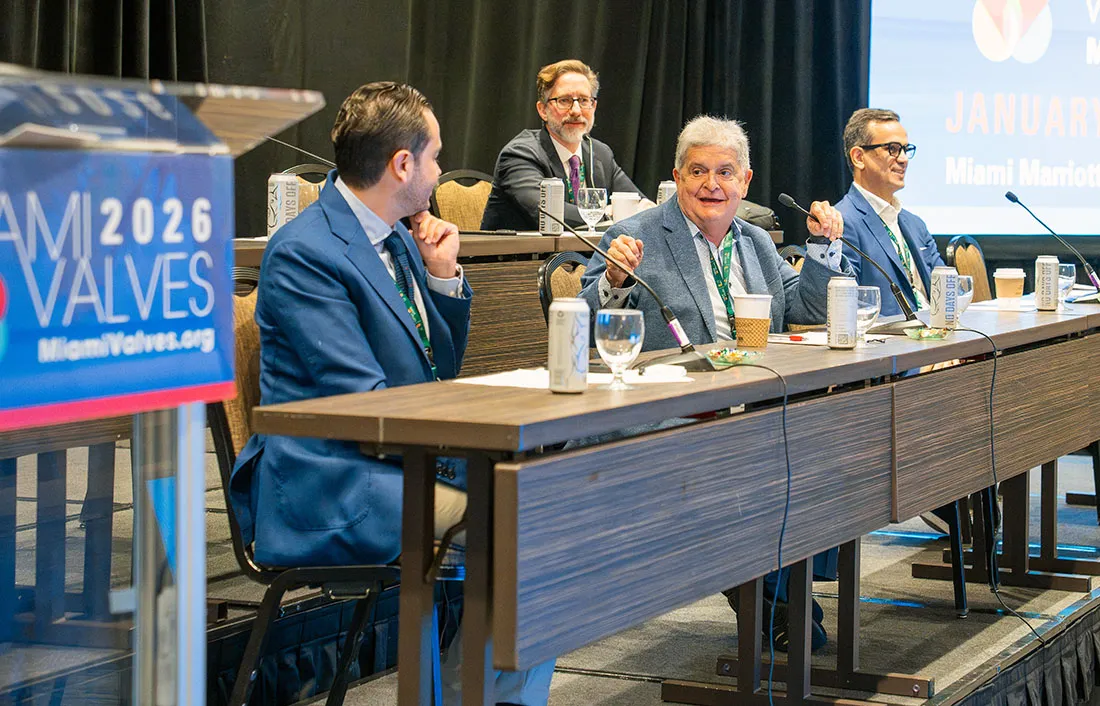 Dr. De Marchena (second from left) says it was a “breakout year” for structural heart programs.
Another theme was the gap between intuition and evidence in cerebral embolic protection. While the concept is compelling, the clinical payoff has been difficult to prove.
“The science for routine use isn’t there,” Dr. de Marchena said, adding that selective use may still be reasonable.
Innovation suffered a setback when a self-expanding aortic valve platform that gained traction internationally failed to meet key thresholds in the U.S., prompting market withdrawal.
“That was a big loss,” Dr. De Marchena said.
Looking beyond devices, he pointed to early signals suggesting pharmacologic approaches may one day slow calcification progression.
The session also highlighted the expansion of transcatheter therapies beyond the aortic valve. Mitral edge-to-edge repair continues to grow, offering symptom relief and improved quality of life for many patients. And after years of being undertreated, tricuspid disease is moving into the mainstream. These patients tend to be very sick, and intervention can lead to meaningful improvements.
“Putting it all together, 2025 was a spectacular year for structural heart disease,” Dr. De Marchena said.
The SAVR/TAVR Debate
Juan Pablo Umaña, M.D., professor and chief of cardiothoracic surgery at the Miller School and UHealth—University of Miami Health System, framed the SAVR (surgical aortic valve replacement)-TAVR decision as a lifetime strategy, not a single episode of care. This is especially true for patients under 65, he said, when durability, reintervention risk and redo complexity can shape outcomes decades later.
“We have to stop being short-sighted about shorter hospital stays and faster recovery,” Dr. Umaña said. “With younger patients, we really have to play the long game.”
A key part of that long-game thinking, he emphasized, is recognizing how strongly the bioprosthetic valve durability depends on age.
“Over 70, it may last the rest of a patient’s life,” Dr. Umaña said. “Under 60, it often won’t last beyond 10 to 12 years.”
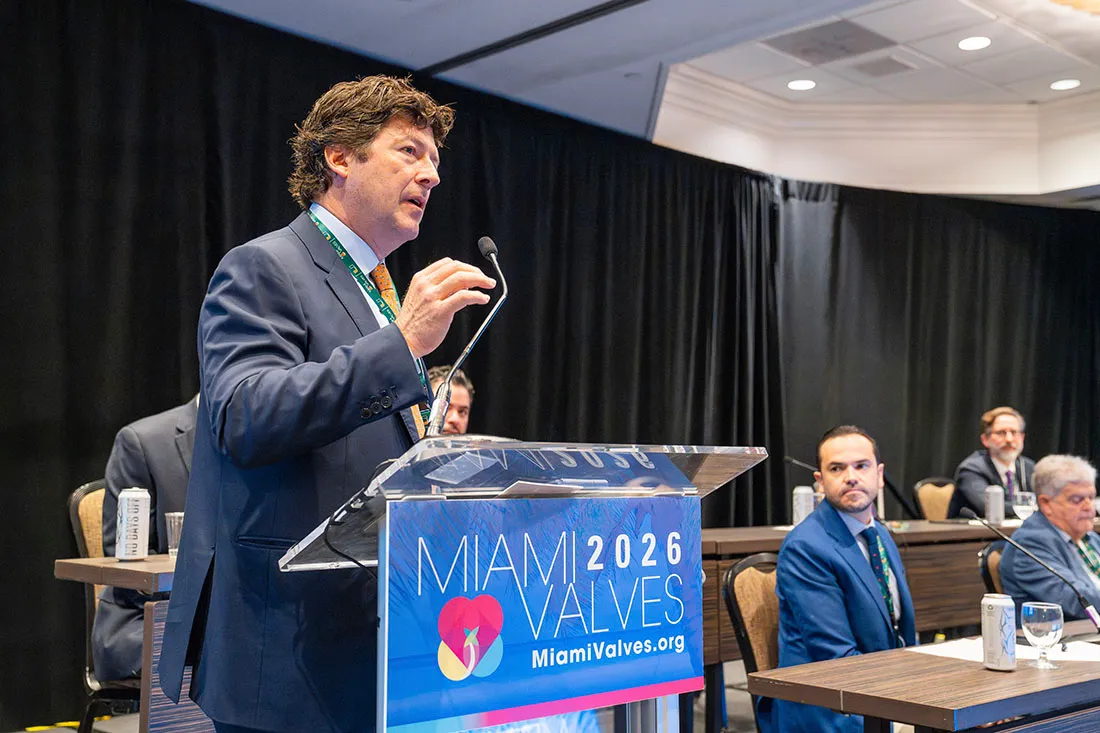 Dr. Juan Pablo Umaña addressed the SAVR-TAVR debate at Miami Valves 2026.
He also urged clinicians to rethink what “low risk” means in 2026.
“Surgery has never been safer,” he said, pointing to recent outcomes with mortality rates near 1 percent in low-risk patients and approaching zero in some series.
Dr. Umaña noted that today’s growth in TAVR volume will lead to difficult redo scenarios down the line and offered a cautionary note about what happens when transcatheter valves fail.
“SAVR after TAVR is not an easy operation. What would have been straightforward can become very complex redo,” he said. “TAVR explant is a growing problem, and it carries risk.”
For many patients under 65, he argued, a surgery-first strategy may better preserve future options.
Treating Mitral Regurgitation
In another talk, Dr. Umaña argued that minimally invasive surgical mitral valve repair should be the preferred first option for treating mitral regurgitation (MR) in patients who are reasonable surgical candidates. Repair, he said, can restore life expectancy (or comes close) compared with untreated MR, offers excellent durability in experienced centers and delivers stronger long-term outcomes than replacement.
It can also be performed minimally invasively, with strong visualization and the ability to “fix everything you see” intraoperatively. Transcatheter edge-to-edge repair (TEER), he said, should be reserved for patients who are either high surgical risk or inoperable.
Dr. De Marchena offered a rebuttal, agreeing that surgery for degenerative MR has strong outcomes data and is often the best choice, but noting that for functional MR, there is limited evidence supporting surgical repair or replacement.
“Primary versus functional MR are different animals. In functional MR, TEER should be considered first for many patients,” Dr. De Marchena said.
Lifetime Achievement Award Winner Delivers Featured Talks and Keynote Address
Jeffrey Popma, M.D., an interventional cardiologist from Harvard Medical School, received the conference’s Lifetime Achievement Award.
“Receiving a Lifetime Achievement Award is a lifetime honor, particularly from this group of individuals,” Dr. Popma said. “It’s really very, very meaningful. It means there’s camaraderie, there’s community, there’s respect amongst individuals along the way.”
A longtime Miami Valves participant, Dr. Popma credited the meeting with fostering a professional community that extends well beyond the conference itself.
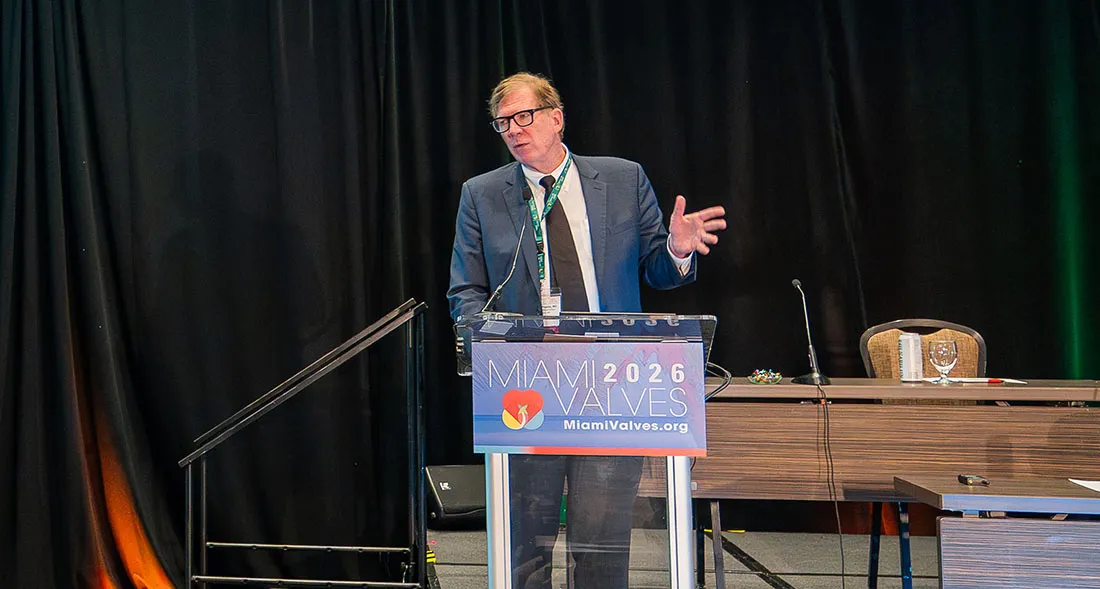 Dr. Jeffrey Popma
Over the course of the conference, Dr. Popma delivered several featured presentations, including an update on upcoming TAVR trials and where the field is headed. He emphasized how AI and electronic clinical tools can help address undertreatment of severe aortic stenosis. He shared data that, despite clear benefit, many patients with severe symptomatic aortic stenosis don’t receive therapy. Dr. Popma highlighted a study where automated notifications to clinicians increased referrals to the heart team and treatment rates, especially among women. He also described emerging AI applications that can detect structural heart disease using tools like ECGs. In addition, Dr. Popma noted rapid innovation in balloon expandable TAVR systems, with several new programs in development.
Dr. Popma also delivered a keynote address tracing the history of cardiac catheterization and interventional cardiology through pivotal “firsts,” influential innovators and reflections from his own training and career.
Optimizing PCI in a Suboptimal, Evolving Landscape
John Lasala, M.D., Ph.D., an interventional cardiology and structural heart disease specialist at Washington University School of Medicine in St. Louis, shared a streamlined approach to bifurcation percutaneous coronary intervention (PCI). His team’s jailed stent balloon technique, a method long used in his lab, now has new outcomes data showing it can deliver results comparable to established techniques for bifurcations with a simpler workflow.
The discussion turned to whether the technique translates beyond his expert touch.
“In your hands, things are different,” Dr. Chatzizisis said.
Dr. Lasala responded, “I think it’s an easy technique to teach people.”
Dr. Lasala, a regular attendee, said the meeting’s format is part of what keeps him returning year after year.
“I like the fact that Miami Valves is a very small, intimate group of people who are working at the top level, and the communication is free and unencumbered,” he said.
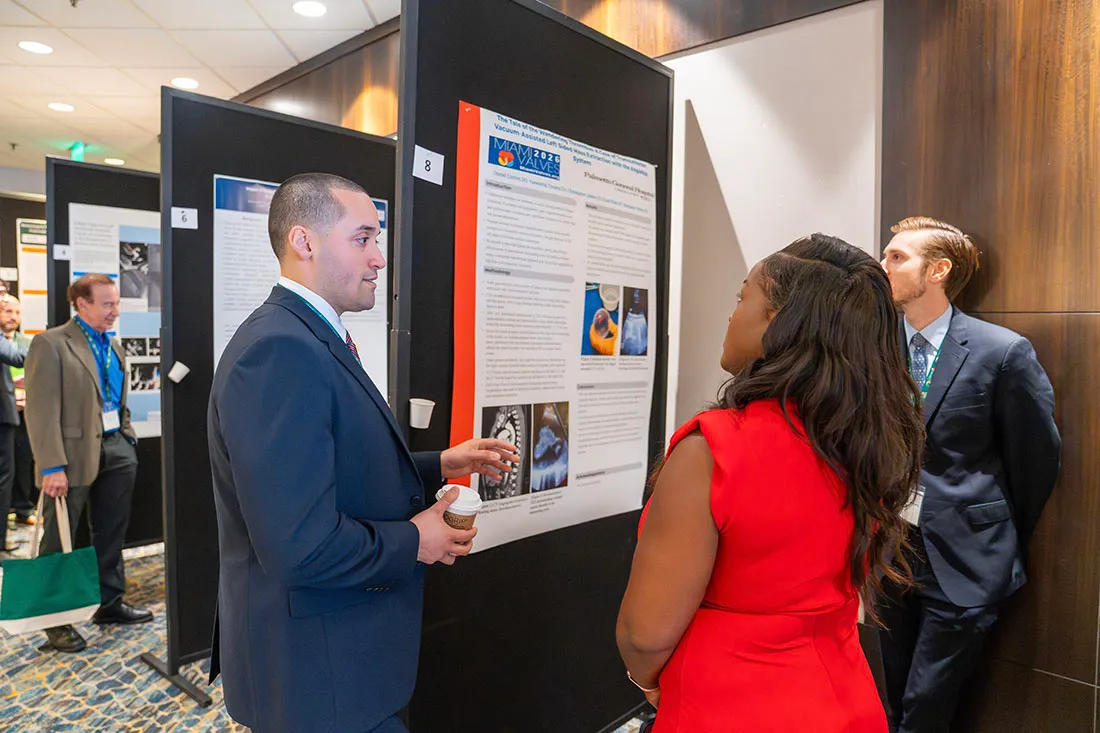 Miami Valves 2026 gave cardiovascular medicine physicians and researchers a chance to talk about their work.
Beyond technique, coronary CT and emerging AI tools also are reshaping how doctors approach PCI, shifting key decisions from the cath lab to the planning stage. In a session moderated by Michael Dyal, M.D., assistant professor of cardiovascular medicine and program director of the Interventional Cardiology Fellowship at the Miller School, clinicians described how imaging-driven prep now lets operators map anatomy, anticipate challenges and choose equipment with greater precision.
“CT gives you a better understanding of disease burden, the optimal angle, the right guide size and how to prepare the lesion – as well as the stent size and length you want – so you don’t waste time in the cath lab,” Dr. Chatzizisis said. “When you go into the cath lab prepared, the energy is focused on identifying complications and things that can’t be predicted. Everything that can be predicted is already in place. You’re not wasting time looking for balloons or other equipment that adds noise and delays. Efficiency definitely works in our favor.”
The theme carried into a workshop led by Dr. Chatzizisis and Carlos Collet, M.D., an interventional cardiologist at the Cardiovascular Research Foundation in New York. The presenters highlighted how advanced imaging, including 3D CT visualization, and emerging AI-assisted planning tools are shifting PCI from real-time decision-making to deliberate pre-procedural strategy.
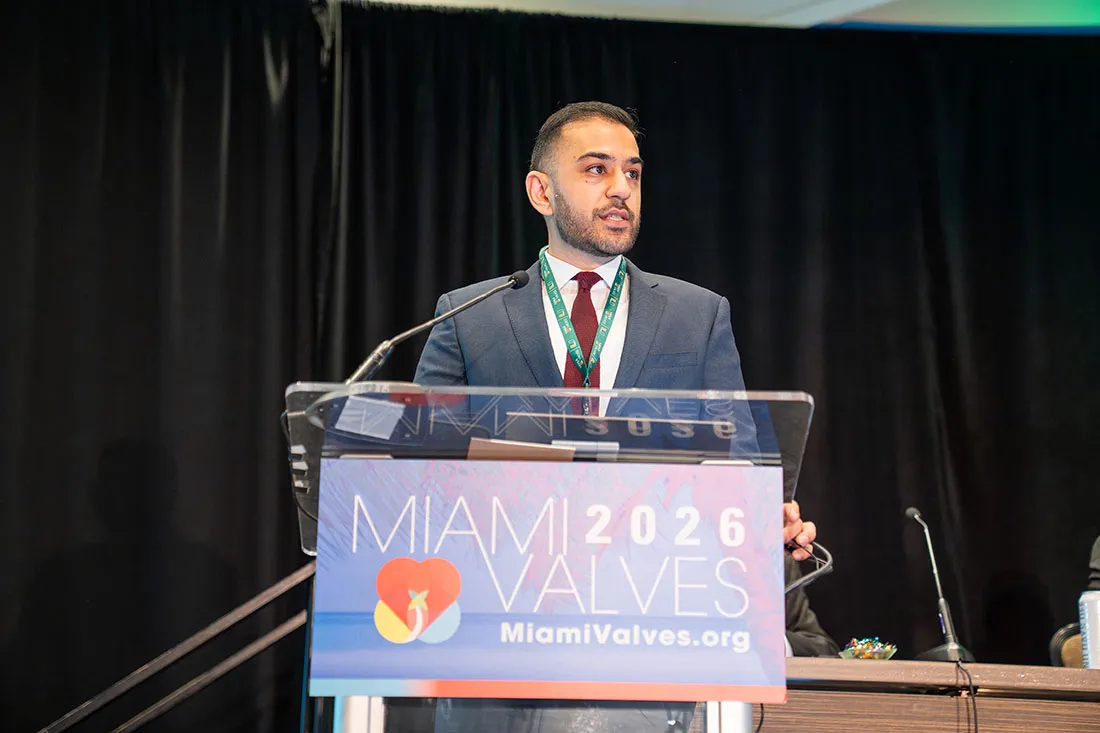 Dr. Carlos Collet (pictured) joined the Miller School’s Dr. Yiannis Chatzizisis for a workshop on advanced imaging.
Calling CT and AI “gamechangers,” the clinicians described the cath lab as a place to execute rather than troubleshoot.
“If we fail to prepare, we are essentially preparing to fail,” Dr. Chatzizisis said. “We can use technologies nowadays that allow us to be more precise, more patient-tailored and more successful in our interventions.”
Dr. Chatzizisis outlined a four-step workflow for CT-based procedural planning. Start with 3D MIP (maximum intensity projection) to assess overall case complexity, he said. Scroll through images to select the guiding catheter and anticipate access needs, then use MPR (multiplanar reconstruction) to assess lesion severity and length. Finally, he said, perform cross-sectional assessment to evaluate plaque composition and tailor lesion preparation.
“This is not the future,” he added. “This is happening. We are changing the guidelines here. We are changing how we practice, leading to better, more precise care for our patients.”
Presenters also pointed to photon-counting CT as an emerging tool, offering images that are up to five times sharper, with about half the radiation exposure.
Looking ahead, Dr. Chatzizisis predicted increasing automation across coronary and structural heart care. Clinicians won’t disappear, he said, but their role will evolve toward oversight, complex decision-making and managing the unexpected. Computer vision and AI, meantime, will detect disease patterns, support diagnosis and recommend procedural plans. Eventually, robotics will standardize execution, improving consistency and reproducibility.
SOLACI Partnership Strengthens Cross-Regional Exchange
In collaboration with SOLACI (the Society of Latin American Interventional Cardiology), Miami Valves hosted a dedicated session for visiting physicians from Latin America and the Caribbean aimed at strengthening scientific ties across regions. The exchange also gave U.S.-based attendees an early look at devices and technologies already in clinical use abroad, often ahead of U.S. adoption, where the regulatory pathway is usually slower and more deliberate.
For many visiting faculty in the room, it was a homecoming, as they trained at the Miller School, while many of the current faculty share Latin American roots.
Renal Artery Denervation Workshop
Iliana Hurtado Rendon, M.D., assistant professor of clinical medicine in the Division of Cardiovascular Medicine at the Miller School, presented on renal denervation as an option for severe, uncontrolled hypertension, covering both the evidence behind the procedure and the step-by-step technical workflow. The session included hands-on training with a kidney artery simulator, giving attendees that chance to practice catheter and wire techniques for engaging the renal arteries and navigating branch anatomy.
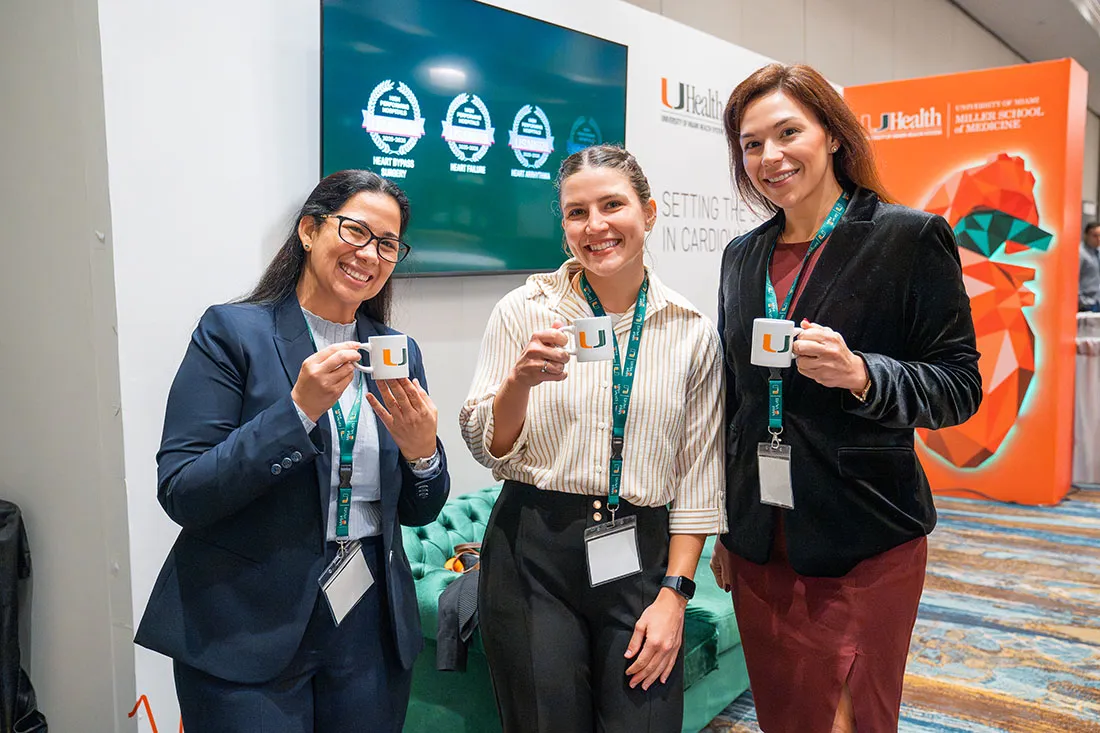 Dr. Iliana Hurtado Rendon (right), with colleagues at Miami Valves.
With blood pressure control still elusive for a large share of U.S. patients, Dr. Hurtado Rendon discussed how renal denervation is gaining traction and is recommended by the American Heart Association as an avenue for hypertension control.
“Many patients take a lot of medications, multiple times a day, and that makes their life more difficult and much more challenging to comply with the medical regimen,” Dr. Hurtado Rendon said. “These procedures, when done successfully and effectively, can decrease one or two medications in the regimen.”
Wide-Ranging Symposia
Electrophysiologists reviewed best practices and new research on atrial fibrillation during two AFib symposia. Topics ranged from evidence-based strategies for stroke prevention to the rise of digital tools in arrhythmia management.
• Litsa Lambrakos, M.D., associate professor in the Division of Cardiovascular Medicine at the Miller School, discussed how technology is reshaping monitoring and care.
• Omar Wever-Pinzon, M.D., associate professor in the Division of Cardiovascular Medicine at the Miller School and director of the Advanced Heart Failure Treatment and Recovery Section at UHealth/Jackson, moderated two heart failure symposia and also discussed new frontiers in the management of hypertrophic cardiomyopathy.
• Aditya Bharadwaj, M.D., associate professor in the Division of Cardiovascular Medicine at the Miller School and director of UHealth’s Cardiac Catheterization Laboratory, gave several presentations, including one on best practices for cardiogenic shock, where he emphasized the importance of a multidisciplinary approach.
• Line Kemeyou, M.D., a cardiologist at University of Utah Health, spoke about how cardiac sarcoidosis is no longer considered a rare entity.
• Joshua Hare, M.D., the Louis Lemberg Professor of Medicine in the Division of Cardiovascular Medicine and director of the Interdisciplinary Stem Cell Institute at the Miller School, presented on cell and gene therapy for heart failure.
• Hoda Butrous, M.D., staff physician at the Miller School, presented on durable LVAD (left ventricular assist device) innovations and what’s next in mechanical circulatory support.
• Mrudula Munagala, M.D., assistant professor in the Division of Cardiovascular Medicine at the Miller School, provided an update on pulmonary hypertension.
Another session brought together international cardiologists to dissect structural heart cases from medical centers across the Americas, including several that were unusually complex. Dr. De Marchena said the forum reflected how the meeting’s scope has broadened beyond the Miller School.
Big names from outside the Miller School included Igor Palacios, M.D., an interventional cardiologist from Harvard Medical School, who is a pioneer in PCI for structural heart disease, and international thought leader and former Miller School fellow Antonio Dager, M.D., from Colombia. Both sat on the “Guru Enlightens, Teaches, Inspires and Motivates” panel.
On the final day, a symposium on investigational devices offered a look at coming technologies for treating valvular and coronary disease.
“One of the areas I’ve been most involved in is innovation and new devices, and this was a preview of technologies and devices not yet approved,” Dr. De Marchena said. “It’s a menu of devices coming one to three years from now, showing new ways that people are thinking about treating these diseases.”
Trainees and young investigators from institutions including Duke and Harvard submitted 114 abstracts, with selected authors presenting posters and oral presentations to judge’s offering feedback aimed at strengthening projects for publication. For the first time, former Miller School fellows taught an interventional and structural fellows course that drew physicians from training programs across Florida. Bringing back alumni as conference leaders is a priority for Dr. De Marchena.
“These guys are now major players, and it’s beautiful to see,” he said.
Tags: AFib, AI, artificial intelligence, atrial fibrillation, cardiovascular, Cardiovascular Research, Center for Digital Cardiovascular Innovations, Division of Cardiovascular Medicine, Dr. Aditya Bharadwaj, Dr. Eduardo de Marchena, Dr. Ilian Hurtado Rendon, Dr. Joshua Hare, Dr. Juan Pablo Umaña, Dr. Michael Dyal, Dr. Mrudula Munagala, Dr. Omar Wever-Pinzon, Dr. Yiannis Chatzizisis, International Medicine Institute, Miami Valves, mitral valve surgery, structural cardiology