
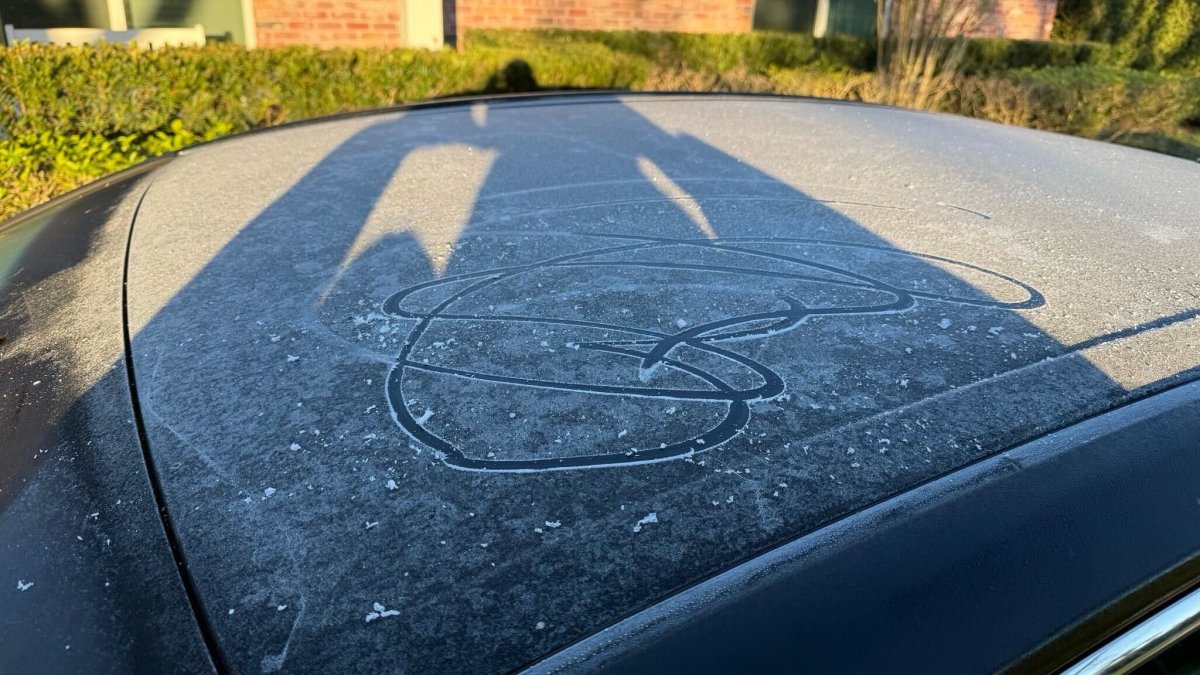
After a historic cold snap hit Florida over the weekend, chilly weather continued, and people found frost on their cars on Monday morning.
Video showed a car’s rooftop covered in frost in South Florida.
A frost advisory will be in effect for Miami-Dade and Monroe counties at 11 p.m.
How to safely remove frost on a car
To remove the frost off your car’s roof and windshield, mix two-thirds rubbing alcohol with one-third of water and then spray it where the frost is. The next step is to wipe the frost off.
A rubber scraper can also be used to remove the frost.
Another method involves turning on your car’s defroster and turning up the heat
What not to do
Avoid pouring hot water on your windshield since the heat could crack the glass.
Using a metal scraper could damage the car.
Over the weekend, there were reports of snow flurries in the Tampa Bay area.
The last two times the area got snow was flurries in January 2010 and December 1989. A record 2 inches (5 centimeters) of snow fell in January 1977, about 20 miles (32 kilometers) east of Tampa.
Snow flurries were also seen in Tallahassee, according to NBC affiliate in Orlando, WESH.
And Florida’s invasive green iguanas were also affected by the cold.
Over 1,000 iguanas were turned in to the Florida Fish and Wildlife Conservation Commission in one day during the historic cold snap.
Monday morning featured record-setting temperatures in Fort Lauderdale and Key West for the date — meaning it’s the coldest Feb. 2 we’ve had since we started tracking.
Although temperatures were far lower than usual in South Florida, it wasn’t the coldest.
Temperatures in the 30s are extremely rare in South Florida, and this may be the coldest Feb. 2 on record, but for all-time lows, you’d have to go back even farther.
Fort Lauderdale’s all-time record low is 28°F, set on January 20, 1977. Miami’s all-time record low is 27°F, set in January 1940.
Current projections for early February are approaching those levels, underscoring how unusual this cold spell could be.